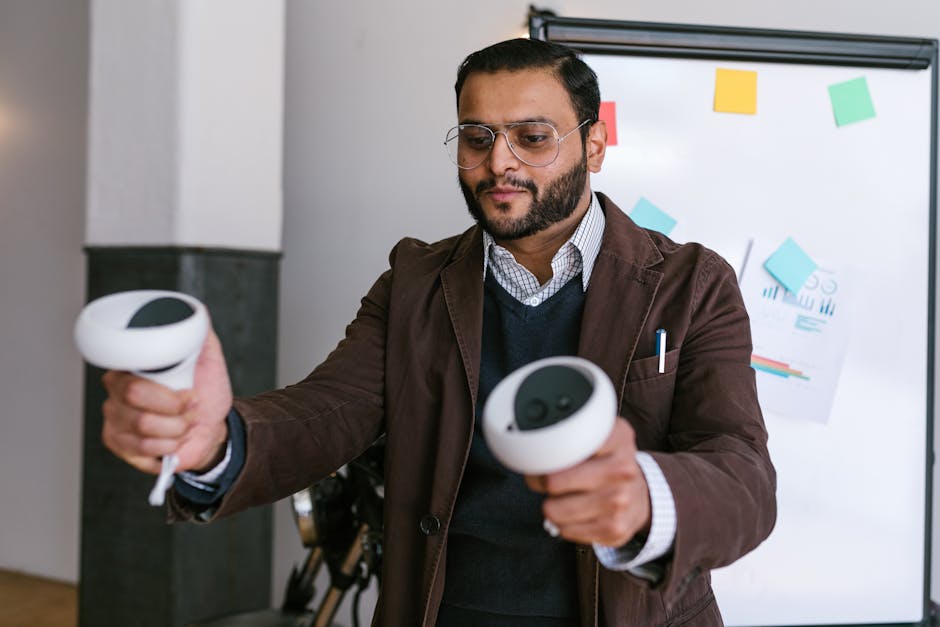
We have spent years discussing the ethical pitfalls of Virtual Reality—data privacy, biometric tracking, and virtual harassment. But there is a more insidious, quiet threat to the modern organization: the hyper-optimized VR workplace.
As leaders rush to replace Zoom fatigue with ‘spatial presence,’ they are inadvertently replacing the messy, inefficient, and highly creative nature of human work with a digital assembly line. The true danger of VR in the office isn’t just that it can spy on our pupils; it’s that it can force-feed our subconscious a version of ‘productivity’ that kills original thought.
The Illusion of the ‘Flow State’
VR environments are designed to reduce friction. By eliminating outside distractions, these platforms promise an uninterrupted ‘flow state.’ However, in the realm of high-level management and creative strategy, friction is a feature, not a bug. Staring out a window, pacing a room, or experiencing the mild physical discomfort of a long meeting often serves as a cognitive reset button. In a curated VR environment, the ‘room’ is optimized to keep you tethered to a digital task. When a leader removes the ability to disconnect from the digital architecture, they are essentially automating their employees’ cognitive cycles.
The Death of the ‘Water Cooler’ Serendipity
Proponents argue that VR mimics physical presence. They are wrong. It mimics the performance of presence. In a physical office, a leader might encounter an employee in the hallway, notice their body language, and have an unscripted, human moment. In VR, interaction is intentional, logged, and often scripted by the limitations of the software. If you have to ‘login’ to a virtual lobby to have a conversation, you have already signaled that the interaction is a task, not a human connection. This shifts organizational culture from one of relational trust to one of transactional interface.
Designing for Absence, Not Just Presence
The most contrarian (and necessary) take for future leaders is this: True digital leadership lies in knowing when to turn the hardware off. We need a ‘Right to Disconnect’ that goes beyond labor laws and enters the realm of cognitive hygiene. Leaders must stop designing VR spaces as permanent productivity hubs and start treating them as transient tools—akin to a whiteboard or a spreadsheet—rather than a second headquarters.
The New Ethical Imperative
If you want to maintain a creative, high-performing workforce, your goal shouldn’t be to build the most immersive, ‘sticky’ VR experience. It should be to build the most expendable one. Encourage employees to exit the system. Reward those who solve complex problems away from the headset. If your business strategy requires constant immersion to function, you haven’t built an innovative workplace; you’ve built an echo chamber.
The ultimate test of a leader in the age of spatial computing is the ability to facilitate excellence without trapping their team in a loop of constant, monitored engagement. Lead your team out of the headset, not deeper into it.