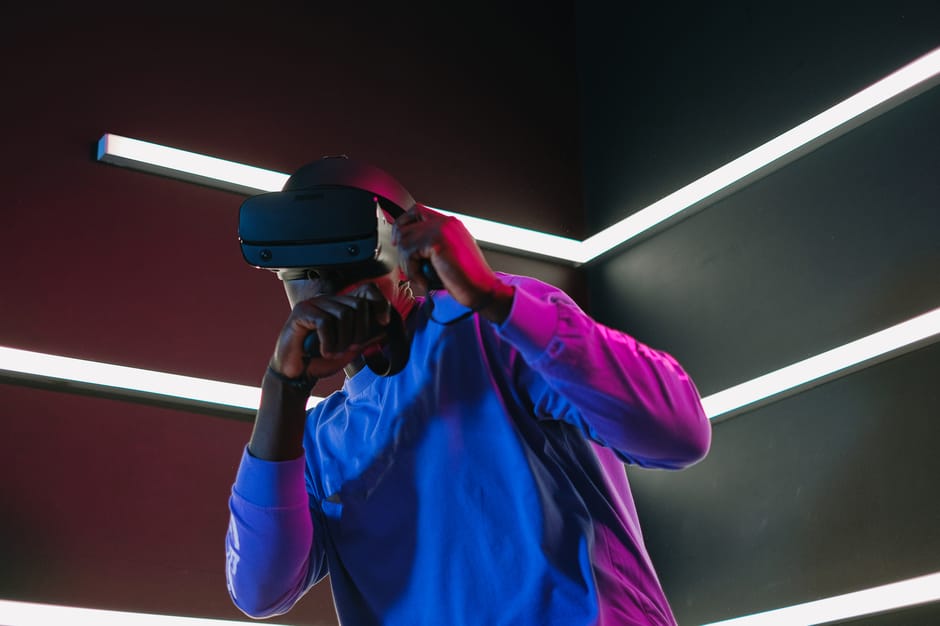
While virtual reality is rightfully hailed as the next frontier for scientific visualization, there is a dangerous undercurrent to the hype: the assumption that ‘more immersion’ always equals ‘better insight.’ At thebossmind.com, we believe in operational excellence, and in the world of high-stakes science, unchecked immersion can actually lead to a new category of cognitive failure.
The Danger of ‘Digital Hallucination’
By removing the friction of 2D data representation, we risk introducing a new kind of bias: the illusion of understanding. When a researcher can ‘walk through’ a protein structure or ‘fly through’ a neural network, the vividness of the experience can create a false sense of certainty. Humans are evolutionarily hardwired to trust what we see with our own eyes. In VR, if the underlying data model is flawed, our brains will ‘fill in the gaps’ to create a coherent narrative, potentially masking anomalies that a cold, 2D scatterplot would have revealed instantly.
The Case for ‘Strategic Friction’
Total immersion is often the enemy of rigorous critique. True scientific breakthrough requires the ability to step back, detach, and view data with clinical skepticism. Our research teams must implement ‘Strategic Friction’—the intentional inclusion of non-immersive dashboards, flat statistical audits, and 2D data parity checks alongside immersive VR sessions. If you cannot explain your discovery on a flat piece of paper, you don’t fully understand it; you are merely reacting to a sensory experience.
Redefining the Role of the Human-in-the-Loop
The goal isn’t to live inside the simulation; it’s to use the simulation to sharpen human intuition. We suggest a new operational protocol for labs integrating spatial computing:
- The 70/30 Rule: Spend 70% of analytical time in immersive environments, but reserve 30% for traditional, non-immersive forensic analysis of the raw datasets.
- Red-Teaming the Reality: Always pair a VR researcher with a ‘skeptic’ who reviews only the raw, flat numerical data to ensure that the VR visualizations aren’t biasing the interpretation.
- Focus on Synthesis, Not Just Display: Use VR to construct and manipulate, but rely on traditional computational logic to validate the final output.
Beyond the Hype
Spatial computing is a powerful tool, but it is not a substitute for the scientific method. At thebossmind.online, we argue that the future belongs to the operators who treat VR as a high-fidelity drafting board, not an alternate reality. By maintaining the tension between immersive exploration and cold, analytical detachment, scientists can harness the speed of VR without falling victim to its psychological traps. The future of research isn’t just about seeing more; it’s about staying grounded while the data is elevated.