The Energy Trap: Why Centralization is Becoming a Liability
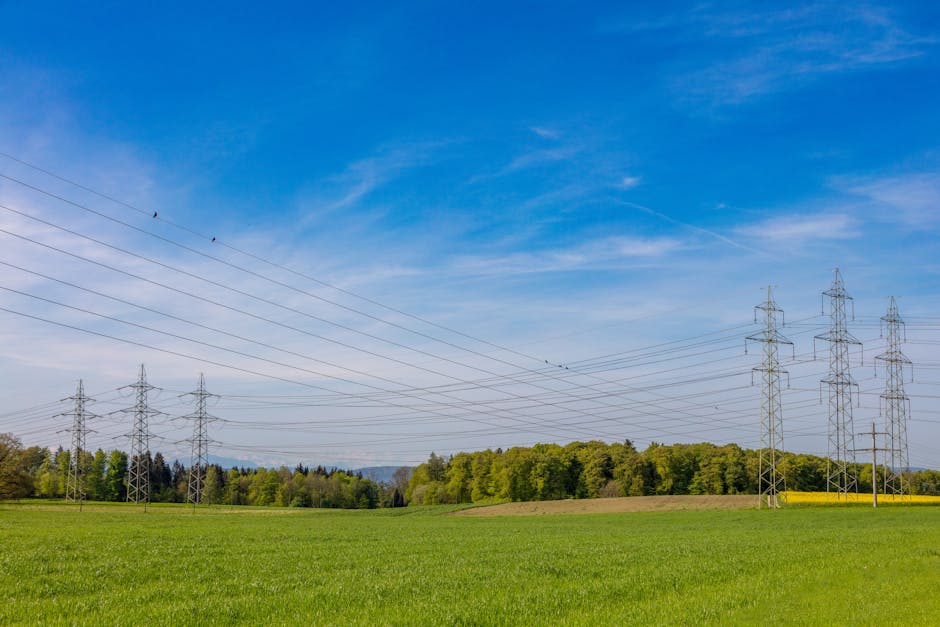
For decades, the standard business playbook has emphasized the benefits of centralization. We built massive, consolidated data centers, sprawling global supply chains, and relied on a singular, grid-dependent power model. The logic was sound: economies of scale lead to lower unit costs. But as we transition back to the decentralized, flow-based energy models of the 21st century, that centralized logic is fast becoming our greatest strategic vulnerability.
The Fragility of Consolidation
The fossil-fuel era encouraged us to think in terms of ‘hubs.’ Whether it was a corporate headquarters or a centralized manufacturing facility, the model relied on a constant, predictable stream of energy provided by a third party. We optimized for volume at the expense of autonomy. However, the current shift toward renewables isn’t just about the source of power; it is about the architecture of resilience. When your operational backbone is tied to a single, centralized grid, you are effectively outsourcing your business continuity to an external entity that cannot guarantee stability in a volatile, climate-uncertain world.
The Contrarian View: Decentralization as an Offensive Strategy
Most organizations treat on-site energy generation—solar arrays, microgrids, or battery storage—as a defensive measure to lower utility costs. This is a mistake. The true high-performance leaders of the next decade will view decentralization as an offensive strategy. By untethering production from centralized grids, you eliminate the single point of failure that keeps your competitors awake at night.
Think of this as the ‘Cloud Computing’ of energy. Just as companies moved from on-premise servers to distributed cloud architectures to gain speed and flexibility, the most agile firms are now moving toward distributed energy architecture. This allows for ‘Energy Arbitrage’—the ability to keep running, producing, and innovating when the macro-grid experiences price spikes or physical failure.
Practical Application: The Distributed Resilience Audit
To move from a passive consumer to an active operator of your energy ecosystem, consider these three steps:
Map Your Failure Points: If the local grid went down for 48 hours, where would your value chain break? That gap is not just an insurance problem; it is an architectural flaw.
Identify ‘Flow’ Opportunities: Stop viewing your facility as a static box. Can your roof, your parking lot, or your waste-heat exhaust be repurposed to capture local energy flows?
Shift from Opex to Asset Management: Energy is no longer a line-item expense—it is a critical infrastructure asset. Treat it with the same rigorous oversight as you would your proprietary technology stack.
The BossMind Perspective
At The BossMind, we advocate for the ‘Hard Truth’ approach to management. The hard truth is that the era of cheap, reliable, and invisible energy is over. The leaders who will dominate the next cycle are not those who lobby for better infrastructure, but those who design systems that function regardless of the infrastructure around them. Don’t wait for the grid to modernize. Build your own. To continue refining your organizational resilience, explore our advanced modules at The BossMind Network and learn how to audit your firm for total operational independence.