Propulsion has always been the primary constraint of human ambition. For centuries, our reach has been dictated by the tyranny of the rocket equation—the brutal reality that to go further, you must carry more fuel, which in turn requires more fuel to move that fuel. Beam-powered sailcraft represent the first viable technological exit from this cycle. By decoupling the energy source from the vehicle, we shift from the paradigm of combustion to the paradigm of transmission.
In terms of strategy, this is the ultimate move in operational efficiency. When you remove the mass of the propellant, you remove the primary friction to growth. The craft becomes a pure vessel for velocity, propelled by high-energy lasers or microwave emitters positioned in orbit or on a planetary surface. This is not merely an engineering challenge; it is a masterclass in separating the “engine” from the “payload,” a principle that defines high-performance thinking in any industry.
The Operational Mechanics of Light Pressure
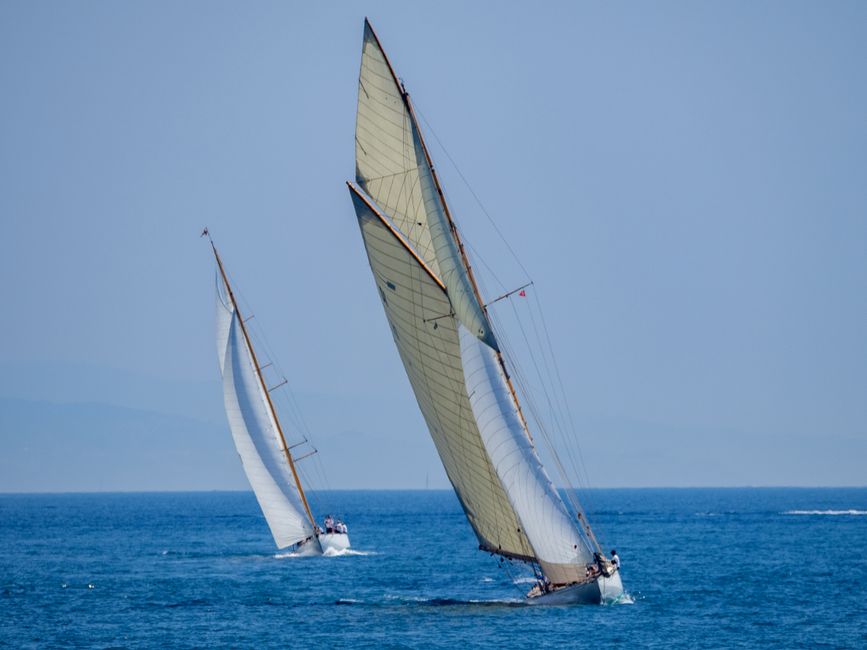
The core concept relies on radiation pressure. While a single photon carries negligible momentum, a coherent, high-intensity beam directed at a highly reflective, ultra-lightweight sail generates a constant, accelerating force. Unlike chemical rockets, which offer a brief, violent burst of thrust, beam-powered systems provide continuous acceleration.
This creates a distinct advantage in execution: the longer the beam is applied, the faster the craft travels. We are looking at the potential for interstellar transit in decades rather than millennia. From a leadership perspective, this mirrors the power of compounding. Success in complex systems is rarely the result of a single “big bang” event; it is the result of applying sustained, focused intensity over a long duration until the velocity becomes self-sustaining.
Strategic Implications for Future Infrastructure
The development of beam-powered sailcraft necessitates a shift in how we view capital investment. Building the laser array is a massive, front-loaded cost—a “fixed cost” that enables near-zero marginal cost for future missions. This is the hallmark of a platform-based business model. Once the beam infrastructure is operational, the cost of sending individual probes drops exponentially.
For those managing decision-making in high-stakes environments, the lesson is clear: identify where you can build permanent infrastructure that scales linearly while your output scales exponentially. The sailcraft is the output; the beam is the infrastructure. Many organizations fail because they continue to build “chemical rockets”—expendable, one-off solutions that require a full reset for every new objective—rather than investing in the beam-powered systems that allow for repeated, rapid deployment.
The Constraints of Precision
The technical hurdles are significant. Maintaining a coherent beam over astronomical distances requires unprecedented pointing accuracy and adaptive optics. If the beam drifts, the sail loses its acceleration. This reflects a reality in any high-performance organization: your effectiveness is limited by the precision of your alignment.
When your leadership team is misaligned, even the most powerful resources fail to move the needle. You can have the best technology, the brightest minds, and the most robust capital, but if the “beam” of your vision is not tightly focused on the “sail” of your operational goals, you will miss the target entirely. Energy is wasted, momentum is lost, and the mission stalls.
Moving Toward Autonomous Deployment
As we integrate AI into the guidance systems of these sailcraft, the role of human intervention diminishes. The craft must adjust its own trajectory, manage its thermal load, and optimize its orientation relative to the incoming beam in real-time. This is the pinnacle of decentralized operations. You set the initial trajectory and the beam provides the power, but the craft manages its own survival and performance.
We are moving toward a future where the most ambitious projects are not directed by minute-by-minute control, but by the establishment of powerful, persistent systems that operate independently. When you master the art of building systems that run themselves, you free your capacity to focus on the next horizon.