The Thermodynamics of Corporate Efficiency: Lessons from Waste-to-Energy
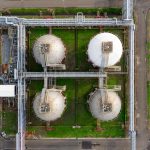
Most organizations operate like inefficient internal combustion engines. They burn through capital, talent, and time, yet a staggering percentage of that input is lost as “heat”—bureaucratic friction, misaligned incentives, and failed initiatives. In the industrial sector, waste-to-energy conversion is the process of generating electricity or heat from the primary treatment of waste. It is a masterclass in systems thinking: taking an output that is typically viewed as a liability and transforming it into a high-value asset.
The smartest leaders treat organizational waste with the same clinical precision. Every failed project, every redundant process, and every piece of dormant institutional knowledge is a potential fuel source. The challenge is not the absence of value; it is the absence of the infrastructure required to capture it.
The Architecture of Recovery
Waste-to-energy systems rely on three critical components: collection, conversion, and output. To apply this to strategic execution, you must build similar loops within your firm. Most leaders are obsessed with the “front end”—hiring, funding, and launching—but they lack the conversion technology to process the inevitable byproducts of growth.
Consider the “post-mortem” culture. In many firms, a project failure is treated as a sunk cost—an ash heap to be hauled away. In a high-performance organization, failures are treated as feedstock. By applying decision-making frameworks to these failures, you extract the thermal energy of the lesson. You turn a liability (lost revenue or time) into a permanent increase in organizational IQ. This is not just “learning”; it is energy recovery.
Operational Excellence as a Closed-Loop System
Entropy is the default state of any business. Without active intervention, communication degrades, silos emerge, and processes bloat. Waste-to-energy plants succeed because they are designed to handle the volatile nature of their input. They don’t expect clean, uniform fuel; they expect complexity.
Operational excellence requires a similar mindset. If you are waiting for a perfect, streamlined workflow to emerge, you are waiting for a fantasy. Operational excellence is the ability to maintain high output regardless of the chaos in the input stream. When you view your organizational waste—the friction of cross-departmental communication, for example—as a source of latent energy, you stop trying to eliminate it entirely and start trying to convert it into streamlined policy or automated workflows.
Converting Idle Assets into High-Performance Output
The most dangerous form of waste is not what you throw away; it is the underutilized capacity within your current team. Many leaders mistake “busy” for “productive.” In reality, much of what your staff does is entropy masquerading as progress. This is wasted intellectual energy.
To convert this, you must apply leadership strategy that prioritizes the redistribution of human capital. Just as a conversion plant pulls energy from the methane of decomposing waste, you must pull energy from the “decomposition” of legacy projects. If a product line is stagnant, don’t just kill it; extract the talent, the customer insights, and the technical architecture and inject them into the next high-growth vector. That is how you maintain momentum without constantly increasing your input costs.
The Role of AI in Energy Extraction
We are currently witnessing a shift in how organizations process information waste. For decades, data was the ultimate byproduct—we generated massive amounts of logs, emails, and reports that simply sat in servers, costing money to store but providing zero value. Artificial intelligence acts as the modern turbine in this system. It allows us to process that “data waste” and convert it into predictive insights. If you are not using AI to reclaim the value of your dormant data, you are essentially burying energy in a landfill while paying for the privilege.
The Bottom Line
The transition from a linear organization to a circular one is a matter of survival. When you stop viewing waste as a nuisance and start viewing it as a resource, you change your entire competitive posture. You become leaner, more resilient, and significantly more efficient. Efficiency is not just about doing more with less; it is about ensuring that nothing—not even your failures—is ever truly wasted.