The Infrastructure Bottleneck: Why Green Hydrogen Remains a Strategic Mirage
Energy transition discourse often treats green hydrogen as the ultimate panacea for industrial decarbonization. Proponents point to its potential to replace fossil fuels in hard-to-abate sectors like steel manufacturing, heavy shipping, and chemical production. Yet, the current obsession with hydrogen production capacity ignores a brutal reality: the infrastructure required to store, transport, and distribute this volatile gas is decades behind the production goals. For the leadership teams tasked with allocating capital toward long-term sustainability, green hydrogen is currently a logistical liability rather than an operational strategy.
The fundamental problem lies in the physics of the molecule. Hydrogen is the smallest element in the periodic table, prone to leaking through standard steel pipes and embrittling the very infrastructure intended to contain it. When leaders evaluate the viability of a hydrogen-based future, they must look beyond the electrolyzer efficiency rates and focus on the systemic failure of midstream infrastructure.
The Fallacy of Repurposing Existing Assets
A common narrative suggests that existing natural gas pipelines can be retrofitted to carry hydrogen blends. This is a dangerous oversimplification. While minor blending—typically up to 20%—is technically feasible in certain conditions, scaling this to a pure hydrogen economy requires a complete overhaul of compression stations, valves, and metering equipment.
From an operational excellence perspective, the cost of retrofitting is often comparable to building dedicated infrastructure from scratch, without the benefit of a clean, optimized design. Decision-makers must recognize that “repurposing” is rarely a low-cost shortcut. It is an engineering compromise that introduces significant safety risks and operational inefficiencies. When you ignore the complexity of asset integrity, you invite long-term maintenance debt that will erode your execution capabilities.
Capital Allocation and the Risk of Stranded Assets
The capital intensity of green hydrogen infrastructure is astronomical. Unlike electricity, which moves through a grid that is already largely established, hydrogen requires a localized point-to-point transport network. This creates a “chicken and egg” trap for investors. You cannot justify the infrastructure spend without a guaranteed industrial off-taker, but you cannot secure the off-taker without the infrastructure to guarantee delivery.
High-performance thinking demands that we view hydrogen infrastructure as a massive, immobile capital commitment. In an era where AI-driven market shifts and rapid technological evolution are the norms, betting billions on fixed, inflexible pipelines is a high-stakes gamble. Leaders should prioritize decentralized production—generating hydrogen on-site at the point of use—rather than chasing the dream of a centralized, utility-scale hydrogen grid that may never be economically viable.
The Operational Reality of Storage
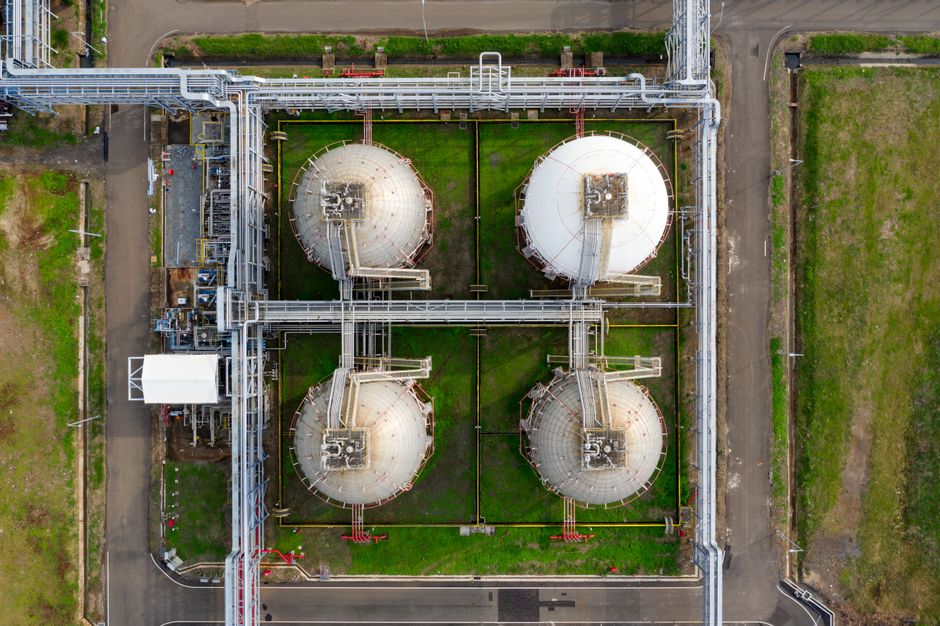
Hydrogen storage remains the most significant barrier to operational continuity. Because gaseous hydrogen has low volumetric energy density, it must be compressed to extreme pressures or liquefied at cryogenic temperatures. Both processes are energy-intensive and introduce massive thermodynamic losses.
If your decision-making framework assumes that hydrogen will eventually mimic the ease of natural gas storage, your model is flawed. The energy required to simply move and store the fuel consumes a significant portion of the energy value stored within it. Unless breakthroughs in solid-state storage or ammonia-based carriers reach industrial scale, hydrogen will remain a niche solution for specific, geographically clustered industrial hubs.
Strategic Implications for Energy-Intensive Industries
For firms operating in heavy industry, the path forward is not to bet the house on a national hydrogen grid. Instead, it is to focus on localized, modular solutions that minimize transport distances. This reduces dependency on external, uncertain infrastructure projects. By controlling the entire chain—from renewable energy generation to electrolyzer output—you insulate your operations from the volatility of external logistics.
True high-performance thinking involves acknowledging the limitations of current infrastructure and building for the environment that exists, not the one promised by political white papers. Prioritize energy efficiency and electrification where possible. Reserve hydrogen for the narrow band of high-heat applications where no other alternative exists, and ensure your infrastructure investments remain agile enough to pivot as the technology matures.