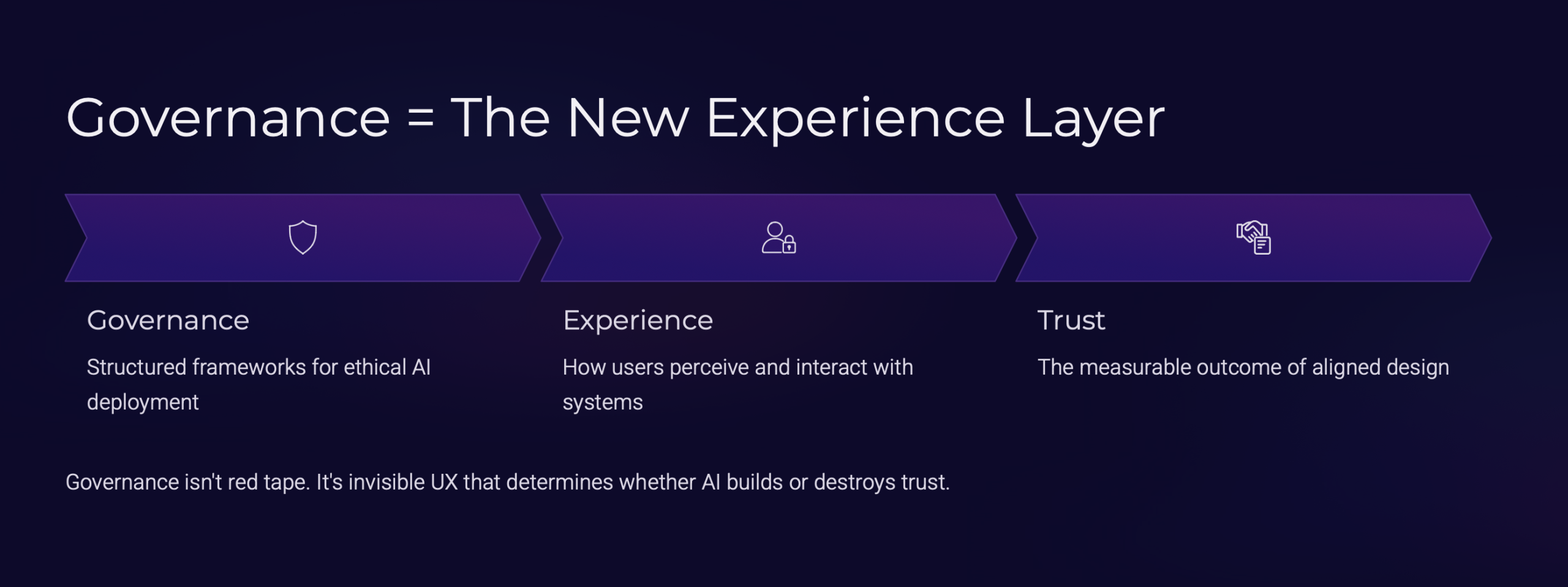
The promise of data democracy is seductive: decentralize access to information, empower every employee to become an analyst, and watch organizational intelligence skyrocket. Proponents claim that when the barriers between raw data and decision-makers vanish, the organization achieves a state of perpetual optimization. This is a dangerous half-truth.
In reality, democratizing data without a corresponding architecture for decision-making results in “analysis paralysis” and the proliferation of conflicting metrics. When everyone owns the data, accountability for the quality and interpretation of that data often evaporates. True operational excellence requires not just access, but the rigorous governance of how that information is translated into action.
The Governance Gap
Organizations often confuse accessibility with literacy. Granting a marketing manager access to a raw SQL database is not empowerment; it is an invitation to draw erroneous correlations. Without a centralized framework, teams revert to “vanity metrics”—data points that look impressive in a slide deck but have zero correlation with bottom-line growth or operational excellence.
Data democracy demands a shift from passive consumption to active curation. Leaders must implement a “semantic layer” that ensures every department speaks the same language. If the finance team defines “Customer Acquisition Cost” differently than the product team, the democratization of data serves only to accelerate the speed of organizational confusion.
AI as the Great Arbiter
The emergence of generative AI and automated insights provides a solution to the chaos of mass access. Instead of human analysts manually querying databases—a process prone to bias and human error—AI acts as an impartial arbiter. It provides the high-performance thinking required to synthesize disparate data streams into coherent, actionable intelligence.
However, AI is only as robust as the underlying data architecture. If you democratize garbage, you receive hyper-efficient garbage at scale. The role of leadership in this environment is to establish the “guardrails of relevance.” This means identifying which data sets are mission-critical and automating their delivery, while restricting access to noisy, non-performant data that distracts from the core mission.
Reframing Ownership
To move beyond the pitfalls of standard data democracy, adopt a model of “Data Stewardship.” In this framework, access is universal, but interpretation and reporting are localized to specific, accountable owners. This bridges the gap between the strategy defined at the top and the execution occurring on the front lines.
When an organization shifts its focus from “more access” to “better utility,” the culture changes. Decisions are no longer justified by the sheer volume of supporting data, but by the clarity of the insight. This is the hallmark of a high-performance organization: the ability to strip away the noise and focus exclusively on the variables that drive competitive advantage.
Operationalizing Insights
Democratization is a tool, not an end state. The goal is to maximize the velocity of sound decisions. If your current data strategy is not reducing the time between identifying a market shift and executing a pivot, it is failing.
Define the North Star: Every team must map their localized data to a single organizational goal.
Standardize Definitions: Eliminate ambiguity in terminology before granting broad access.
Automate the Routine: Use AI to handle standard reporting so human talent can focus on edge cases and strategic anomalies.
Enforce Accountability: If a data point is used to drive a decision, the steward of that data must be identifiable and responsible for its accuracy.
True data democracy is not about giving everyone a seat at the table; it is about ensuring that whoever sits at that table has the tools to make an informed, defensible, and high-impact move. Anything less is merely noise in the system.