Federated learning allows models to be trained across decentralized devices without sharing raw data.
— by
Steven Haynes
Contents
1. Introduction: The paradigm shift from centralized data storage to decentralized intelligence.
2. Key Concepts: Defining Federated Learning (FL), the role of the global server, and the principle of data locality.
3. Step-by-Step Guide: The iterative process of local training, gradient calculation, aggregation, and model updating.
4. Real-World Applications: Healthcare (predictive analytics), Mobile Tech (predictive text/keyboard), and IoT (smart home optimization).
5. Common Mistakes: Communication overhead, data heterogeneity (non-IID), and security vulnerabilities (inference attacks).
6. Advanced Tips: Differential privacy, secure multi-party computation, and hardware acceleration for edge devices.
7. Conclusion: The future of privacy-first AI.
***
Federated Learning: Mastering Decentralized Intelligence Without Compromising Privacy
Introduction
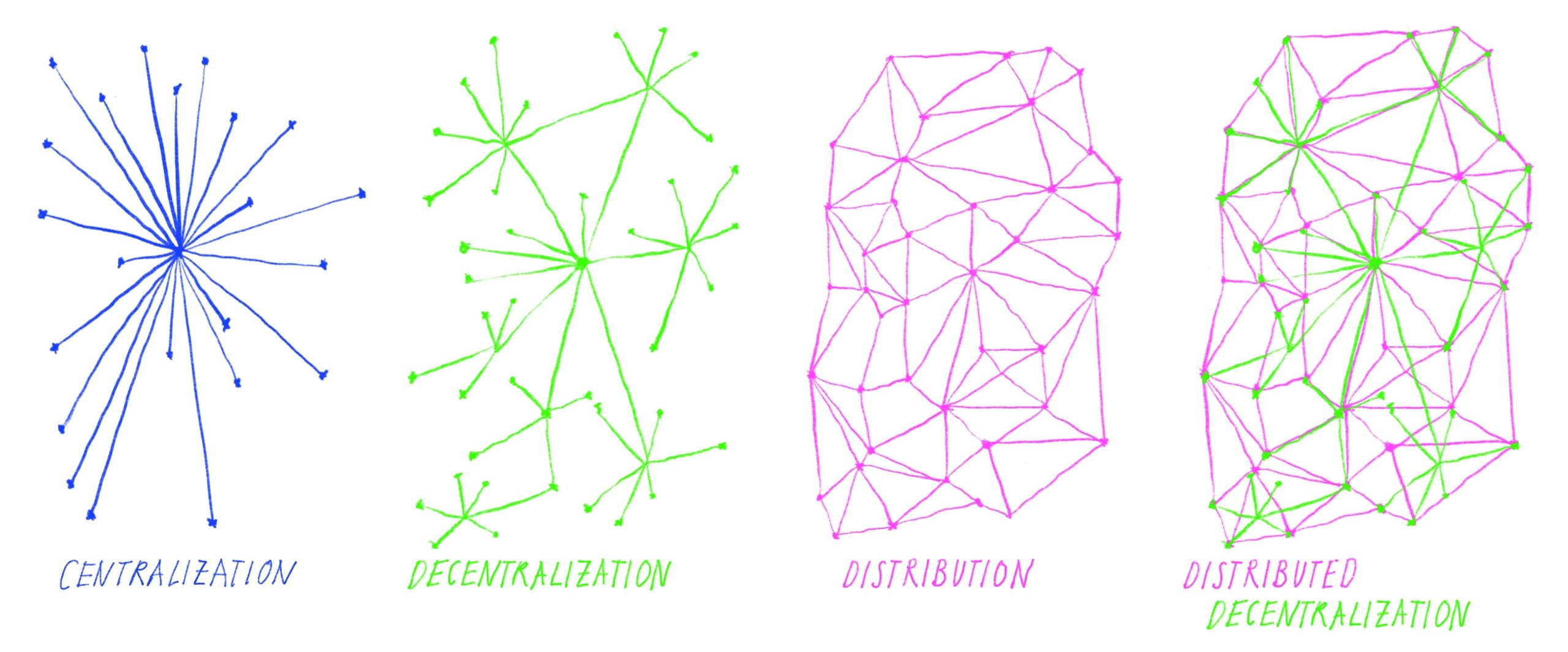
For the past decade, the dominant model of Artificial Intelligence development has been simple: hoard as much data as possible, move it to a centralized cloud server, and train massive models on that data. This approach has led to incredible breakthroughs, but it carries an inherent fragility: a reliance on mass data collection that conflicts with modern privacy regulations and user trust.
Enter Federated Learning (FL). Instead of bringing the data to the code, FL brings the code to the data. By training models directly on decentralized edge devices—like your smartphone, wearable, or local server—organizations can build highly accurate intelligence without ever accessing the raw, sensitive information contained on those devices. This is not just a technical optimization; it is a fundamental shift in how we build the next generation of privacy-preserving systems.
Key Concepts
At its core, Federated Learning is a machine learning technique that trains an algorithm across multiple decentralized edge devices or servers holding local data samples, without exchanging them. The architecture relies on three distinct components:
The Global Model: A centralized, master version of the model that resides on a secure server.
Edge Devices: The individual nodes (phones, IoT sensors, or hospitals) that contain the private, raw data.
Aggregation Protocol: The mathematical mechanism, such as Federated Averaging (FedAvg), used to merge the updates from thousands of devices into a single, improved global model.
The beauty of FL lies in its constraints. Because the raw data never leaves the device, the risk of data leakage during transit is effectively zero. Only the “model weights” or “gradients”—the mathematical expressions of what the model learned—are sent back to the server. These updates are ephemeral and represent statistical patterns rather than individual data points.
Step-by-Step Guide: The Federated Training Loop
To implement a Federated Learning architecture, you must shift from a batch-processing mindset to an iterative, asynchronous cycle. Here is how the process works in practice:
Initialization: The central server initiates a base model and broadcasts it to a select subset of edge devices.
Local Training: Each device trains the model on its own local data. Because this happens on-device, the computation power is distributed across the entire network, reducing the load on your central infrastructure.
Gradient Calculation: Instead of sending the full dataset, the device calculates “updates”—the mathematical adjustments that would improve the model based on its specific, private data.
Secure Aggregation: These updates are sent to the central server. The server uses an aggregation algorithm to calculate the weighted average of these updates. This allows the global model to “learn” from the collective experiences of every device.
Synchronization: The improved global model is pushed back to the edge devices, replacing the previous iteration. This cycle repeats until the model reaches the desired level of accuracy.
Examples and Real-World Applications
Federated Learning has moved out of the laboratory and into the hands of billions of users. Its applications are most effective where data is sensitive, high-volume, and physically distributed.
Predictive Text and Next-Word Prediction
Mobile keyboards are the classic example of successful FL. When you type on your smartphone, the keyboard learns your unique slang, professional jargon, and writing style. That data is never uploaded to a corporate server. Instead, your phone learns locally, and only the incremental improvement to the model is aggregated into a global update that eventually benefits all users without compromising your personal message history.
Healthcare and Medical Imaging
Medical records are notoriously difficult to share due to strict regulations like HIPAA and GDPR. Federated Learning allows hospitals to collaborate on training diagnostic models—such as detecting tumors in X-rays—without sharing patient records. Multiple hospitals can train a global model on their respective patient populations; the model gains the collective diagnostic wisdom of ten institutions while the patient data remains behind the hospital’s firewall.
Smart Home and IoT Optimization
Smart home devices like thermostats or energy monitors need to learn user behavior to save electricity. Training on a server would require sending household activity logs to the cloud. With FL, the device learns your specific habits locally, optimizing itself to your schedule without exposing your private household routines to the manufacturer.
Common Mistakes to Avoid
Implementing a federated system is significantly more complex than standard machine learning. Avoid these common pitfalls:
Ignoring Data Heterogeneity (Non-IID Data): In standard training, data is usually Independent and Identically Distributed (IID). In FL, your data is rarely balanced. A user in Tokyo uses their phone differently than a user in New York. If your model doesn’t account for these distinct statistical distributions, it may fail to converge.
Communication Bottlenecks: If you try to synchronize models with thousands of devices over slow, inconsistent mobile networks, your training will stall. Optimize your model size and frequency of updates to minimize bandwidth usage.
Overlooking Inference Attacks: Even though raw data isn’t shared, it is theoretically possible to reconstruct some features from model gradients. If your project involves highly sensitive data, you must implement additional layers of defense like Differential Privacy.
Neglecting Client Availability: Edge devices are not always online or plugged into power. Your orchestration logic must be robust enough to handle “stragglers”—devices that drop out of the training loop mid-process.
Advanced Tips for Success
To move from a basic implementation to a production-grade system, consider these advanced strategies:
The most successful FL implementations treat the edge device as a limited resource, not a passive data repository.
Differential Privacy: This is the gold standard for FL. By adding a small amount of “noise” to the model updates before they leave the device, you mathematically guarantee that the individual contribution of any single data point cannot be reverse-engineered, even by a malicious central server.
On-Device Hardware Acceleration: Modern smartphones come equipped with Neural Processing Units (NPUs). Ensure your local training code is optimized for these hardware accelerators rather than just the CPU, which will significantly reduce the impact on battery life and user experience.
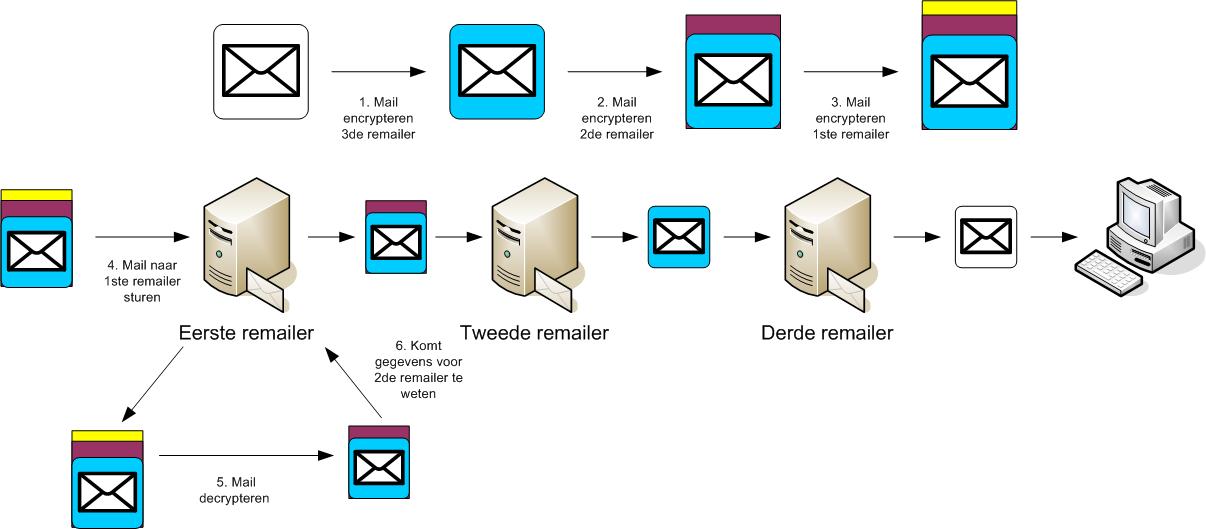
Secure Multi-Party Computation (SMPC): For high-stakes environments, use SMPC protocols to encrypt the model updates while they are in transit. This ensures that even the central server cannot “see” the individual model updates; it only sees the final, aggregated result, providing a higher level of trust.
Conclusion
Federated Learning represents the future of responsible, scalable artificial intelligence. By decoupling the insights derived from data from the data itself, we can build smarter applications that respect individual privacy by design. While the shift from centralized training to decentralized orchestration presents unique challenges—ranging from communication overhead to complex statistical imbalances—the benefits are undeniable.
For organizations, FL is the bridge between the demand for highly personalized user experiences and the tightening global regulations surrounding data privacy. By mastering the federated loop, developers can build models that are not only accurate but also inherently more secure, moving us closer to an era of “Privacy-First Intelligence.”






Leave a Reply