
Contents
1. Introduction: The privacy-utility trade-off in machine learning and the necessity of data protection.
2. Key Concepts: Differentiating between traditional anonymization (masking/k-anonymity) and the mathematical rigor of differential privacy.
3. Step-by-Step Guide: Implementing a data protection pipeline from data audit to model training.
4. Examples and Case Studies: Real-world implementation in healthcare and tech (Google/Apple).
5. Common Mistakes: The fallibility of “anonymized” data and the “linkage attack” danger.
6. Advanced Tips: Understanding the “Privacy Budget” (epsilon) and selecting the right noise mechanisms.
7. Conclusion: Balancing innovation with ethical responsibility.
***
Protecting Individual Identities: A Deep Dive into Anonymization and Differential Privacy
Introduction
We are living in the age of big data, where the efficacy of machine learning models is directly proportional to the quality and quantity of the data they consume. However, this insatiable appetite for data creates a significant tension: how do we extract valuable insights from sensitive datasets without exposing the individual identities of the people contained within them?
Traditional methods of “de-identification”—such as removing names or social security numbers—are no longer sufficient in an era of high-dimensional data and sophisticated computational power. To build trustworthy AI, organizations must move beyond surface-level scrubbing and embrace rigorous mathematical frameworks. This article explores how to bridge the gap between privacy and utility using advanced anonymization and differential privacy techniques.
Key Concepts
To secure a training set, you must distinguish between identifiability and privacy. Anonymization is a broad category, while differential privacy is a specific, provable standard.
Traditional Anonymization (Masking and Generalization)
This approach involves modifying data so that specific identifiers cannot be linked back to a person. Common methods include:
- Suppression: Deleting columns (e.g., zip codes) that could identify an individual.
- Generalization: Reducing precision (e.g., changing an exact age of 28 to a bracket of 25–30).
- Pseudonymization: Replacing names with artificial identifiers or “tokens.”
Differential Privacy (The Mathematical Gold Standard)
Differential privacy (DP) is not a single technique but a definition of privacy. It ensures that the output of an algorithm is virtually the same regardless of whether a specific individual’s data is included in the input set. It achieves this by injecting a calculated amount of “statistical noise” into the dataset or the gradient updates during model training. The goal is to ensure that an observer cannot tell, with high confidence, whether a specific record was present in the database.
The core strength of differential privacy is that it provides a mathematical guarantee of privacy that persists even if an attacker possesses external information about the dataset.
Step-by-Step Guide: Building a Privacy-Preserving Pipeline
- Data Audit and Risk Assessment: Before applying any transformation, classify your data. Identify “quasi-identifiers”—data points that are not unique on their own but become identifiable when combined (e.g., gender + birth date + zip code).
- Define the Privacy Budget (Epsilon): In differential privacy, the “privacy budget” (denoted by the Greek letter epsilon, ε) defines the balance between privacy and utility. A lower epsilon provides stronger privacy but introduces more noise, potentially reducing model accuracy. A higher epsilon allows for higher precision but risks leaking more individual information.
- Choose the Noise Mechanism: Decide where to inject noise. Local differential privacy adds noise to individual data before it reaches the server (common in mobile app analytics). Central differential privacy adds noise to the aggregated results or the model gradients during training.
- Implement Differentially Private SGD (DP-SGD): When training deep learning models, use DP-SGD. This process involves clipping the influence of individual training examples (to prevent one person from drastically shifting the model) and adding noise to the gradients before updating the model weights.
- Validation and Monitoring: Continuously monitor your “Privacy Budget” expenditure. Each time you query or train on the data, you “spend” a portion of your budget. Once exhausted, you must stop training to prevent a total privacy collapse.
Examples and Case Studies
Several global tech leaders have pioneered the use of these techniques in production environments:
- Apple’s QuickType and Emoji Suggestions: Apple utilizes local differential privacy to collect usage statistics from millions of iOS devices. By adding noise to the data on-device before it is sent to Apple’s servers, they can identify trending emojis or predictive text patterns without ever knowing which specific user sent which message.
- Google’s COVID-19 Mobility Reports: During the pandemic, Google used differential privacy to track aggregate human movement patterns. This allowed public health officials to understand if social distancing mandates were effective without the risk of exposing the trajectory of any single individual.
- The U.S. Census Bureau: The 2020 Decennial Census shifted to using differential privacy to protect the anonymity of respondents while still providing granular demographic data to researchers and policy makers.
Common Mistakes
Many organizations fall into the trap of thinking their data is “safe” because it is “anonymized.” Avoid these critical failures:
- The Linkage Attack Trap: Assuming that removing direct identifiers is enough. Research has repeatedly shown that combining “anonymized” datasets with other public data (like voter records or social media) can re-identify individuals with startling accuracy.
- Ignoring Model Inversion: A common oversight is forgetting that models themselves can leak data. If an attacker queries a model repeatedly, they can sometimes infer whether a specific person’s data was used in the training set through “membership inference attacks.”
- Setting Epsilon Too High: Because of the technical complexity, developers often pick a high epsilon value to keep model performance high. This effectively renders the privacy protections useless, providing a false sense of security.
- Post-Processing Mistakes: Performing analysis on the output of a differentially private system without accounting for the added noise can lead to biased conclusions and flawed business decisions.
Advanced Tips
To truly master privacy-preserving machine learning, consider these advanced concepts:
Use Open-Source Toolkits: Do not attempt to write your own noise-injection algorithms from scratch. Use battle-tested libraries such as OpenDP (from Harvard University), Google’s Differential Privacy library, or PySyft for secure multi-party computation and federated learning.
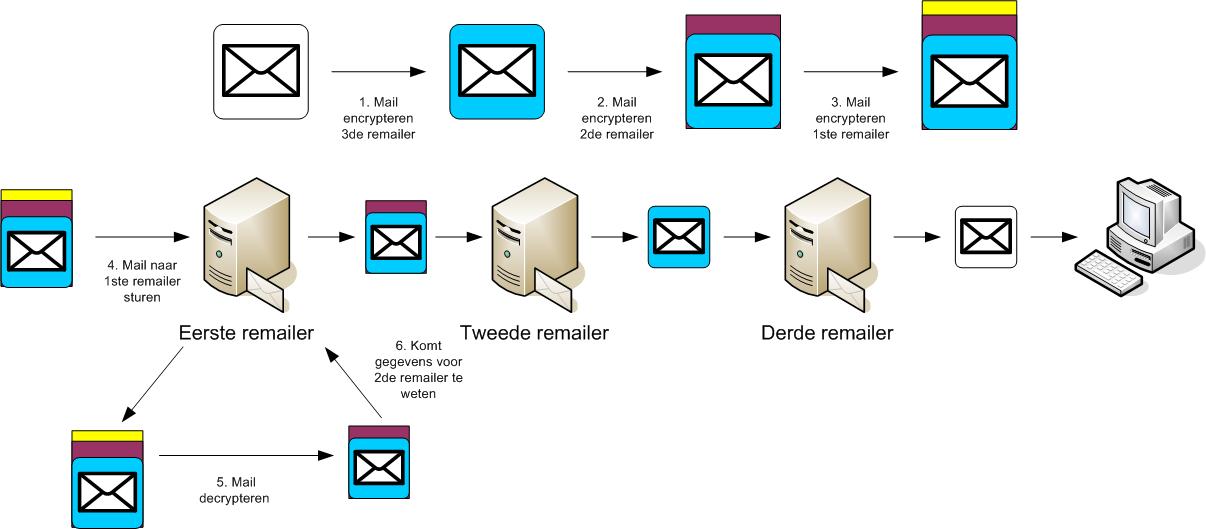
Federated Learning Synergy: Combine differential privacy with federated learning. In this architecture, the model is sent to the user’s device, trained locally, and only the model updates (not the raw data) are sent back to the central server. By applying differential privacy to these updates, you create a layered defense that is extremely difficult to breach.
Understand Composition Theorems: Privacy budgets are additive. If you run multiple analyses on the same dataset, the privacy risk increases. Use formal “composition theorems” to calculate the total budget spent across all queries, ensuring you never accidentally exceed your risk threshold.
Conclusion
Protecting individual identity is no longer an optional compliance box to check—it is a foundational requirement for sustainable AI development. While traditional anonymization techniques provide a baseline, they are increasingly insufficient against modern data-linkage capabilities. Differential privacy offers the mathematical rigor necessary to build robust, future-proof machine learning models.
By carefully balancing your privacy budget, adopting standard libraries, and shifting toward decentralized training paradigms like federated learning, you can extract meaningful, actionable insights while maintaining the absolute trust of your users. Privacy-preserving AI is not a hurdle to innovation; it is the infrastructure upon which the next generation of ethical technology will be built.
Further Reading





Leave a Reply