Privacy-preserving technologies, such as federated learning, enhance security during data model training.
— by
Steven Haynes
Contents
1. Introduction: The paradigm shift from centralized data hoarding to decentralized intelligence.
2. Key Concepts: Defining Federated Learning, Differential Privacy, and Secure Multi-Party Computation.
3. Step-by-Step Guide: How the federated learning process actually works in a production environment.
4. Real-World Applications: Healthcare (medical imaging), Finance (fraud detection), and Edge Computing (predictive text).
5. Common Mistakes: Misunderstanding the “privacy” guarantee and ignoring the communication overhead.
6. Advanced Tips: Balancing model utility with noise injection and architectural considerations.
7. Conclusion: Why privacy-preserving AI is the future of enterprise digital transformation.
***
The Future of Intelligence: Leveraging Privacy-Preserving Technologies in AI Training
Introduction
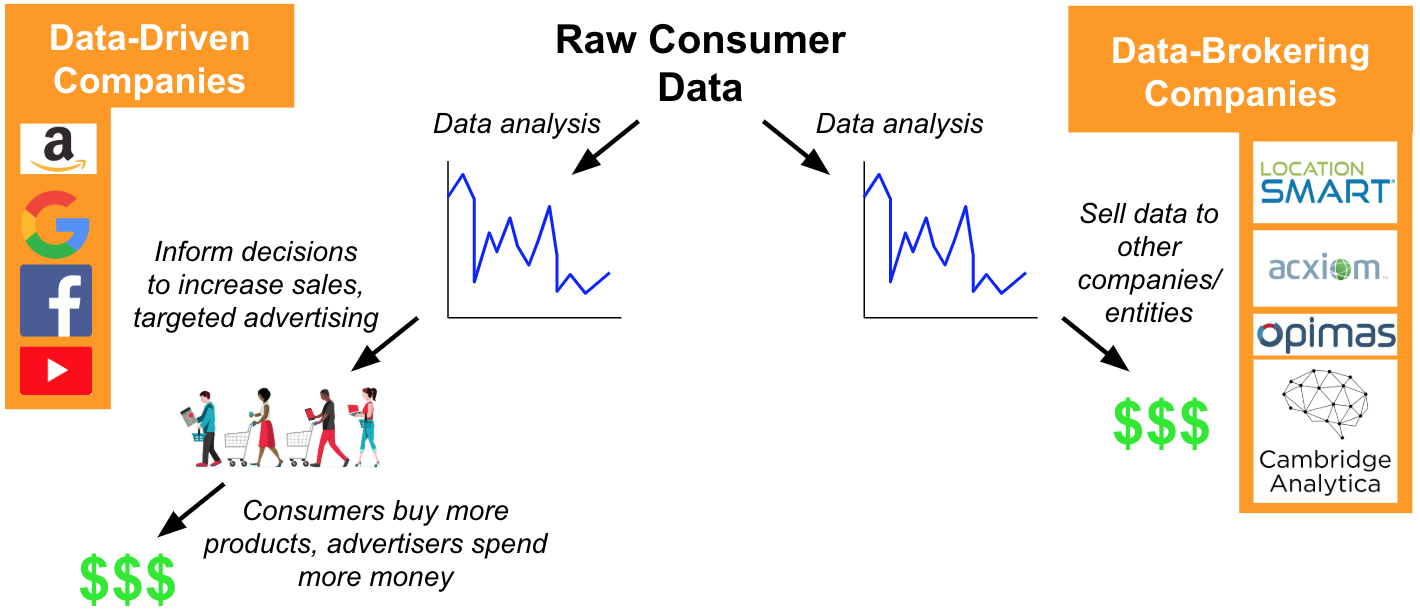
For the past decade, the dominant narrative in machine learning has been simple: “He who has the most data wins.” This philosophy led to the creation of massive, centralized data lakes where information was aggregated, stored, and processed. However, as global regulations like GDPR and CCPA become more stringent, and as consumers demand greater agency over their personal information, the centralized model has become a liability. The risk of data breaches, coupled with the ethical implications of data harvesting, has forced a paradigm shift.
Enter privacy-preserving technologies (PPTs). These technologies allow organizations to extract actionable insights from data without actually moving or exposing the raw data itself. By decentralizing the training process, companies can build sophisticated models that are both highly accurate and inherently secure. This article explores how technologies like federated learning are rewriting the rules of data security.
Key Concepts
To understand the security benefits of modern AI, we must look at three core pillars that shift the focus from data collection to data intelligence.
Federated Learning
Federated learning is a decentralized machine learning approach. Instead of sending user data to a central server, the model is sent to the data. Each local device—be it a smartphone, a medical sensor, or an edge server—trains the model on its own data. Only the model updates (gradients), not the raw data, are transmitted back to the central server to be aggregated. The central model improves, but the sensitive raw data never leaves the user’s device.
Differential Privacy
Federated learning alone does not guarantee total privacy; an attacker might attempt to reverse-engineer raw data from the model updates. Differential privacy addresses this by injecting mathematical “noise” into the data or the updates. This noise ensures that the contribution of any single individual remains statistically indistinguishable from the crowd, effectively masking the presence of specific data points while maintaining the overall accuracy of the model.
Secure Multi-Party Computation (SMPC)
SMPC is a cryptographic method that allows multiple parties to jointly compute a function over their inputs while keeping those inputs private. In the context of AI, it allows a server to aggregate model updates without ever “seeing” the individual updates from different participants, ensuring that even the central aggregator remains blind to the specific device’s output.
Step-by-Step Guide
Implementing a privacy-preserving framework requires a shift in how you architect your machine learning pipeline. Here is the operational flow:
Distribute the Model: The central server initializes a base model and pushes it to participating client devices.
Local Training: Each client trains the model on its local, private data. This happens locally, using only the device’s compute power.
Gradient Computation: Once training is complete, the device calculates the “gradients”—a mathematical representation of the learning progress—rather than sending the actual data.
Anonymization and Masking: The local device applies differential privacy techniques to add noise to the gradients, ensuring they cannot be easily reverse-engineered.
Aggregation: The encrypted or masked updates are sent to the central server. The server uses techniques like Federated Averaging (FedAvg) to merge these updates into a new, improved global model.
Global Update: The updated global model is pushed back out to all clients, starting the cycle anew.
Real-World Applications
Privacy-preserving technologies are no longer theoretical; they are currently protecting sensitive data across high-stakes industries.
Healthcare and Medical Research
Hospitals often cannot share patient data due to HIPAA regulations. Using federated learning, researchers can train models to detect tumors in medical imaging across dozens of hospitals globally. Each hospital keeps the patient records behind their own firewall, contributing only the model updates to the global researcher. This accelerates drug discovery without compromising patient confidentiality.
Financial Fraud Detection
Banks are inherently wary of sharing transaction data due to competitive and regulatory pressures. Federated learning allows multiple financial institutions to collaborate on a fraud detection model. If Bank A identifies a new pattern of phishing, the model learns it and shares that insight (via updates) with Bank B and Bank C, effectively hardening the entire financial system against the fraudster without any bank exposing its customer list.
Edge Computing and Mobile UX
When you use predictive text on your smartphone, that model has been refined through federated learning. Your phone learns your slang, your phrasing, and your unique vocabulary locally. It then sends a small, anonymized update to the central server so that the “global” model becomes slightly better at predicting text for all users, all while your personal messages remain securely stored on your device.
Common Mistakes
Transitioning to a privacy-first AI architecture is challenging. Avoid these common pitfalls:
Ignoring the “Communication Wall”: Federated learning requires constant synchronization between clients and the server. If your bandwidth is limited or your client devices are unstable (e.g., they disconnect often), your model training will stall.
Over-Smoothing the Data: While differential privacy is essential, adding too much noise can render your model useless. Balancing the “privacy budget” (epsilon) is an art; if the noise is too high, the model loses its predictive power.
Underestimating Data Heterogeneity: Different users have different data distributions. A model trained on a device in a rural area may behave very differently than one in an urban setting. Failing to account for this skew can lead to biased models.
Trusting the “Black Box”: Simply implementing federated learning doesn’t mean your system is unhackable. It is vital to still perform security audits on your aggregation protocols to prevent sophisticated side-channel attacks.
Advanced Tips
To maximize the efficacy of your privacy-preserving model, consider these high-level strategies:
Success in federated learning is found in the optimization of the communication loop. Use asynchronous updates to prevent slow devices from holding up the entire network’s learning progress.
Furthermore, ensure you are utilizing Homomorphic Encryption if your threat model requires the central server to be completely untrusted. This allows the server to perform mathematical operations on encrypted model updates without ever decrypting them. While this is computationally expensive, it is the gold standard for high-security environments.
Lastly, always prioritize “Data Minimization.” Ask yourself if the model needs all the features it is currently requesting. The best way to preserve privacy is to avoid training on unnecessary, sensitive features in the first place.
Conclusion
Privacy-preserving technologies are fundamentally changing the narrative of AI development. We are moving away from an era of “data silos and leaks” toward an era of “decentralized intelligence.” By adopting federated learning, differential privacy, and secure multi-party computation, organizations can unlock the power of their data without violating the trust of their users.
The transition is not just a technological requirement; it is a competitive advantage. Companies that learn to train models on data that remains private will be the ones that earn the highest level of consumer trust, navigate regulatory hurdles with ease, and ultimately build more robust, intelligent systems. Start small, focus on your data architecture, and embrace the decentralized future.
The Trust Paradox: Why Decentralized AI Requires a New Corporate Philosophy – TheBossMind
[…] a landscape where security was merely a perimeter defense. However, as organizations begin adopting privacy-preserving technologies like federated learning, we are witnessing more than just a technical pivot; we are seeing the birth of a new corporate […]






Leave a Reply