Privacy-preserving techniques, such as differential privacy, protect sensitive data during training.
— by
Steven Haynes
Outline
Introduction: The tension between data utility and individual privacy in the age of Big Data.
Key Concepts: Defining Differential Privacy (DP), noise injection, and the privacy budget (epsilon).
Step-by-Step Guide: Implementing DP in a machine learning workflow.
Real-World Applications: How tech giants and research institutions utilize these techniques.
Common Mistakes: Over-fitting to noisy data and mismanaging the privacy budget.
Advanced Tips: Balancing accuracy vs. privacy through hyperparameter tuning.
Conclusion: Why privacy-preserving AI is a competitive advantage, not a hurdle.
The Invisible Shield: Protecting Data Privacy in Machine Learning
Introduction
We are living in an era where data is the lifeblood of innovation. From personalized medicine to hyper-targeted advertising, machine learning models thrive on the richness of human-generated data. However, this reliance creates a profound paradox: the more accurate a model becomes, the more susceptible it is to memorizing the sensitive details of the individuals who provided the input.
For data scientists and business leaders, the challenge is no longer just about building high-performing algorithms—it is about building trustworthy ones. Privacy-preserving techniques, specifically differential privacy, offer a mathematical framework to train models that extract patterns without compromising individual identities. In this article, we explore how to implement these robust defenses without sacrificing the utility of your data.
Key Concepts
At its core, Differential Privacy (DP) is a rigorous mathematical definition of privacy. It ensures that the output of an algorithm remains essentially the same whether or not any single individual’s data is included in the input dataset.
The primary mechanism for achieving this is noise injection. By adding carefully calibrated statistical noise to the data or the gradient updates during training, we mask the contribution of any single data point. Think of it as blurring the details of a group photo; you can clearly see the crowd’s behavior, but you cannot identify the specific expression on one person’s face.
Crucial to this process is the privacy budget, often denoted by the Greek letter epsilon (ε). This parameter controls the trade-off between privacy and accuracy:
Lower Epsilon: Stronger privacy, but higher noise levels, which can lead to lower model accuracy.
Higher Epsilon: Weaker privacy, but higher fidelity data, resulting in more precise model performance.
Finding the “sweet spot” for epsilon is the defining task of the modern privacy-conscious data engineer.
Step-by-Step Guide to Implementing Differential Privacy
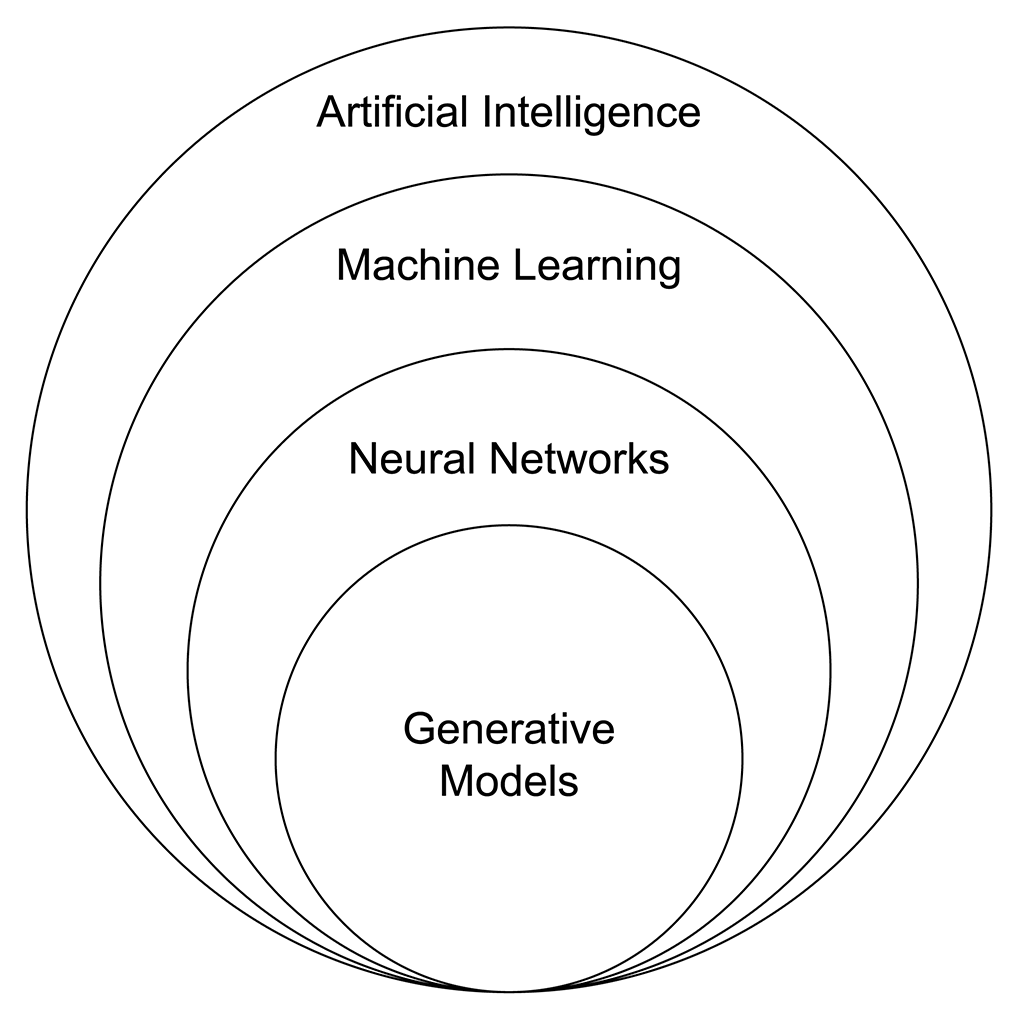
Integrating differential privacy into a machine learning pipeline, such as a neural network, involves modifying the standard training loop. Follow these steps to get started with frameworks like TensorFlow Privacy or Opacus (PyTorch).
Select a Privacy-Preserving Optimizer: Replace your standard SGD or Adam optimizer with a DP-compatible variant. These optimizers are designed to perform gradient clipping and noise addition automatically.
Implement Gradient Clipping: Before updating model weights, “clip” the gradients of each individual sample. This ensures that no single record can exert an outsized influence on the model’s weight changes.
Add Calibrated Noise: After clipping, the optimizer adds Gaussian or Laplacian noise to the average gradient. The variance of this noise is directly tied to your epsilon budget.
Track the Privacy Budget: Use a privacy accountant to monitor your cumulative epsilon consumption. Every time you train on the data or query the model, you “spend” a portion of your budget. Once the budget is exhausted, you must stop training to prevent potential privacy leakage.
Evaluate Model Utility: Compare the performance of the DP-trained model against a non-private baseline. If the accuracy drop is too high, revisit your clipping threshold and batch sizes.
Examples and Real-World Applications
Differential privacy is not merely a theoretical exercise; it is being deployed at massive scales to solve sensitive data problems.
The primary value of privacy-preserving techniques is the ability to unlock datasets that were previously considered “off-limits” due to regulatory or ethical concerns.
Healthcare Research: Hospitals often hold vast quantities of Electronic Health Records (EHRs) but are restricted by HIPAA and GDPR from sharing them for collaborative research. By using differential privacy, institutions can release synthetic, privacy-safe versions of their datasets or train shared models that identify disease trends without ever exposing a single patient’s identity.
Big Tech Product Analytics: Companies like Apple and Google use differential privacy to collect user telemetry—such as identifying popular emojis, trending search queries, or battery usage patterns. By injecting noise at the device level before the data even reaches their servers, they gain global insights while ensuring they never actually know which specific user performed which action.
Common Mistakes
Even with the best tools, implementation pitfalls can undermine your efforts. Watch out for these common errors:
Ignoring the Privacy Budget: Treating epsilon as a one-time toggle rather than a finite resource. If you query a DP model repeatedly, you effectively “burn” your privacy budget, rendering the privacy protections null.
Poor Gradient Clipping Thresholds: Setting the clipping norm too low results in massive amounts of noise that destroy model signal. Setting it too high allows individual samples to leak private information through the gradients.
Underestimating the Impact of Data Skew: Differential privacy behaves differently on long-tail data. If your dataset has very rare, unique, or outlier records, those specific samples are more likely to be affected by the noise, which can bias the model against minority groups.
Failure to Secure the Final Model: It is not enough to train with DP if the final, trained model is then used to generate “membership inference attacks.” Always treat the final model as a potential source of data leakage.
Advanced Tips
To master differential privacy, you must move beyond the basic implementation and focus on fine-tuning the trade-offs.
Leveraging Pre-training: One of the most effective ways to preserve utility is to use Transfer Learning. Pre-train a large model on public, non-sensitive data, and then fine-tune it on your sensitive, private data using differential privacy. Because the model already understands general features, it requires less training (and less epsilon) to converge on your specific task.
Hyperparameter Sensitivity: DP models are notoriously sensitive to batch sizes and learning rates. Larger batch sizes generally work better with differential privacy because they allow you to average the noise across more samples, effectively “washing out” the individual noise components. Experiment with larger batches than you would typically use for non-private training.
Feature Selection: Reduce the dimensionality of your input data before applying DP. Fewer features mean fewer gradients to perturb, which allows you to achieve the same level of privacy protection with less noise injected, preserving model accuracy.
Conclusion
In the modern digital economy, privacy is a competitive advantage. Organizations that can prove they are using rigorous, mathematically-backed methods to protect user data are the ones that will win the trust of consumers and regulators alike.
Differential privacy is not just a constraint; it is a fundamental pillar of responsible AI. By understanding the interaction between the privacy budget, noise injection, and model utility, you can build systems that provide deep, actionable insights while keeping individual information shielded from view. The goal is no longer to choose between data-driven success and privacy—the goal is to achieve both.



Leave a Reply