

Outline
- Introduction: Bridging the Humanities and Data Science in Occult Studies.
- Key Concepts: Defining Ensemble Learning in a Transdisciplinary context.
- Step-by-Step Guide: The Pipeline from Data Acquisition to Model Synthesis.
- Examples: Case studies on the transmission of Hermetic texts.
- Common Mistakes: Pitfalls in heuristic bias and data contamination.
- Advanced Tips: Incorporating Temporal Graph Networks and Semantic Vector Spaces.
- Conclusion: The future of digital esotericism.
Synthesizing History and Occultism: An Ensemble Learning Framework
Introduction
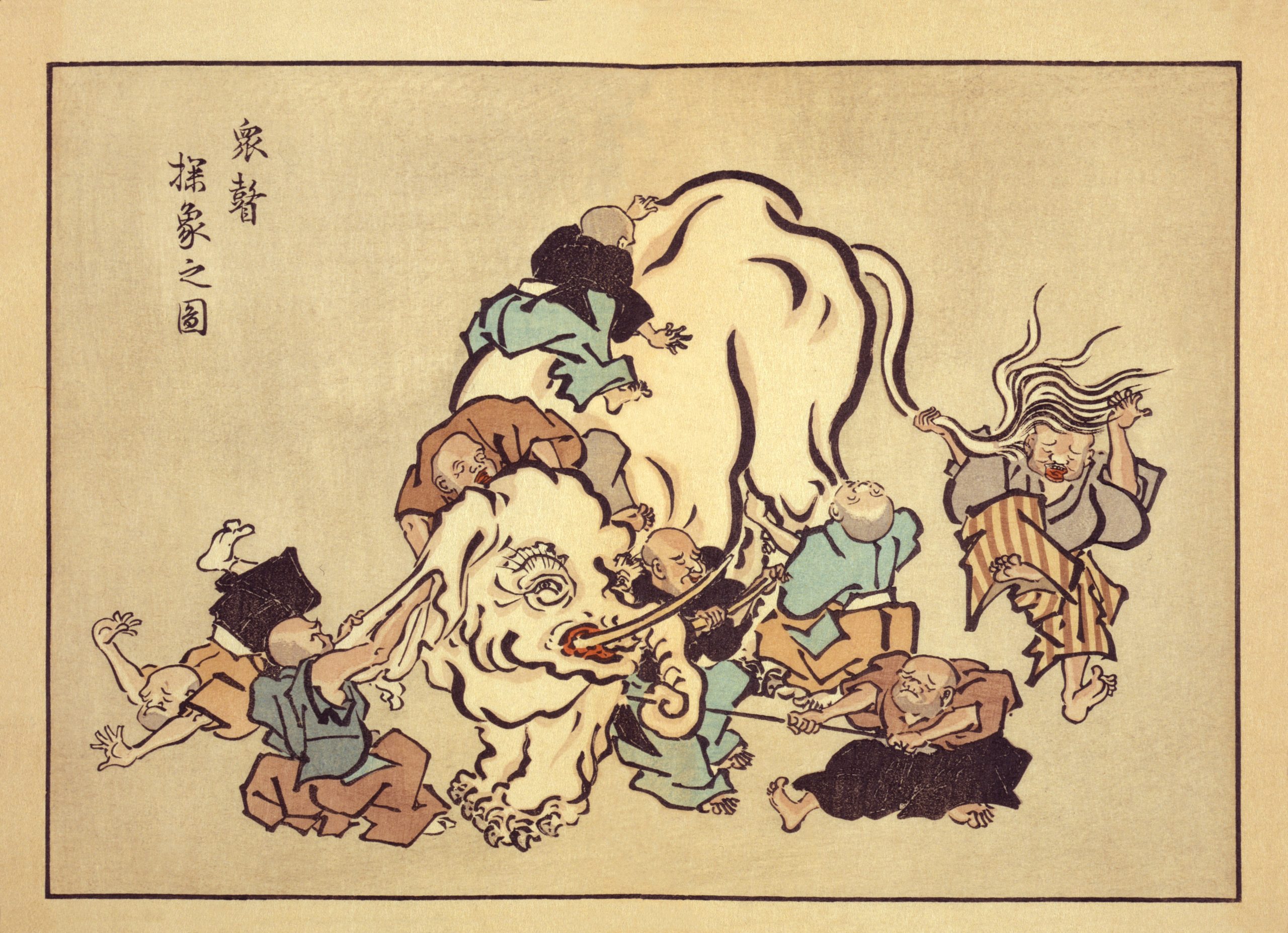
For centuries, the study of occult tradition—from the grimoires of the Renaissance to the oral traditions of antiquity—has been siloed. Historians focus on provenance, linguists analyze syntax and terminology, and archaeologists seek the physical context of ritual artifacts. Individually, these disciplines offer fragments of a mosaic. Collectively, they often contradict one another, leaving researchers with a fragmented understanding of how esoteric knowledge evolved, mutated, and migrated across time.
The solution lies not in choosing a single lens, but in ensemble learning. By treating disparate data streams as independent “weak learners,” we can aggregate them into a single, high-confidence model of evolution. This approach allows us to move beyond anecdotal scholarship and toward a predictive, data-driven architecture that maps the transmission of ideas with unprecedented precision.
Key Concepts: The Ensemble Approach to Esoteric History
In machine learning, an ensemble method combines multiple algorithms to improve predictive performance. In the context of occult history, an ensemble model functions by aggregating three distinct feature sets:
- Historical Metadata: Bibliographic data, transmission chains, and institutional censorship records.
- Linguistic Corpora: N-gram analysis, semantic shifts, and stylometric signatures of ritual texts.
- Archaeological/Spatial Data: Geographic distributions of artifacts, site usage patterns, and ritual geography.
Instead of relying on a human expert to weigh these sources, the ensemble model uses a meta-learner (such as a Random Forest or Gradient Boosting model) to determine which features most accurately predict the evolution of a tradition. If linguistic drift consistently maps to specific geographic dispersal patterns, the model automatically assigns higher weight to those features when predicting the next phase of a tradition’s development.
Step-by-Step Guide: Building Your Evolutionary Model
To synthesize these disparate fields, you must follow a structured pipeline that ensures data compatibility and reduces the influence of subjective bias.
- Data Normalization: Convert non-numeric historical data into quantifiable vectors. For instance, translate the “geographic movement of a text” into coordinate offsets and “textual complexity” into normalized Shannon entropy scores.
- Feature Selection: Identify the variables that define a tradition. Use sentiment analysis for linguistic data, carbon dating or stratigraphic layers for archaeological data, and archival influence scores for historical data.
- Weak Learner Deployment: Run individual models for each dataset. A Random Forest model might look for linguistic drift, while a K-Nearest Neighbors (KNN) model might cluster archaeological findings by ritual utility.
- Aggregation (The Meta-Learner): Use a stack generalization approach. Pass the outputs of your weak learners (the probability distributions of each model) as input features to a final logistic regression or neural network that produces the “synthetic” model of evolution.
- Validation against Known Chronologies: Test your model against “anchor events”—periods in history where the transmission of a text is well-documented—to calibrate the model’s accuracy.
Examples and Case Studies: The Hermetic Transmission
Consider the transmission of the Corpus Hermeticum. Historical analysis provides dates of manuscripts, but linguistic analysis reveals that certain passages were inserted centuries later to align with Neoplatonic thought. Archaeological data from the Nag Hammadi findings adds a third layer: the social environment where these texts were read.
By applying ensemble learning, you could weight the linguistic evolution against the geographical availability of the scrolls. You might find that the text didn’t evolve merely due to philosophical debate, but due to the linguistic constraints of the regions where specific copies were physically discovered. The ensemble model reveals a “transmission friction”—where the evolution of the occult idea is a function of the distance from the original source and the local linguistic norms of the host population.
Common Mistakes
- Data Contamination (Anachronistic Bias): A common error is applying modern conceptual frameworks to ancient texts. If your linguistic model uses contemporary terminology to “tag” ancient concepts, you create a feedback loop that validates your bias rather than revealing the historical reality.
- Ignoring “Negative Data”: Researchers often focus only on surviving texts. However, lack of evidence is also data. Failing to account for missing links in the transmission chain (a form of survival bias) will skew your model toward assuming continuous traditions where they may have been interrupted.
- Overfitting the Model: If your model tracks the evolution of a single occult symbol too closely, it will mistake random noise for a pattern. Always ensure your ensemble model is generalized across different traditions (e.g., Alchemy vs. Astrology) to confirm it is learning universal evolutionary mechanics rather than just memorizing one specific dataset.
Advanced Tips: Beyond Static Models
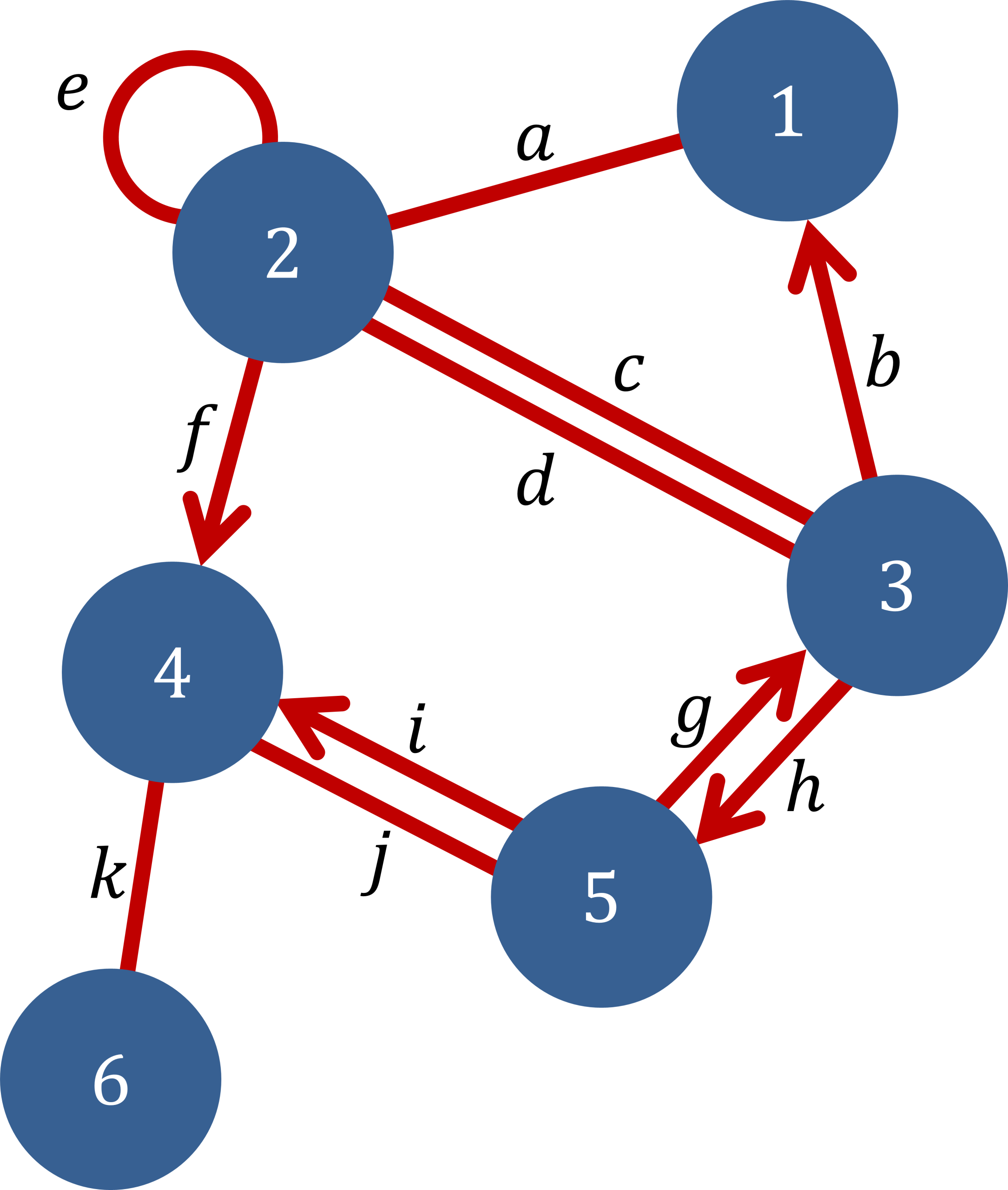
To achieve a truly holistic model, incorporate Temporal Graph Networks (TGNs). Unlike standard static models, TGNs represent the occult tradition as a dynamic graph where nodes (concepts) and edges (transmission paths) evolve over time. This allows you to visualize the “velocity” of an idea.
“The most potent synthesis occurs when you stop treating occult evolution as a linear timeline and start treating it as a dynamic social network where ideas behave like viral agents, mutating in response to the historical pressures of their environment.”
Furthermore, use Semantic Vector Spaces to measure conceptual distance. By embedding ancient concepts into a multi-dimensional vector space, you can calculate the “semantic drift” of an idea like “The Philosopher’s Stone” as it travels from Arabic alchemical texts into European mystical circles. This allows for mathematical rigor in what is often treated as purely intuitive historical analysis.
Conclusion
Utilizing ensemble learning to synthesize historical, linguistic, and archaeological data transforms the study of occult tradition from a speculative pursuit into a rigorous, predictive science. By balancing different modes of data, we account for the limitations of each discipline and create a model that is more robust than any single expert’s opinion.
The goal is not to “solve” the occult, but to quantify the patterns of human belief, myth-making, and intellectual inheritance. As we continue to digitize archives and refine our computational techniques, this holistic approach will become the gold standard for understanding how human culture preserves its most esoteric mysteries across the ages. Start small by integrating two datasets—perhaps linguistic and historical—before scaling into the full ensemble architecture, and you will quickly see the hidden currents of history begin to surface.


Leave a Reply