Use graph neural networks to predict missing connections in the historical lineage of secret society initiatory rites.
— by
Steven Haynes
Mapping the Invisible: Using Graph Neural Networks to Reconstruct Secret Society Lineages
Introduction
History is often written by the victors, but the deeper, more esoteric currents of human history—secret societies, fraternal orders, and initiatory rites—are often written in shadows. For centuries, researchers have struggled to piece together the transmission of specific rituals, symbols, and structural frameworks across centuries and continents. Gaps in the historical record, intentionally obscured by initiatory secrecy, leave us with fragmented data points and untraceable connections.
Today, we can bridge these gaps using Graph Neural Networks (GNNs). By treating historical lineage as a complex network of nodes (societies) and edges (transmission of rites), we can move beyond traditional, linear historical analysis. GNNs allow us to predict “missing links”—the likely points of cultural exchange that were never documented but are mathematically probable. This article explores how to apply deep learning to the study of hermetic traditions, fraternal organizations, and mystery schools.
Key Concepts
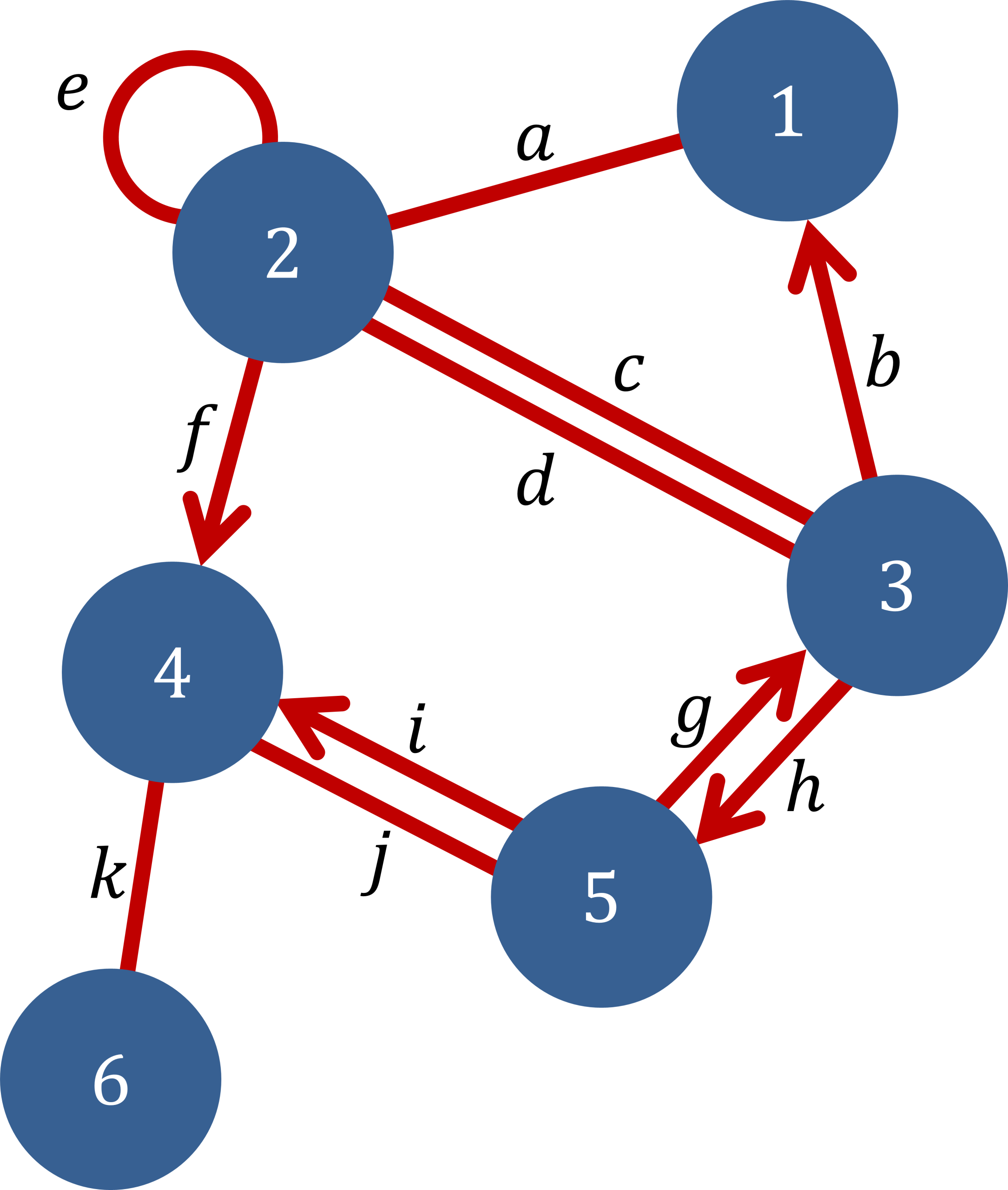
To understand how GNNs function in this context, we must first define the problem as a graph problem. A Graph consists of nodes (entities) and edges (relationships).
Nodes: These represent specific initiatory groups, lodges, or individual grandmasters. Each node is enriched with features—such as the date of founding, geographical location, specific symbolic motifs used, or the structure of their hierarchy.
Edges: These represent the transmission of knowledge. An edge might signify a “Founding Membership,” “Shared Ritual Text,” or “Cross-Initiation.”
Graph Neural Networks (GNNs): Unlike traditional machine learning that processes independent data points, GNNs leverage the structural relationship between nodes. A GNN performs “message passing,” where a node updates its state by aggregating information from its neighbors. If a 17th-century Rosicrucian cell and an 18th-century Masonic lodge share specific, rare architectural metaphors in their rites, the GNN identifies the latent “proximity” between them, even if no written record explicitly links the two.
Step-by-Step Guide
Data Collection and Knowledge Graph Construction: Begin by digitizing primary sources. Extract entities from historical texts, lodge minutes, and rite manuscripts. Use Named Entity Recognition (NER) to identify groups and rituals. Map these into a knowledge graph where edges represent documented historical interactions.
Feature Engineering: Assign attributes to your nodes. Include metadata such as:
Geographic coordinates of lodge activity.
Lexical signatures (common words or phrases in ritual scripts).
Structural complexity (the number of degrees within the order).
Chronological temporal vectors.
Selecting the GNN Architecture: Utilize Graph Convolutional Networks (GCNs) or Graph Attention Networks (GATs). GATs are particularly useful here because they can “weigh” the importance of different historical connections—for example, a shared ritual text is a stronger indicator of lineage than being in the same city.
Link Prediction Training: This is the core task. You will hide a subset of known historical connections (the “ground truth”) and train the model to predict their existence. If the model can accurately recover the known links, it is ready to identify the “missing” ones.
Inference and Analysis: Run the model on the entire dataset. Focus on pairs of nodes that have no known connection but show a high probability score for a linkage. These are your “candidate lineages” for further human-expert historical investigation.
Examples or Case Studies
Consider the spread of 18th-century “High Degree” Masonry in Central Europe. Historical archives are often incomplete due to wars, purges, or the destruction of sensitive documents. By inputting the membership lists of known lodges and the specific vocabulary of their “higher” rites into a GNN, researchers can model the flow of knowledge.
In one hypothetical scenario, a GNN might identify an unexpected, high-probability link between a specific, short-lived lodge in Lyon and a later, influential school of theurgy in St. Petersburg. Even without a paper trail, the mathematical similarity in their ritual structure—specifically the cadence and symbolic content of their initiation—suggests a transmission vector, perhaps via a single traveling agent who remained anonymous in public records.
This allows historians to narrow down their search. Instead of sifting through thousands of pages of uncatalogued archives, the researcher can focus on the specific timeframe and geographic corridors suggested by the GNN’s predictions, significantly increasing the efficiency of archival discovery.
Common Mistakes
Ignoring Data Noise: Historical records are notoriously inaccurate. Using unreliable sources as “ground truth” will skew the GNN’s predictions. Always sanitize your data by weighting sources by their historical reliability.
Overfitting the Graph: If your model is too complex relative to your dataset size, it will “memorize” the historical connections rather than learning the patterns of transmission. Use techniques like dropout or graph regularization to ensure the model generalizes well.
Treating Geography as Euclidean: In the 18th century, travel was constrained by topography and politics. Using straight-line distance between nodes ignores the “cost” of transmission. Incorporate “network distance” (routes of trade and postal movement) into your model’s features.
Advanced Tips
To move beyond simple link prediction, implement Temporal Graph Networks (TGNs). Historical lineages are dynamic; they evolve over time. TGNs account for the “event stream”—the fact that a lodge’s influence in 1750 is different from its influence in 1780. By treating time as an edge attribute, you can visualize the movement of an initiatory rite like a spreading wave across the map.
Additionally, apply Anomaly Detection. In the context of secret societies, a broken or anomalous connection can be just as informative as a standard one. If the GNN expects a link between two groups based on their symbolic profile, but it does not exist in the historical record, it may point toward an intentional “historical erasure”—a conscious effort by the society to mask its origins or influence.
Conclusion
Predicting the missing connections in the history of initiatory rites is no longer the sole domain of intuition and decades of archival study. By leveraging Graph Neural Networks, we provide a mathematical scaffolding to historical research. This approach does not replace the human historian; rather, it amplifies their capabilities, allowing them to see patterns hidden within the complexity of human interaction.
As we continue to digitize the world’s archives, the ability to synthesize fragmented data into a cohesive narrative will become the new frontier of historical inquiry. Whether tracking the evolution of ritual architecture or the cross-pollination of esoteric philosophies, GNNs provide the bridge between the known record and the silent history waiting to be uncovered.




Leave a Reply