
The Architecture of Infinity: How Fractal Geometry Reveals the Structure of Reality
Introduction
If you look closely at a fern leaf, you will notice that each small frond is a miniature replica of the entire branch. Scan a satellite map of a river delta, and the branching patterns mimic the neural pathways in your own brain. This is not a coincidence; it is a fundamental property of the universe known as fractals.
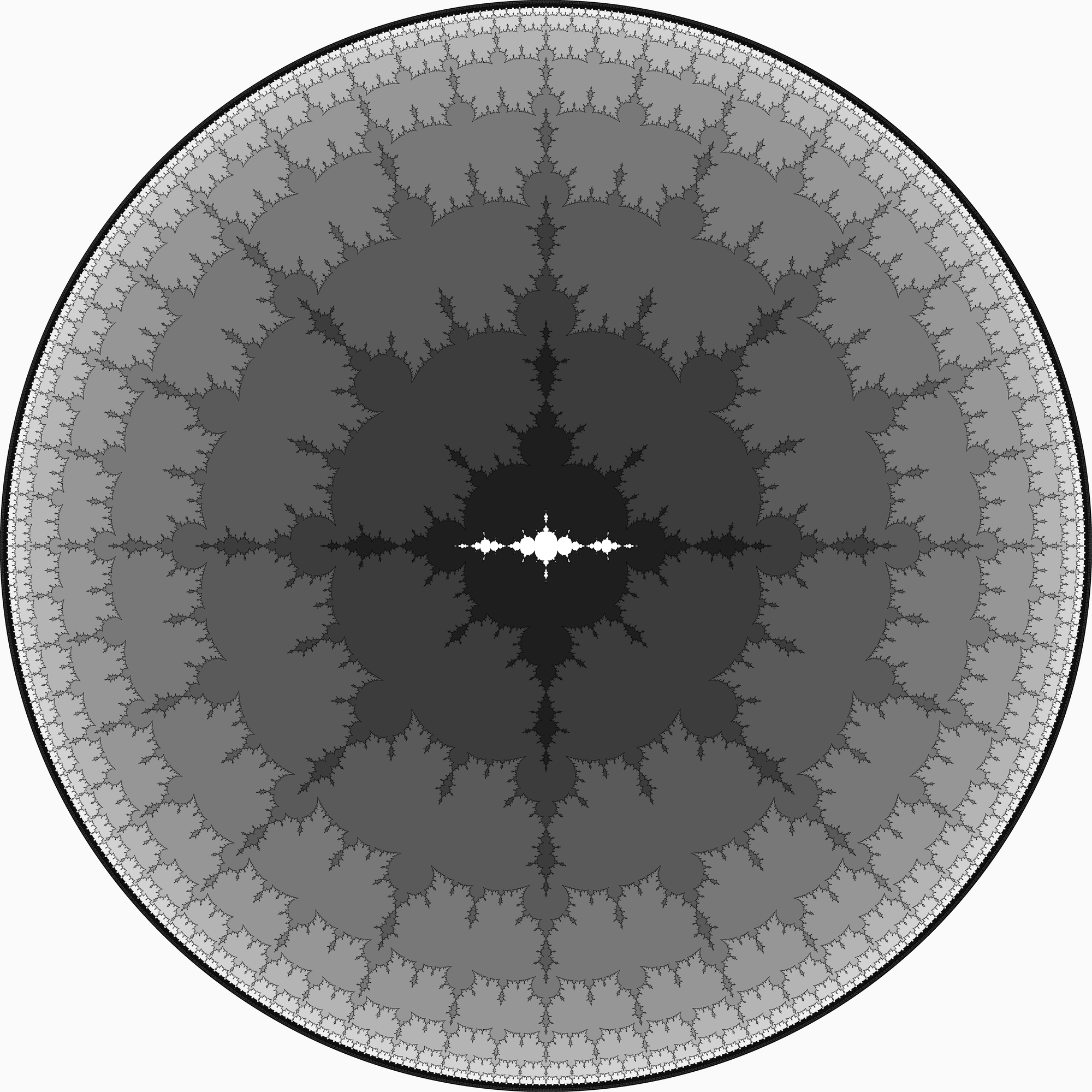
Fractals are geometric shapes that exhibit self-similarity across different scales. They defy the traditional Euclidean geometry of smooth lines and perfect circles, offering instead a language for the rough, complex, and irregular patterns that define our physical world. Understanding fractals is more than an exercise in mathematics; it is a gateway to understanding the efficiency, resilience, and underlying order of reality itself.
Key Concepts
At its core, a fractal is a pattern that repeats itself at every level of magnification. Whether you zoom in or zoom out, the fundamental structure remains constant. This is known as “self-similarity.”
In nature, however, this repetition is rarely infinite or perfect due to physical constraints. This leads us to the concept of the fractal dimension. While a line has one dimension and a square has two, a fractal occupies a fractional dimension—somewhere in between. This allows objects like human lungs or the surface of a mountain to pack an immense amount of surface area into a limited space.
Why does nature favor these shapes? Efficiency. Fractals are the optimal way to distribute energy, nutrients, or information throughout a system. A branching fractal system—like a tree’s root network—maximizes exposure to soil resources while minimizing the energy required to grow the structure. By studying these patterns, we can learn to design systems that mirror the efficiency of nature.
Step-by-Step Guide: How to Observe and Apply Fractal Logic
You can begin to integrate the logic of fractal geometry into your observation of the world and your problem-solving processes by following these steps:
- Identify the Unit: Look at a complex system—a business organization, a workflow, or a biological organism. Identify the “base unit.” In a company, this might be a single project team. In a plant, it is the leaf.
- Analyze the Iteration: Observe how that unit replicates. Does the communication structure of the small team mirror the communication structure of the entire corporation? If it does, you are looking at a fractal system.
- Assess Efficiency: Ask whether the pattern facilitates flow. Does the information move through the layers of the fractal without degradation? If the “smaller” iterations are bottlenecked, the “larger” system will inevitably fail.
- Iterate and Scale: When you need to scale a system, do not reinvent the architecture. Design a robust base unit that functions well, and then replicate that structure. Nature succeeds because it keeps the base unit simple but allows the scale to increase exponentially.
Examples and Case Studies
The Vascular and Pulmonary Systems: The human body uses fractal branching to ensure that blood and oxygen reach every cell. The bronchial tree in your lungs branches repeatedly until it reaches the alveoli. This fractal design provides the maximum surface area for gas exchange within the finite volume of the chest cavity. If our lungs were simple, flat balloons, we would not have the oxygen capacity to power our complex brains.
Urban Planning: Modern urbanists have started applying fractal geometry to city design. By creating “fractal neighborhoods”—where residential, commercial, and recreational zones are balanced at the micro-level and then repeated at the city-wide macro-level—planners reduce the need for long-distance transit. This mimics the “distributed node” network seen in deep-rooted forest ecosystems, increasing urban resilience.
Stock Market Analysis: Financial analysts often use the “fractal market hypothesis.” They treat price movements as self-similar patterns. A price drop on a five-minute chart often mirrors the structural behavior of a crash on a five-year chart. By recognizing these recurring patterns, analysts can better anticipate market volatility.
Common Mistakes
- Confusing Chaos with Fractals: Just because something is messy does not mean it is a fractal. Fractals are not merely random; they are defined by a specific, repeating mathematical rule. Mistaking noise for a fractal pattern leads to flawed predictive modeling.
- Ignoring Physical Limits: In nature, fractals eventually stop repeating. Trying to force a business or design process to scale infinitely without accounting for external resources (like energy or bandwidth) will result in systemic collapse.
- Over-Complicating the Base Unit: The beauty of a fractal is a simple rule applied over and over. Many leaders try to make their systems complex from the start. A fractal system should start with a simple, high-performing “seed” unit.
Advanced Tips
To truly master the application of fractal logic, shift your focus from static geometry to dynamic processes. Fractal patterns are often the result of “feedback loops.”
The most powerful systems are not static; they are processes that feed back into themselves. If you want to build a high-performance team, create a feedback loop where the success of the individual directly reinforces the success of the collective, and vice versa. This creates a self-reinforcing fractal growth pattern.
Furthermore, look for “multifractals.” These are systems where the scaling rule itself changes slightly at different levels. This is how evolution functions. A tree follows a fractal branching pattern, but the branches are slightly different lengths and thicknesses to adapt to the specific light conditions of their environment. Incorporating this “adaptive scaling” into your professional life means keeping your core mission consistent while allowing your tactical approach to evolve based on the environment.
Conclusion
Fractal geometry reveals that reality is not built from separate, isolated pieces, but from interconnected patterns that echo one another across all scales. From the neurons firing in your brain to the expanding structure of the galaxy, the language of the universe is written in fractals.
By learning to recognize these patterns, you gain a unique advantage. You begin to see the underlying architecture of systems, allowing you to build, manage, and scale your own endeavors with the efficiency and resilience of nature itself. Remember: identify the unit, respect the iteration, and understand the limits. When you align your actions with the geometric laws of nature, you move from fighting against the complexity of reality to flowing with its fundamental design.


Leave a Reply