
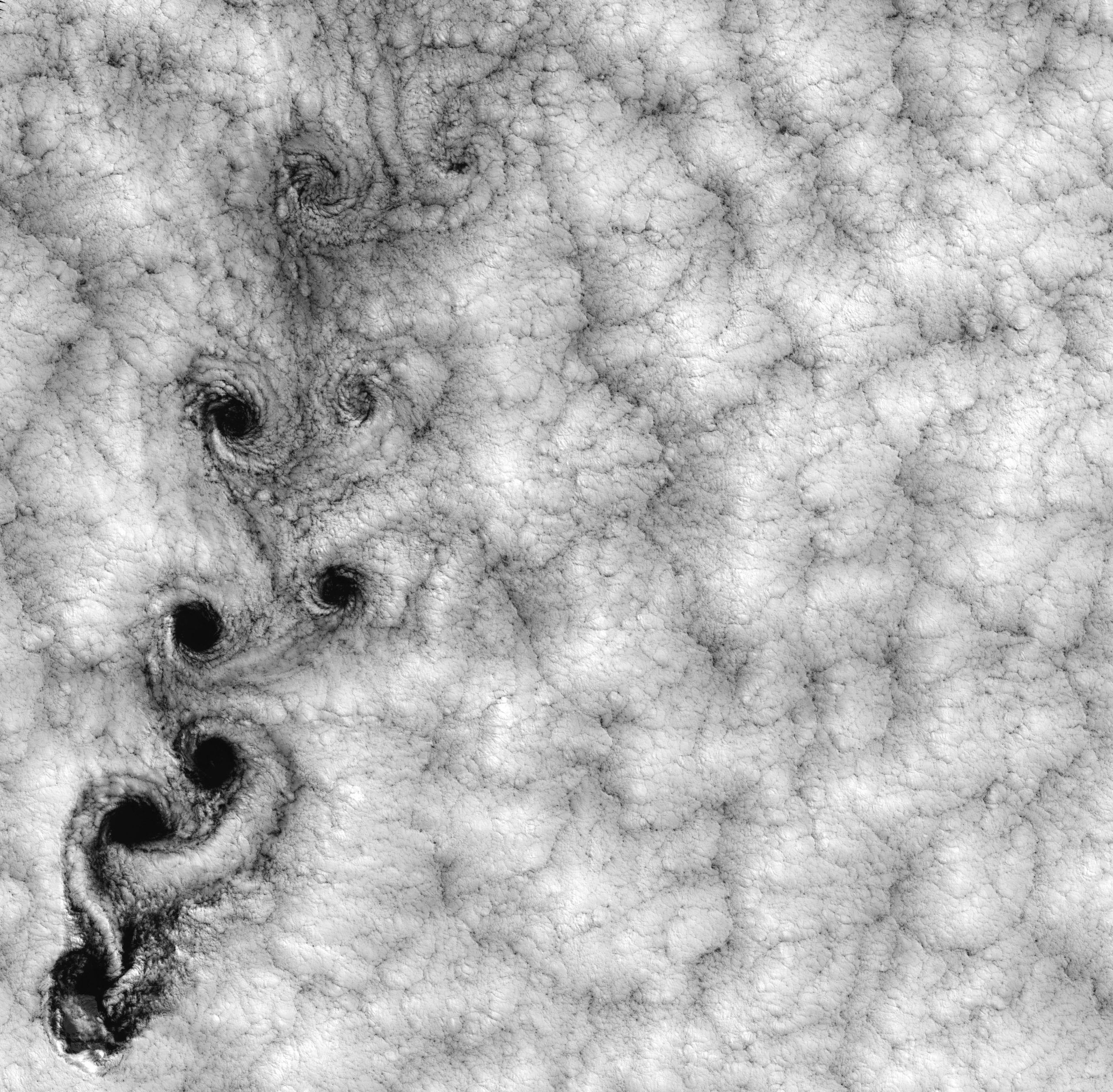
The Fractal Geometry of Reality: Decoding the Patterns of Nature
Introduction
If you look closely at the branching of a lightning bolt, the spiraling needles of a pinecone, or the jagged serrations of a coastline, you are witnessing more than just aesthetic beauty. You are observing the fundamental architecture of the universe. These are fractals—complex, self-similar patterns that repeat at different scales. While Euclidean geometry gives us smooth lines and perfect circles, fractal geometry gives us the language of reality itself.
Understanding fractals is not merely a mathematical exercise; it is a way to perceive the hidden efficiency and connectivity of the natural world. By recognizing these patterns, we can gain insights into everything from organizational design and creative problem-solving to how we perceive stress and time. In this article, we explore the connection between fractal patterns and the fabric of reality, providing you with actionable ways to integrate this perspective into your daily life.
Key Concepts
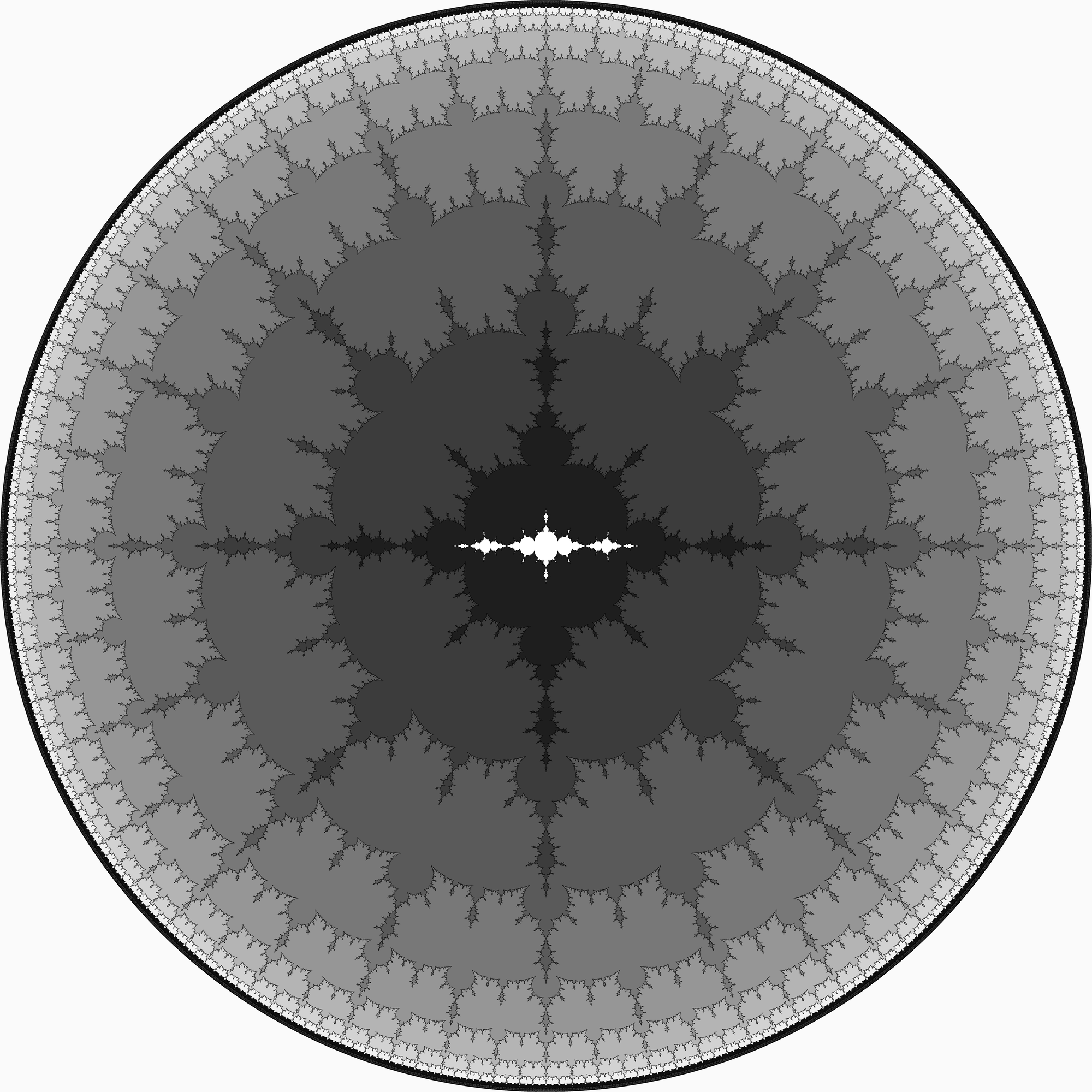
At its core, a fractal is a geometric shape that appears similar regardless of the magnification level. If you zoom in on a fractal, you see the same structural motifs repeating. This phenomenon is known as self-similarity.
The universe uses this efficiency for a specific reason: surface area maximization. Consider the human circulatory system. To deliver oxygen to trillions of cells, the body does not use one massive pipe. Instead, it utilizes a fractal branching network of arteries, veins, and capillaries. This design ensures that every cell in the body is within a microscopic distance of a blood vessel, maximizing efficiency with minimal material expenditure.
Fractals are the fingerprints of complexity. They bridge the gap between simple, iterative rules and the staggering diversity of the natural world.
Beyond biology, fractal theory suggests that the structure of reality is non-linear. In a traditional worldview, cause and effect are seen as a straight line. In a fractal worldview, events are interconnected loops. Small changes at one level—the “butterfly effect”—can cause disproportionate, self-similar ripples at higher levels of the system.
Step-by-Step Guide: Thinking in Fractals
You can apply fractal thinking to your professional life and cognitive processes to improve efficiency and reduce “noise” in your decision-making. Follow these steps to begin viewing the world through a fractal lens.
- Identify the Iterative Core: Every project, company, or personal habit has a core set of rules or values that repeat. Identify the “seed” of your current project. What is the one simple action that, if repeated consistently, builds the whole?
- Assess Self-Similarity: Look at your current workflow. Does your daily habit reflect your long-term goal? If you want to build a legacy, your daily tasks should be a miniature, self-similar version of your long-term objectives. If they aren’t, you are experiencing “geometric drift.”
- Optimize for Surface Area: In resource management, do not focus on scaling by simply adding “more.” Focus on increasing the reach of your connections. Just as tree roots fractalize to find water, look for ways to increase your influence or output by branching your communication and networking touchpoints rather than focusing on a single, heavy output.
- Observe the Scale Invariance: When facing a problem, zoom in and out. Does the issue look the same at the team level, the individual level, and the organizational level? Often, if you can solve the fractal pattern at the smallest scale, it creates a cascade effect that resolves the problem at larger scales.
Examples and Case Studies
Urban Planning and Architecture: Modern architects like Zaha Hadid have utilized fractal geometry to create structures that feel “natural” and intuitive. By incorporating fractal dimensions—the measure of how “rough” or complex a shape is—buildings can induce a sense of calm in humans. Research shows that exposure to fractal patterns with a dimension of 1.3 to 1.5 reduces stress levels in observers, a principle now used in “biophilic design” for offices and hospitals.
Algorithmic Trading and Economics: Financial markets have long been thought of as “random walks.” However, pioneers like Benoit Mandelbrot identified that market price movements follow fractal patterns. By analyzing the “roughness” of price charts over minutes, days, and months, analysts can better understand systemic risk. The realization that small market movements are statistically self-similar to large crashes changed how hedge funds manage volatility.
Productive Habits: Successful CEOs often utilize the “fractal day.” This involves ensuring that the habits practiced in the first hour of the day are a smaller version of the strategies executed throughout the year. By ensuring the “micro” reflects the “macro,” they maintain alignment and reduce the cognitive load of shifting between conflicting modes of work.
Common Mistakes
- Confusing Fractals with Chaos: A common misconception is that fractals are synonymous with randomness. In reality, fractals are highly ordered, even if they appear chaotic. Mistaking complex order for random noise leads to poor decision-making and a lack of pattern recognition.
- Ignoring Scale Limits: While nature is fractal, it is not infinite. A lung cannot branch forever; it reaches a physical limit of cell size. When applying fractal thinking to business or life, ensure you recognize the physical and logical boundaries where the pattern must change or stop.
- Over-Complicating Systems: Do not add complexity for the sake of beauty. The most powerful fractal systems in nature are defined by extreme simplicity at the iteration level. If your process requires a massive manual, it is likely not a true fractal system.
Advanced Tips
To deepen your mastery of fractal awareness, look toward the concept of Fractal Dimension. In traditional geometry, a line is 1D and a plane is 2D. A fractal can have a dimension between these integers. A coastline, for example, is more than a line but less than a surface—it occupies a fractal dimension.
In your own life, ask yourself: What is the fractal dimension of my current task? If a task is too “smooth” (simple, repetitive, low-value), it may lead to stagnation. If it is too “rough” (chaotic, undefined, overwhelming), it leads to burnout. The sweet spot of peak performance often exists at a specific fractal dimension where complexity is high enough to be interesting but structured enough to be actionable.
Furthermore, study L-Systems (Lindenmayer Systems). These are mathematical grammars used to model the growth processes of plants. By understanding the recursive string-rewriting rules that build a fern, you can effectively write the “code” for your own habits. Instead of setting a rigid goal, write a recursive rule for your behavior that allows for growth and self-correction as you scale.
Conclusion
The connection between fractal patterns in nature and the structure of reality reveals that we live in a universe built on recursive logic and efficiency. We are not separate from these patterns; we are an extension of them. By recognizing that our actions, thoughts, and organizations operate on the same geometric principles as a river delta or a snowflake, we gain a profound tool for navigating complexity.
Start by observing the patterns in your immediate environment. Notice how simple rules lead to complex outcomes. Apply the principle of self-similarity to ensure your daily efforts mirror your highest goals. When you align your personal growth with the fundamental geometry of the universe, you stop fighting against the current of reality and start flowing with the very patterns that define existence.

Leave a Reply