
The Geometry of Mystery: Using Fractal Modeling to Map Esoteric Hierarchies
Introduction
For centuries, seekers, mystics, and philosophers have attempted to map the structure of reality. From the Hermetic principle of “As above, so below” to the Kabbalistic Tree of Life, the human pursuit of esoteric knowledge is fundamentally a pursuit of pattern recognition. However, traditional linear models often fail to capture the complexity of these systems. They attempt to flatten multi-dimensional truths into two-dimensional checklists.
Fractal geometry offers a radical departure from this rigidity. By understanding reality through self-similar, recursive structures, we can finally bridge the gap between abstract occult theory and structured, actionable reality. This article explores how fractal geometry serves as the ultimate structural model for understanding hierarchical esoteric systems, providing you with a lens to view your personal and spiritual development with mathematical precision.
Key Concepts
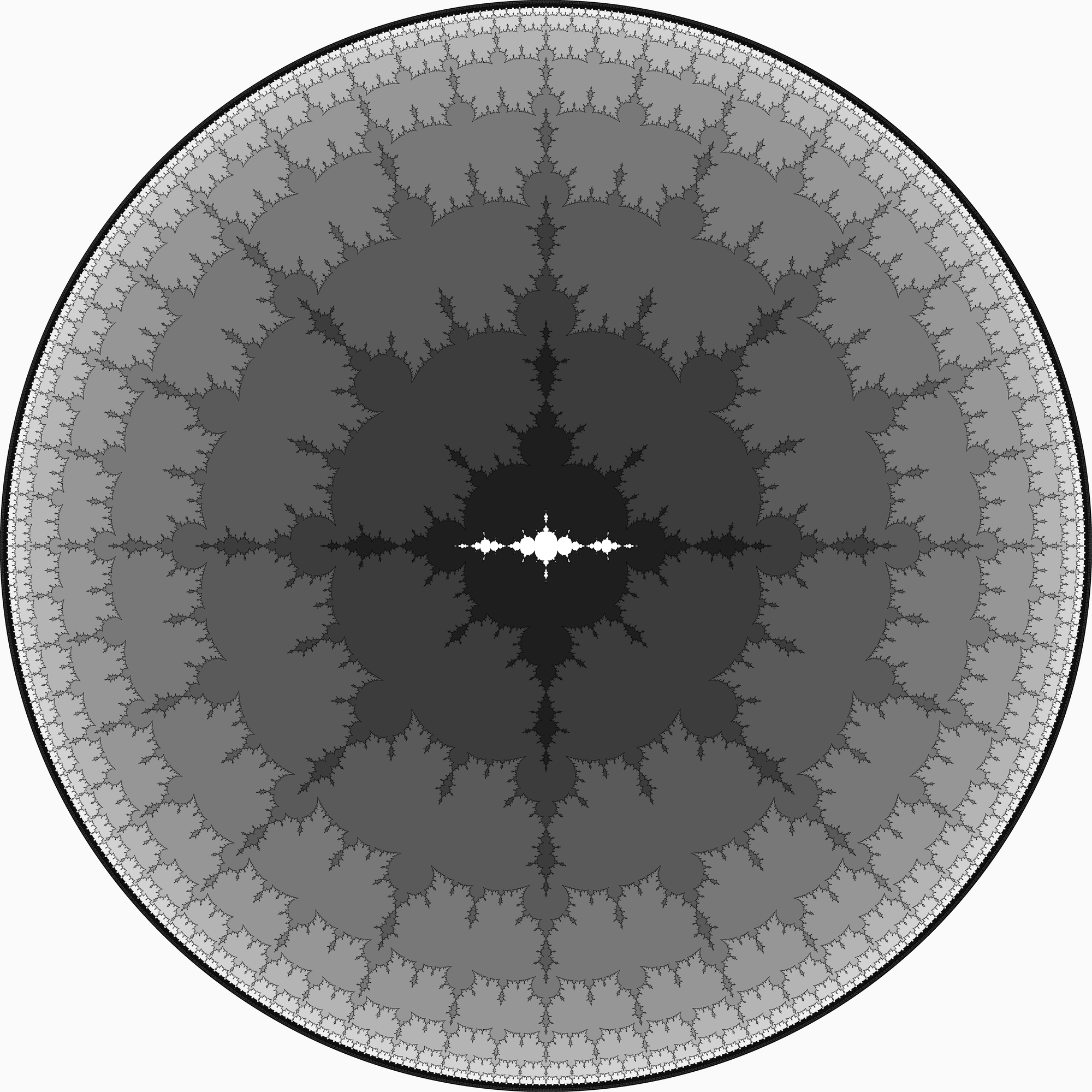
At its core, a fractal is a geometric shape that appears similar at all scales. If you zoom into the edge of a Mandelbrot set, you find a version of the whole repeated within the part. In esoteric terms, this is the definition of a holographic universe.
Self-Similarity: This is the pillar of fractal logic. It posits that the fundamental structure of the macrocosm (the universe) is mirrored in the microcosm (the individual). When you understand the dynamics of your own psyche, you are observing the dynamics of the collective unconscious.
Iteration: Esoteric growth is rarely a straight line. It is a process of iteration—repeating a specific set of experiences or spiritual exercises. Each iteration adds a layer of complexity to the soul’s development, building upon the last while maintaining the core identity of the individual.
Recursive Hierarchy: Unlike a pyramid, where the top is disconnected from the base, a fractal hierarchy is nested. Every level contains the seeds of the level above it. This allows for a deeper understanding of “levels of consciousness,” where each stage of spiritual attainment is not a “new” place, but a more detailed manifestation of the same underlying truth.
Step-by-Step Guide: Mapping Your Personal Fractal
Applying fractal geometry to your personal growth requires a move away from “to-do list” spirituality. Use this process to audit your own hierarchical development.
- Identify the Iterative Core: Determine the fundamental principle or “seed” of your current practice. If you are focused on meditation, identify the most basic, recurring theme (e.g., breath awareness). This is your initial iteration.
- Expand the Scale (Recursive Expansion): Take that core principle and apply it to a broader context. How does breath awareness manifest in your professional life? How does it look during a conflict? If the core is sound, the pattern should be recognizable in all aspects of your life.
- Identify Discontinuities: In mathematics, a fractal breaks down if the equation is inconsistent. If you find your “spiritual” behavior drastically contradicts your “professional” behavior, you have a structural break in your fractal. Identify these gaps as areas requiring integration.
- Layering the Hierarchy: Once the pattern is consistent, add a layer of complexity. If “breath awareness” is the base, the next iteration might be “conscious response to emotional triggers.” Each new layer must remain structurally faithful to the base.
Examples and Case Studies
The Tree of Life as a Fractal Engine
In the Western Mystery Tradition, the Tree of Life is often viewed as a static map of 10 Sephiroth. However, when viewed through a fractal lens, the Tree becomes a recursive tool. Each Sephirah contains its own, smaller Tree of Life. This explains why an initiate can spend a lifetime studying one path; they are not just looking at a station on a map, but a self-contained fractal universe nested within the greater whole.
The Hero’s Journey as a Fractal Loop
Joseph Campbell’s monomyth is often taught as a linear progression from Departure to Return. Viewed as a fractal, the Hero’s Journey is a loop that repeats at different scales. We “leave home” (comfort zone) and “return” (integration) daily, weekly, and yearly. The big, life-defining transformations are simply larger, more complex iterations of the small, daily choices we make to confront our shadows.
Common Mistakes
- Over-Complication: The beauty of a fractal is its simplicity at the origin. Many seekers attempt to add “fancy” layers before mastering the foundational iteration. If your system requires a degree in theology to understand, you have likely lost the fractal connection.
- The Trap of Linearity: Treating spiritual growth as a ladder to be climbed. This leads to spiritual ego. A fractal model reminds us that the “highest” level is simply a more complex version of the “lowest.” There is no destination, only further iterations of self-discovery.
- Ignoring Negative Feedback: In geometry, if a formula doesn’t resolve, the image blurs. If your life-model results in constant suffering or failure, don’t double down. Adjust the seed (your core belief) and re-run the iteration.
Advanced Tips
To truly master this structural approach, consider the following:
The most powerful fractal growth occurs at the edge of chaos. If your system is too rigid, it becomes a cage. If it is too loose, it lacks structure. Aim for the “golden ratio” of your own life—where your routines are predictable enough to create stability, but open enough to allow for the entropy of life’s unpredictability.
Utilize Digital Mapping: Software tools used for mind-mapping (like Obsidian or Scrivener) allow for recursive links. Create a “Zettelkasten” or knowledge base that links your core values to your daily actions. If you can’t draw a line between your meditation practice and your bank account management, your fractal model is currently incomplete.
Observe the Zoom: Practice “zooming out” when faced with a crisis. Ask: “Is this event a localized disturbance in my life, or is it a systemic pattern?” Often, a crisis is just a smaller-scale iteration of an unresolved issue you have faced in the past. Solve it once at the core, and it disappears at all scales.
Conclusion
Fractal geometry provides more than just a metaphor for esoteric study; it provides an architecture for living. By viewing your existence as a recursive system, you move from being a passenger of circumstance to an architect of pattern.
When you align your actions with the principle of self-similarity, you ensure that every part of your life—from the mundane to the transcendent—supports the integrity of the whole. You no longer need to compartmentalize your spiritual search because, through the fractal lens, everything is part of the same unfolding geometry. Start by identifying your core seed today, and observe how the rest of your life begins to resonate in perfect, mathematical harmony.


Leave a Reply