

Contents
1. Introduction: The danger of “set-it-and-forget-it” AI governance.
2. Key Concepts: Defining the AI Charter as a living document vs. a static policy.
3. Step-by-Step Guide: A 5-phase lifecycle for iterative updates.
4. Case Studies: Adapting to Generative AI vs. predictive analytics.
5. Common Mistakes: Shadow AI, policy-reality gaps, and lack of stakeholder buy-in.
6. Advanced Tips: Version control for policy and automated compliance triggers.
7. Conclusion: Emphasizing agility as a competitive advantage.
***
The Living AI Charter: Why Agility is Your Greatest Governance Asset
Introduction
Most organizations treat their AI charter like a company handbook—a static document drafted by legal and compliance teams, filed away in an internal wiki, and reviewed perhaps once every two years. In the age of rapid machine learning advancements, this approach is not just outdated; it is a liability. The speed at which Large Language Models (LLMs), agentic workflows, and multi-modal generative systems are evolving means that an AI policy written eighteen months ago is likely functionally obsolete today.
An AI charter must evolve from a static set of guardrails into a dynamic, “living” strategic framework. If your governance document doesn’t account for the transition from simple automated classification to complex content generation, it is no longer protecting your organization—it is merely providing a false sense of security. This guide explores how to pivot your governance strategy to keep pace with technological shifts while maintaining operational agility.
Key Concepts: The Charter as a Living Framework
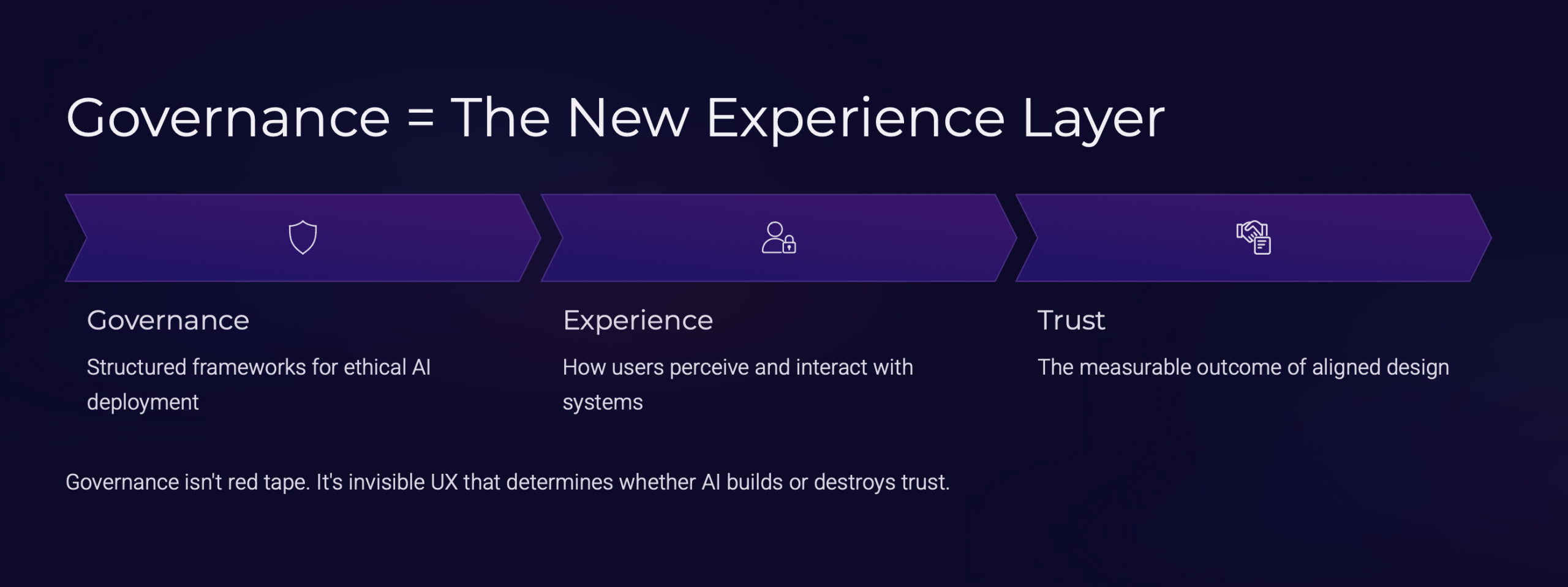
An organizational AI charter is the moral and operational compass for your technical deployment. It defines the “how” and “why” behind your company’s use of algorithmic decision-making. Unlike a standard policy document, which dictates hard rules, an effective AI charter focuses on principles and risk appetites.
Technological drift is the primary driver for updates. This occurs when the capabilities of new tools—such as the transition from private, small-scale models to high-powered, cloud-hosted API models—outpace the assumptions built into your initial governance. A living charter acknowledges that technology is a moving target and incorporates periodic “calibration points” where the charter is stress-tested against the current state of the industry.
Step-by-Step Guide: Building an Iterative AI Charter
- Establish a Quarterly Calibration Cadence: Rather than an annual audit, implement a 90-day review cycle. In the AI sector, 90 days represents a significant shift in capabilities. Use this time to cross-reference current projects with the latest industry benchmarks.
- Map Capabilities to Risk Levels: Create a taxonomy for your AI tools. Update your charter to include specific tiers of risk. For example, a chatbot used for internal IT support carries a lower risk profile than an AI agent authorized to draft external legal communications. As capabilities evolve, an AI tool might jump from “low” to “high” risk; your charter should mandate a re-evaluation process for these shifts.
- Assemble a Cross-Functional Review Board: Your charter should not be the exclusive domain of IT or Legal. Include product managers, data scientists, and even end-users. Their collective experience provides the “ground truth” needed to determine if the current charter is helping or hindering progress.
- Define “Off-Ramp” Triggers: Your charter must outline specific technical behaviors that require an immediate cessation of AI use. For instance, if a tool begins to exhibit “hallucinations” above a certain error rate or if an API provider changes its data privacy policy, your charter should dictate the immediate decommissioning of that tool.
- Documenting the “Why”: Every time you update the charter, log the rationale. This builds a historical record that helps future leadership understand why certain guardrails were implemented, preventing the re-introduction of risks that were previously mitigated.
Examples and Case Studies
Consider a mid-sized marketing firm that adopted an AI policy in 2022. Their original charter focused heavily on data privacy, ensuring no client PII (Personally Identifiable Information) was fed into public models. When Generative AI became mainstream, the firm’s employees began using public chatbots for copy editing. The original charter failed because it didn’t distinguish between “inputting data for analysis” and “using AI as a creative collaborator.”
The firm successfully updated its charter by introducing a “Use-Case Classification Framework.” This framework allowed for public model usage for creative brainstorming (zero PII) while mandating enterprise-grade, private instances for any data-heavy analytical tasks. By updating the charter to reflect the context of use rather than just the technology, they enabled innovation without sacrificing security.
Common Mistakes
- The “Zero-Tolerance” Trap: Implementing an overly restrictive charter that effectively bans all experimentation. This forces employees into “Shadow AI,” where they use unauthorized, unvetted tools in secret, putting the company at greater risk.
- Ignoring Third-Party Dependency Changes: Failing to update the charter when a model provider changes its Terms of Service. If your vendor changes how they store your training data, your charter must be updated to account for that new privacy landscape.
- Lack of User-Centric Feedback: Writing the charter in a vacuum. If developers find the compliance steps too cumbersome, they will bypass them. A charter that isn’t usable by the people actually building the software is destined to fail.
- Treating the Charter as a “Set and Forget” Document: Failing to assign an “owner” to the charter. Without a designated guardian responsible for tracking tech shifts, the document will naturally decay.
Advanced Tips: Scaling Your Governance
To truly professionalize your AI charter, treat it like software code. Use version control (such as a private Git repository) for your policies. This allows you to track changes, see who proposed edits, and maintain a clear audit trail. This is particularly useful for compliance audits, as it demonstrates to regulators that you have been actively managing your risk posture rather than simply holding a static policy document.
Additionally, integrate your charter with automated monitoring tools. If you use a tool that monitors for API security, link that tool’s alerts directly to the charter’s compliance dashboard. When the tool flags an unauthorized data transfer, it should trigger a review of whether the charter needs an update or if a new control is required.
Finally, keep your charter concise. A 50-page document will not be read. Focus on high-impact principles: Transparency, Privacy, Security, and Human-in-the-loop accountability. If a specific technical rule changes, update the “appendix” or “operational guidelines” section, while keeping the core ethical principles stable.
Conclusion
An AI charter is not a legal filing cabinet; it is the heartbeat of your organizational maturity. As AI continues to evolve from a novelty to a fundamental layer of the business stack, your governance must be just as agile as the models you deploy. By treating your charter as a living document, you shift from a culture of fear—where innovation is stifled by rigid policy—to a culture of responsible experimentation.
Start by auditing your current charter against the major technical shifts of the last six months. Does it reflect the realities of your current AI stack? If not, the best time to update it is now. Remember, the goal of a good AI charter is not to prevent progress, but to provide a clear, safe, and efficient path forward in an increasingly automated world.

Leave a Reply