Technical documentation must be maintained throughout the entire lifecycle of an AIsystem to ensure compliance.
— by
Steven Haynes
### Article Outline
1. Introduction: Define the “Living Document” approach to AI systems and why static documentation is a liability.
2. Key Concepts: Understanding AI Lifecycle Management (AILM) and the regulatory landscape (EU AI Act, NIST AI RMF).
3. Step-by-Step Guide: Implementing a continuous documentation workflow from ideation to decommissioning.
4. Examples: Real-world scenarios (Healthcare and Finance compliance).
5. Common Mistakes: The “Documentation Debt” trap and siloed information.
6. Advanced Tips: Automation via CI/CD pipelines and Model Cards.
7. Conclusion: Final thoughts on bridging the gap between ethics and engineering.
***
The Living Blueprint: Why AI Technical Documentation Must Evolve
Introduction
For years, software documentation was viewed as the final “paperwork” phase of a project—a static box to check before shipping. In the age of Artificial Intelligence, this approach is not just outdated; it is a significant business and legal risk. AI systems are not static codebases; they are probabilistic, evolving entities that learn, drift, and interact with complex environments.
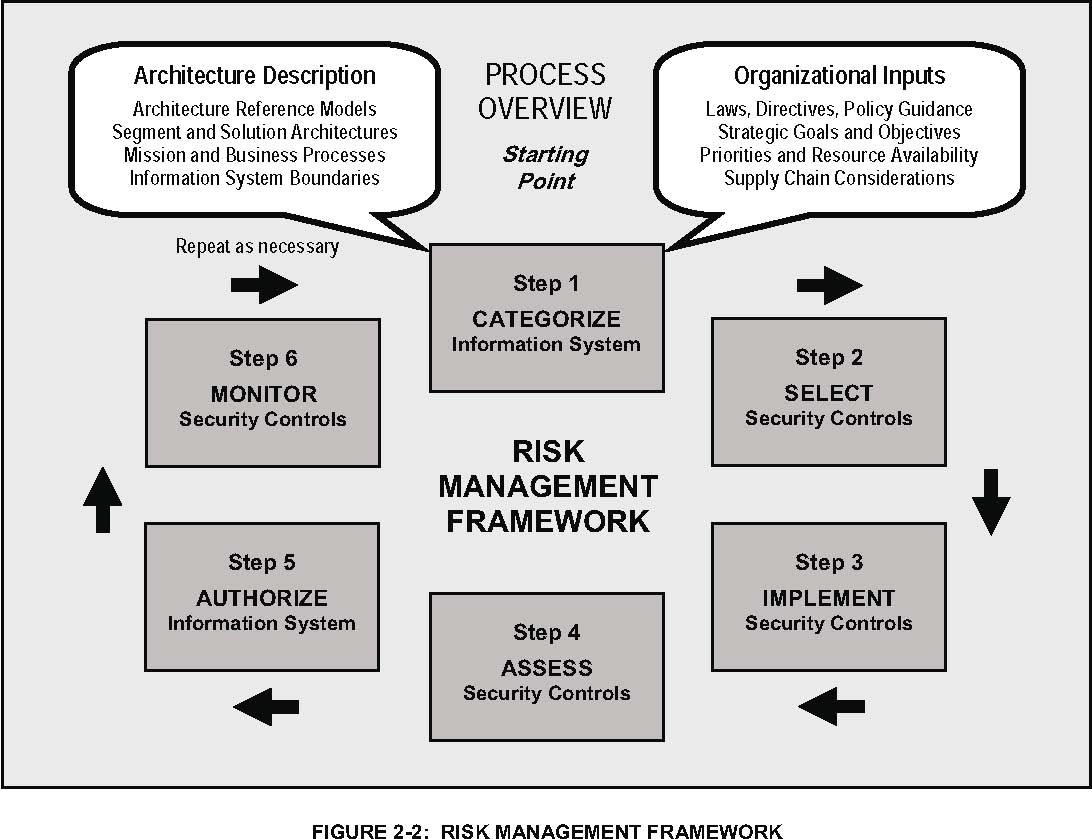
If your documentation is frozen in the versioning state of your initial launch, you are operating in the dark. Maintaining technical documentation throughout the entire lifecycle of an AI system is the bedrock of accountability, safety, and regulatory compliance. Whether you are navigating the requirements of the EU AI Act or adhering to the NIST AI Risk Management Framework, your ability to prove the “how” and “why” behind your model’s decisions is what separates a compliant enterprise from a liability-heavy one.
Key Concepts
To understand why documentation must be continuous, we must distinguish between static documentation (design specs) and lifecycle documentation (evidence trails).
AI Lifecycle Management (AILM) represents the end-to-end process of managing an AI model from conception through training, deployment, monitoring, and eventual retirement. Compliance isn’t about having a “Model Card” on day one; it is about maintaining a historical record of how the model has changed.
Model Drift and Data Drift are the primary technical drivers for ongoing documentation. As an AI model encounters new data, its performance can degrade. Documentation must account for:
Training Data lineage: What specific datasets informed this version?
Performance metrics: How does the current model compare to the baseline?
Human-in-the-loop interventions: What human oversight was applied during specific edge-case failures?
Compliance is not a state you reach; it is a state you maintain through transparency and traceability.
Step-by-Step Guide
Establish a Documentation Taxonomy: Define what constitutes “material changes.” A model parameter tweak might be a minor log entry, while a change in training data source is a major documentation event requiring a sign-off.
Implement Version Control for Data and Code: Use tools that link specific model iterations to specific data snapshots. If your documentation doesn’t reference the exact dataset version used for training, your compliance audit will fail.
Automate Documentation Generation: Don’t rely on manual entry. Use CI/CD pipeline triggers to update documentation automatically when code or models are committed. Integrate tools that extract metadata from experiments directly into your internal wiki or compliance registry.
Maintain a “Decision Log”: Document the rationale behind critical architecture choices. Why was this specific loss function chosen? Why was a threshold set at 0.85 instead of 0.90? This log provides the “intent” that regulators and auditors seek.
Conduct Regular Lifecycle Reviews: Treat documentation reviews like financial audits. Schedule quarterly deep dives where the data science team and compliance officers verify that the documentation matches the actual deployment state.
Retirement Protocols: When a model is decommissioned, document the “why.” Archiving the model and its documentation is essential for potential future forensic investigations.
Examples and Case Studies
Consider a Financial Lending AI. Initially, the model is trained on historical data to predict credit risk. If the economic environment shifts (e.g., a recession), the model begins to deny loans to a specific demographic at a higher rate—a phenomenon known as algorithmic bias. If the bank has maintained a living documentation trail, they can pinpoint the exact moment the drift began, cross-reference it with the training data, and demonstrate to regulators that they identified the issue and applied a mitigation patch. Without this documentation, the bank faces massive fines for non-compliance and reputational damage.
In Healthcare Diagnostics, an AI model assisting with radiology scans may receive a weight update to improve accuracy. If that update is not documented, a clinician might rely on the model without knowing the new confidence intervals. A living documentation system ensures that every time a model is updated, the clinical handbook or the UI-based documentation is synchronized, ensuring the practitioner always understands the model’s current limitations.
Common Mistakes
The “Documentation Debt” Fallacy: Teams often defer documentation, promising to “write it all at the end.” By then, key developers have moved on, and context is lost. Treat documentation as a prerequisite for deployment, just like unit tests.
Siloed Information: Storing technical specs in a Git repo while keeping compliance checklists in a Word document creates a disconnect. Documentation must be centralized and accessible to both engineers and legal counsel.
Ignoring “Human” Logs: Many teams document the machine’s performance but forget to document the human processes surrounding it. Regulatory frameworks prioritize the “human-in-the-loop”—if you don’t document how humans supervised the AI, you haven’t documented the system.
Vague Change Logs: Phrases like “Updated model parameters” are useless. Documentation must be granular: “Updated learning rate from 0.01 to 0.005 to mitigate gradient explosion observed in Q3 stress testing.”
Advanced Tips
Leverage Model Cards: Adopt standardized templates like “Model Cards for Model Reporting.” These provide a structured, industry-accepted format that makes auditing easier for third-party regulators.
Treat Data as Code: Use Data Version Control (DVC) tools. By versioning your data just as you version your code, you create an immutable link between the input and the output. This is the highest standard of evidence for compliance.
Implement Automated Alerts for Compliance: Set up threshold alerts in your monitoring stack. If model performance drops below the documented “safety” threshold, trigger an automated incident report that forces an update to the documentation explaining the corrective action taken.
Internal Audits as Education: Use documentation reviews to cross-train staff. When junior engineers read through the decision logs of senior developers, the documentation serves as a knowledge-transfer tool, not just a compliance chore.
Conclusion
Maintaining technical documentation throughout the AI lifecycle is not about creating red tape; it is about building a map for a machine that is constantly navigating new territory. In an era where AI safety is paramount, documentation serves as your primary defense against unforeseen behavior and regulatory scrutiny.
By automating your documentation processes, maintaining granular version control, and viewing your documentation as a living, breathing artifact, you transform compliance from a burden into a competitive advantage. You are not just building software; you are building an auditable, trustworthy system that can stand the test of time, change, and external inspection.




Leave a Reply