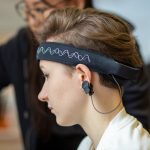
Learn how Physics-Informed Edge Orchestration (PIEO) secures neurotechnology, ensuring mental privacy and data integrity through localized neural signal processing.
1. Introduction: Bridging the gap between edge computing, neurotechnology, and ethical governance.
2. Key Concepts: Defining Physics-Informed Neural Networks (PINNs) in the context of distributed edge orchestration.
3. The Neuroethical Imperative: Why standard data privacy is insufficient for neural signal processing.
4. Step-by-Step Guide: Implementing a Physics-Informed Edge Orchestration (PIEO) framework.
5. Real-World Applications: Clinical monitoring, BCI (Brain-Computer Interface) security, and cognitive privacy.
6. Common Mistakes: Over-reliance on cloud-centric models and ignoring the physical constraints of neural data.
7. Advanced Tips: Leveraging differential privacy and hardware-level constraints.
8. Conclusion: The path toward human-centric, trustworthy neuro-infrastructure.
—
Physics-Informed Edge Orchestration: Ensuring Integrity in Neuroethical Systems
Introduction
As neurotechnology transitions from laboratory environments into everyday consumer electronics—such as wearable EEG headsets and non-invasive Brain-Computer Interfaces (BCIs)—the velocity and sensitivity of neural data have surged. Traditional cloud-based processing models are increasingly untenable, not just due to latency, but due to the profound risks associated with the centralized storage of cognitive data. The solution lies in Physics-Informed Edge Orchestration (PIEO), a framework that integrates the physical laws of neural signal propagation with distributed computing to ensure that neuro-data remains private, localized, and verifiable.
This article explores how we can leverage physics-based constraints to orchestrate edge computing resources, transforming neuroethics from a theoretical framework into a technical reality embedded in the hardware layer.
Key Concepts
Physics-Informed Edge Orchestration (PIEO) is an architectural paradigm where computing tasks—such as signal filtering, artifact removal, and feature extraction—are performed at the network edge (on the device itself) while constrained by the physical properties of the signals being processed. By incorporating differential equations that govern neural activity (e.g., Maxwell’s equations for electromagnetic propagation or volume conduction models) directly into the orchestration logic, the system ensures that the processing is not just efficient, but biologically grounded.
In this context, Neuroethics refers to the governance of cognitive liberty and mental privacy. PIEO acts as a gatekeeper, ensuring that raw neural data never leaves the “edge” (the user’s device) while only transmitting processed, anonymized insights that have been validated against physical reality.
Step-by-Step Guide: Implementing a PIEO Framework
Define the Physical Constraints: Before deploying an edge model, translate the physiological signal characteristics (such as frequency bands of interest in EEG) into a mathematical constraint layer. This ensures that the model cannot “hallucinate” neural patterns that violate biological laws.
Decentralize Inference: Move the computation to the edge node. The orchestration logic should prioritize local hardware acceleration (such as NPUs or FPGAs) to minimize the attack surface of the neural data.
Implement Physics-Informed Validation: Use a secondary “watchdog” process on the device. This process checks if the output of the machine learning model adheres to the predefined physical laws. If an anomaly is detected—suggesting potential data tampering or sensor failure—the system halts transmission.
Orchestrate Privacy-Preserving Handshakes: Configure the edge device to communicate only with verified nodes. Use a consensus protocol that validates the integrity of the physics-informed model rather than the content of the neural data.
Continuous Monitoring and Recalibration: Because neural signals drift due to electrode impedance changes, use the physics constraints to monitor sensor health in real-time without needing to see the raw data.
Real-World Applications
Clinical Neuro-Monitoring: In patients with epilepsy, edge orchestration allows for real-time seizure detection. By using physics-informed models, the device can distinguish between genuine neural activity and environmental noise (like muscle artifacts), ensuring that clinicians receive actionable alerts without the patient’s entire brain scan being uploaded to a vulnerable cloud server.
Secure Brain-Computer Interfaces: For BCI-controlled prosthetics, PIEO ensures that the control signals are generated based on the user’s intent rather than noise. By constraining the orchestration of the BCI software, we prevent “adversarial neuro-attacks,” where malicious code attempts to inject false motor commands into the neural interface.
Cognitive Privacy in Consumer Wearables: Companies developing BCI-enabled headphones can use PIEO to ensure that only “intent-based” data is processed. Any raw neural data that does not conform to the established physical model of motor-cortex intention is discarded at the hardware level, protecting the user’s subconscious thoughts from being digitized.
Common Mistakes
Treating Neural Data like General IoT Data: Unlike sensor data from a thermostat, neural data is dynamic and highly individual. Treating it as a generic data stream ignores the biological context, leading to high false-positive rates.
Ignoring Latency-Privacy Trade-offs: Developers often offload “heavy” processing to the cloud to save battery. This compromises privacy. PIEO forces optimization at the edge, which is more complex but essential for ethical compliance.
Underestimating Model Drift: Failing to integrate physics-based recalibration means that the system will eventually fail as the physical interface (electrodes/sensors) degrades over time.
Advanced Tips
To truly achieve a robust neuroethical architecture, consider integrating Differential Privacy (DP) with your physics-informed models. By adding mathematically calibrated noise to the output of your edge models, you ensure that even if an adversary gains access to the processed insights, they cannot reconstruct the user’s original neural state.
Furthermore, look into Hardware-Root-of-Trust (RoT). By anchoring your physics-informed constraints in secure hardware enclaves (like TPM or TEE), you ensure that the orchestration logic itself cannot be modified by malicious software updates, providing an immutable layer of neuro-protection.
Conclusion
The convergence of physics-informed modeling and edge orchestration provides a necessary, robust solution to the growing risks inherent in neurotechnology. By embedding biological constraints directly into the computing architecture, we create systems that are not only high-performing but also inherently protective of cognitive privacy. As we move toward a future of ubiquitous BCI and neural monitoring, adopting these PIEO principles is not merely a technical choice—it is a fundamental requirement for upholding human dignity and mental integrity in the digital age.
Learn how to implement cooperative Neurosymbolic AI benchmarks for IoT. Improve edge intelligence with efficient, explainable reasoning and distributed logic.
Discover how cloud-native architectures solve the AI black-box problem in neurotechnology, ensuring traceable, auditable, and ethical neuro-data processing.
Introduction Biotechnology is currently undergoing a paradigm shift. For decades, we relied on purely statistical machine learning—the “black box” approach—to…