Outline
- Introduction: The intersection of neurotechnology and data sovereignty.
- Key Concepts: Understanding the privacy paradox in neural data, differential privacy, and federated learning.
- Step-by-Step Guide: Implementing a privacy-preserving pipeline in BCI research.
- Real-World Applications: Clinical neuro-rehabilitation and consumer-grade neural monitoring.
- Common Mistakes: Over-reliance on simple anonymization and ignoring side-channel attacks.
- Advanced Tips: Homomorphic encryption and secure multi-party computation.
- Conclusion: Balancing innovation with fundamental human rights.
Privacy-Preserving Brain-Computer Interfaces: The Future of Secure Neuroscience
Introduction
The field of Brain-Computer Interfaces (BCIs) stands at a critical juncture. As we transition from laboratory-based research to widespread clinical and consumer applications, the sensitivity of the data being generated is unprecedented. Unlike a password or a fingerprint, neural data is the biological substrate of the human self—containing information about cognitive state, emotional disposition, and potentially even subconscious intent. As we move toward a future where our brains are digitally connected, the imperative for privacy-preserving BCI systems has never been more urgent.
Traditional neuroscience research often relies on centralized data storage, where raw neural signals are aggregated for analysis. However, this model is inherently vulnerable. A breach in a BCI ecosystem does not just risk personal identity; it risks the exposure of internal cognitive patterns. Designing privacy-preserving systems is no longer an optional ethical consideration—it is a technical necessity for the survival and public adoption of neurotechnology.
Key Concepts
To secure BCI systems, we must look beyond standard encryption. We must implement architectures that allow for valuable insight extraction without ever exposing the raw neural signal to a centralized server.
Differential Privacy: This involves adding “statistical noise” to datasets. By injecting a mathematically calculated amount of randomness into the neural signal, researchers can ensure that individual data points cannot be re-identified, while the overall population trends—such as group-level patterns in motor cortex activity—remain intact.
Federated Learning: Instead of moving raw data to a central server, the model is sent to the data. In a BCI context, this means the machine learning algorithm is trained locally on the user’s device (e.g., a neural headset). Only the gradients (the updates to the model) are sent back to the central server, ensuring the raw brain signals never leave the user’s physical control.
Edge Processing: By moving the heavy computational lifting of signal processing (decoding, filtering, and feature extraction) to the edge—the BCI hardware itself—we minimize the amount of sensitive data transmitted over networks.
Step-by-Step Guide: Building a Privacy-First BCI Pipeline
Implementing privacy in a BCI system requires a modular approach that prioritizes data minimization at every stage of the pipeline.
- Local Signal Pre-processing: Perform all artifact removal and feature extraction on the local device. Raw EEG or ECoG data should be discarded immediately after features are extracted.
- Local Model Training: Utilize federated learning architectures. The BCI hardware should train the local model based on the user’s specific neural patterns, updating a global model only through encrypted, aggregated updates.
- Noise Injection: Apply a differential privacy layer to the output before any data leaves the local hardware. This ensures that even if an update is intercepted, it is impossible to reconstruct the raw signal from the gradient.
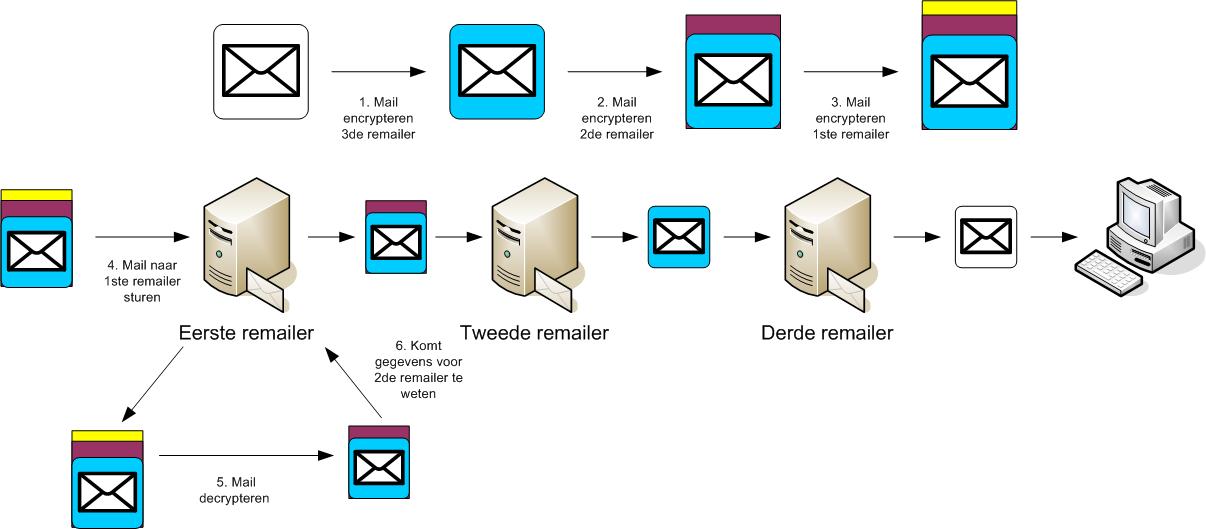
- Secure Multi-Party Computation (SMPC): If multiple researchers need to collaborate on a dataset, use SMPC protocols. This allows different parties to compute functions over their combined data without any party seeing the underlying data of the others.
- Data Lifecycle Management: Establish clear “time-to-live” protocols for stored neural features. Data should be automatically purged unless it is strictly required for longitudinal clinical tracking.
Examples and Real-World Applications
The need for privacy-preserving BCIs spans across both medical and consumer landscapes. In a clinical neuro-rehabilitation setting, a patient recovering from a stroke might use a BCI to control a robotic exoskeleton. Because the patient’s motor cortex signals are highly specific and potentially identifiable, using a federated learning approach allows the rehabilitation software to improve its accuracy across a patient population without ever exposing the individual movement patterns of a single patient to the hospital’s cloud server.
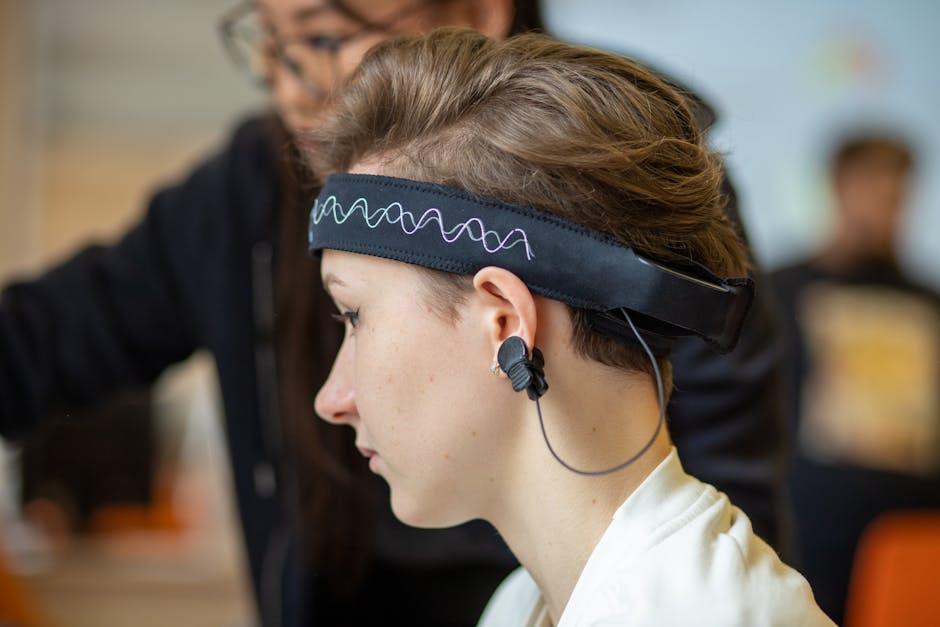
In consumer neural monitoring, such as meditation or sleep-tracking headbands, privacy is equally vital. Users are often wary of corporations “reading their thoughts.” By implementing edge-based processing, companies can offer real-time insights into cognitive fatigue or stress levels while ensuring that no raw neural data ever reaches the company’s servers, effectively turning the user’s phone or headset into a secure “neural vault.”
Common Mistakes
Even well-intentioned researchers and developers often fall into common traps when attempting to secure neural data:
- The Anonymization Fallacy: Removing a name or ID from a neural dataset is insufficient. Neural signatures are often as unique as a fingerprint. Anonymization does not protect against “linkage attacks” where neural patterns are matched against external datasets.
- Ignoring Side-Channel Attacks: Even if the data itself is encrypted, the power consumption or latency of the BCI device can sometimes leak information about the user’s cognitive workload. Secure systems must account for these subtle physical signals.
- Centralized Trust Models: Assuming that the server provider is “good” and won’t look at the data is a failure of security architecture. A robust system assumes the server is untrusted and designs around that assumption.
Advanced Tips
For those looking to push the boundaries of BCI privacy, consider Homomorphic Encryption. This advanced cryptographic technique allows for mathematical operations to be performed directly on encrypted data. In a BCI application, this means a cloud-based server could run a diagnostic algorithm on a user’s encrypted neural features and return an encrypted result—all without the server ever “seeing” the data in its decrypted state.
Additionally, consider the use of Synthetic Neural Data. Researchers can train generative models to produce “fake” neural data that mirrors the statistical properties of real human brain activity. This allows for the development and testing of BCI algorithms without the risk of handling real, sensitive patient data during the initial stages of research.
Conclusion
The promise of Brain-Computer Interfaces—from restoring mobility to enhancing cognitive performance—is immense. However, the future of this technology depends entirely on public trust. If we treat neural data as just another form of “big data” to be harvested and centralized, we risk a backlash that could set the field back by decades.
By adopting privacy-by-design principles—specifically federated learning, differential privacy, and edge processing—we can build systems that respect the sanctity of the human mind. The goal of the next generation of neurotechnology should not just be to decode the brain, but to protect it.