Introduction The race to net-zero carbon emissions is no longer just a policy goal; it is a manufacturing challenge. To scale carbon capture, high-efficiency solar photovoltaics, and next-generation battery storage, we must manipulate matter at the atomic level. Traditionally, the development of these advanced materials has relied on a slow, expensive cycle of “trial-and-error” laboratory…
Introduction The global agricultural landscape is currently undergoing a massive transformation. As we push toward higher yields to feed a growing population, the industry is moving away from broad-spectrum chemical application toward hyper-localized, robotic precision. However, a significant gap remains: how do we ensure that autonomous systems, which are prone to sensor noise and environmental…
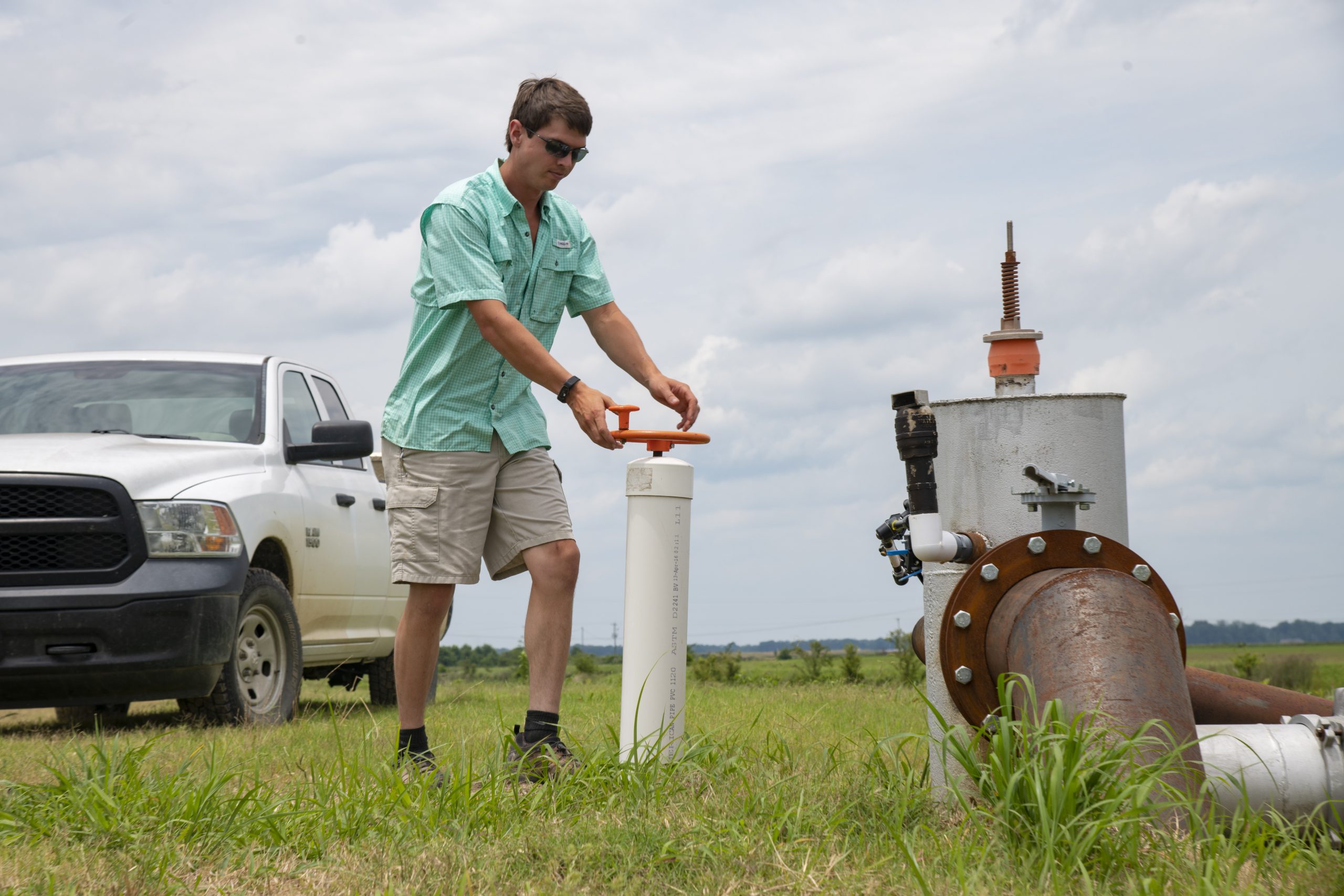
Introduction For decades, agriculture has been a game of averages. Farmers applied water, fertilizer, and pesticides across entire fields, assuming uniformity where none existed. Today, we are witnessing a paradigm shift: the integration of adaptive precision agriculture. By leveraging neuro-inspired computing and advanced sensory networks, we are moving from “blanket” farming to a system that…
Introduction The complexity of modern space systems has outpaced the human capacity for manual oversight. As we transition from legacy satellite architectures to autonomous, distributed orbital networks, the margin for error has narrowed to near zero. When a propulsion system malfunctions or a thermal control loop deviates from nominal parameters, engineers need more than just…
Introduction The traditional paradigm of materials science is shifting. For decades, researchers relied on “trial-and-error” experimentation or narrow, high-fidelity simulations to discover new compounds. Today, machine learning (ML) models are the new engine of innovation. However, a persistent bottleneck remains: distribution shift. When a model is trained on data from one experimental environment—or a specific…
Introduction The convergence of quantum computing and the Semantic Web is no longer a theoretical exercise; it is an architectural necessity. As quantum processors move from noisy intermediate-scale devices to fault-tolerant systems, the challenge shifts from hardware stability to information orchestration. How do we ensure that data produced by quantum systems is interpretable, verifiable, and—most…
Introduction For decades, biotechnology has relied on a binary approach: either expensive, slow-moving laboratory experimentation or purely data-driven computational models. While traditional machine learning (ML) has made strides in protein folding and drug discovery, it often hits a wall when data is scarce or when the model produces biologically “impossible” outputs. Enter Physics-Informed Generative Simulation…
Introduction The convergence of Artificial Intelligence (AI) and high-speed networking is no longer a futuristic concept; it is the backbone of the modern digital economy. As AI models scale—from Large Language Models (LLMs) requiring massive GPU clusters to real-time industrial robotics—the bottleneck has shifted from raw compute power to data movement. In distributed AI systems,…
Introduction The promise of Distributed Ledger Technology (DLT) is decentralization, security, and immutability. However, as we move from high-compute server environments to the Internet of Things (IoT) and edge computing, a fundamental conflict arises: the “Resource-Constrained Paradox.” Traditional consensus mechanisms, such as Proof-of-Work (PoW), demand massive energy and computational overhead, rendering them incompatible with low-power…
Introduction The proliferation of Internet of Things (IoT) devices has created a massive, distributed laboratory of data. However, harnessing this data while maintaining privacy and incentivizing participation remains the “holy grail” of modern distributed computing. This is where Federated Learning (FL) meets Mechanism Design—a field focused on creating rules and incentive structures to ensure that…