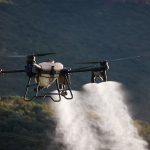
Learn how to implement Privacy-Preserving Synthetic Fertilizer protocols in agricultural IoT, balancing data sovereignty with AI-driven precision farming.
Contents
1. Introduction: Defining the intersection of green chemistry (synthetic fertilizers) and HCI through the lens of data privacy.
2. Key Concepts: Understanding “Privacy-Preserving Synthetic Protocols” (PPSP) in agricultural IoT.
3. Step-by-Step Guide: Implementing a privacy-centric feedback loop for automated fertilization systems.
4. Real-World Applications: Precision agriculture, soil health monitoring, and user-centric nutrient delivery.
5. Common Mistakes: Over-collecting data, ignoring edge-case privacy, and siloed system design.
6. Advanced Tips: Implementing Differential Privacy and Federated Learning for soil sensors.
7. Conclusion: The future of sustainable, private-by-design agricultural tech.
***
Privacy-Preserving Synthetic Fertilizers: The New Protocol for Human-Computer Interaction
Introduction
The agricultural sector is undergoing a digital transformation, moving toward high-precision synthetic fertilizer application. However, as soil sensors, drone imagery, and automated delivery systems become more sophisticated, they generate a massive influx of granular data. For farmers and stakeholders, this data is proprietary and sensitive; for software developers, it is the fuel for machine learning models that optimize crop yields. Balancing the “green” objective of reducing fertilizer waste with the “human” imperative of data sovereignty is the next frontier in Human-Computer Interaction (HCI).
Privacy-Preserving Synthetic Fertilizer (PPSF) protocols are not just about shielding numbers; they are about designing interaction systems that allow farmers to benefit from AI-driven insights without exposing their land management strategies or proprietary operational data. This article explores how to integrate these concepts into the next generation of agricultural HCI.
Key Concepts
In the context of green technology, a Privacy-Preserving Protocol for synthetic fertilizers refers to the architectural design that processes soil-nutrient data locally or through anonymized aggregation before providing actionable feedback.
The core challenge in HCI here is transparency vs. opacity. A farmer needs to see why a system is recommending a specific nitrogen dose, yet the system must not “leak” the baseline data that could be exploited by competitors or regulatory overreach. By utilizing Federated Learning and On-Device Processing, we move from a centralized model—where the cloud knows everything about your field—to a decentralized model where the system learns without ever “seeing” the raw, identifiable data.
Step-by-Step Guide: Implementing a Privacy-Centric Protocol
To build an HCI-compliant system for synthetic fertilizer management, developers should follow this workflow:
Data Minimization at the Edge: Configure soil sensors to perform local pre-processing. Instead of sending raw soil conductivity or pH logs to the cloud, the sensor sends only the Delta (the change in values) or a quantized classification of the soil’s state.
Noise Injection (Differential Privacy): Add statistical “noise” to the data before it leaves the farm’s local network. This ensures that even if the data packet is intercepted, it cannot be reverse-engineered to identify the exact coordinates or volume of fertilizer applied.
Human-in-the-loop Interface Design: Design the UI to show “Trust Indicators.” If the AI is recommending a 5% reduction in synthetic nitrogen, the interface should explain the reasoning—e.g., “Soil moisture levels are high, and nitrogen leaching is likely”—without needing to display the raw, sensitive telemetry that triggered the decision.
Local Model Weight Updates: Use Federated Learning. The model is trained on the farmer’s device based on local soil performance. Only the model updates (not the raw soil data) are sent to the central server to improve global agricultural intelligence.
Examples and Case Studies
Consider a large-scale wheat operation in the Midwest. The farm utilizes an automated synthetic fertilizer system. In a traditional setup, the farm’s data is uploaded to a cloud provider, which creates a map of the farm’s productivity. A competitor or a predatory data-broker could purchase this data to understand the farm’s yield potential and operational vulnerabilities.
By implementing a PPSF protocol, the system functions differently. The interface presents the farmer with a “Privacy Dashboard.” When the farmer approves an automated fertilization schedule, the system confirms the action while keeping the specific soil-health telemetry encrypted locally. This allows the farmer to maintain their competitive advantage while still utilizing the most advanced, environmentally friendly fertilizer delivery algorithms available.
Common Mistakes
Over-collection: Many developers collect “everything just in case.” This creates a massive attack surface. If you don’t need the GPS coordinates down to the centimeter for the model to function, do not collect them.
Misleading Transparency: Providing too much raw data to the user causes “cognitive overload.” A good HCI design should translate complex soil chemistry into clear, actionable advice while keeping the underlying privacy layer invisible but robust.
Ignoring Data Lifecycle: Assuming data is safe once it is “anonymized.” In agricultural contexts, quasi-identifiers like crop type, planting date, and local weather patterns can be used to re-identify a farm. Always use differential privacy to break these correlations.
Advanced Tips
To truly master privacy-preserving HCI in green tech, look toward Homomorphic Encryption. This allows the system to perform calculations (like calculating the optimal fertilizer dose) on encrypted data without ever decrypting it. While computationally expensive, the hardware acceleration for these processes is rapidly improving.
Additionally, focus on User Agency. Modern HCI should allow farmers to set “Privacy Tiers.” A Tier 1 user might share data with a research university for the greater good of crop science, while a Tier 3 user keeps all data strictly local. The system interface should clearly explain the trade-offs between data-sharing (e.g., better global model accuracy) and data-privacy (e.g., total anonymity).
Conclusion
The integration of synthetic fertilizer optimization and privacy-preserving protocols is not merely a technical necessity—it is an ethical imperative. As we push for greener, more efficient agricultural practices, we must ensure that the digital tools we build empower farmers rather than strip them of their data autonomy.
By focusing on edge-computing, differential privacy, and intuitive human-machine interfaces, we can create a future where synthetic fertilizers are applied with surgical precision, minimizing environmental impact while maximizing the security and dignity of the land manager. The future of sustainable farming is private, automated, and human-centric.
Discover how Quantum-Enhanced Foundation Models are revolutionizing biotechnology by bridging quantum mechanics and AI for accelerated drug discovery and research.
Correlation Matrices: Bridging Infrastructure Health and Model Drift Introduction In the modern machine learning lifecycle, the gap between “model deployment”…
Learn how Privacy-Preserving Quantum Machine Learning (PPQML) is revolutionizing neuroscience by securing sensitive brain data while enabling medical breakthroughs.