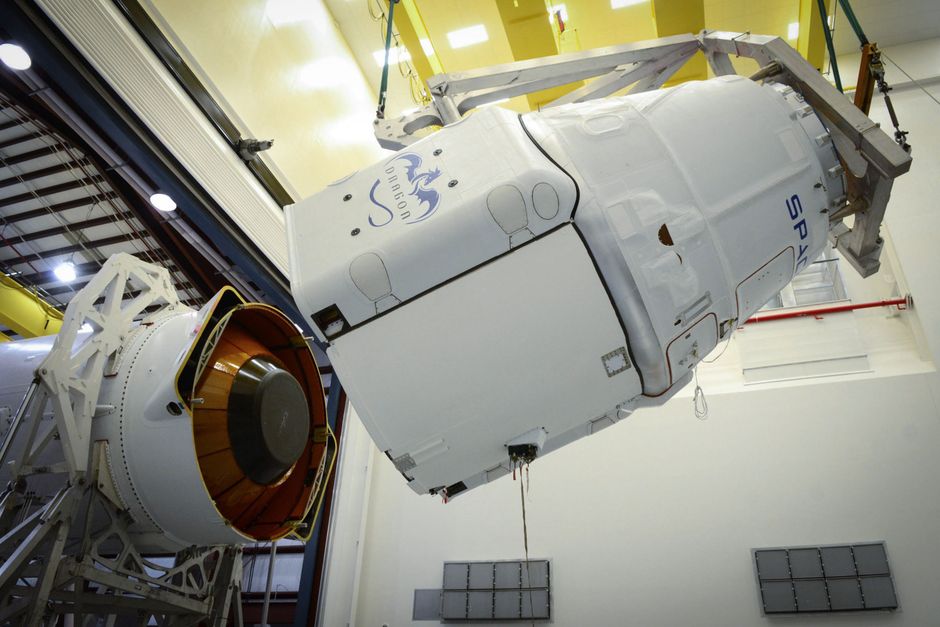
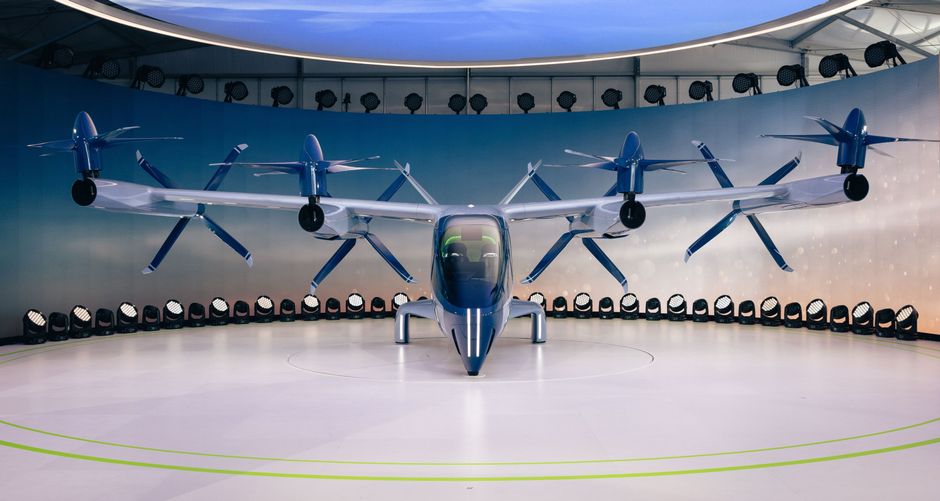
For centuries, the fundamental constraints of industrial production have been defined by the Earth’s gravity. We build, forge, and synthesize within a 1G environment, accepting the limitations of buoyancy, sedimentation, and thermal convection as immutable laws of business. However, the emergence of orbital manufacturing is shifting the paradigm from managing earthly limitations to architecting material properties from the ground up.
This is not merely a logistical upgrade; it is a fundamental shift in the strategy of high-value production. When you remove the gravity vector, you gain access to a manufacturing environment where fluids do not layer, crystals grow with perfect lattice structures, and material purity reaches levels impossible to replicate on the surface. For leaders in aerospace, pharmaceuticals, and semiconductor manufacturing, the orbital transition represents the next frontier of operational excellence.
Precision Without Interference
On Earth, the “sedimentation” problem haunts high-end manufacturing. When creating alloys or complex biological tissues, heavier elements settle or float based on gravity, creating microscopic defects. In low-Earth orbit (LEO), these forces vanish. This allows for the creation of ZBLAN optical fibers with a fraction of the signal loss found in terrestrial glass, or the production of protein crystals for pharmaceutical research that are large enough to map with atomic precision.
From a decision-making perspective, the investment in orbital facilities is an exercise in long-term capital allocation. Leaders who view space as a research playground miss the point. Space is a manufacturing substrate. Organizations that begin to integrate orbital processes into their supply chain will secure competitive advantages in material science that cannot be closed by terrestrial competitors, regardless of how much they invest in traditional R&D.
The Economics of Orbital Execution
The primary barrier to orbital manufacturing has historically been the cost-per-kilogram to orbit. As launch costs plummet due to reusable rocket architectures, the economic logic of space-based production is reaching an inflection point. The calculation is no longer “Can we afford to launch this?” but “What is the cost of not having the superior material property?”
Effective execution in this domain requires a shift in how we view the factory floor. Traditional facilities prioritize scale and throughput. Orbital facilities prioritize purity, precision, and unique molecular properties. This requires a modular approach to manufacturing. Rather than building massive, centralized facilities, the future favors small, automated, high-precision modules that operate autonomously in orbit, returning finished, high-value goods back to Earth.
Scaling Through Artificial Intelligence
Managing a factory in orbit introduces a latency and distance gap that renders traditional human-in-the-loop management obsolete. This is where AI moves from a productivity tool to an operational necessity. Autonomous manufacturing systems in space must diagnose their own material defects, recalibrate for thermal fluctuations, and manage energy loads without real-time human intervention.
High-performance thinking demands that we view these systems as extensions of our own organizational intent. The AI does not just “run” the machine; it executes the strategic mandate of quality and purity that the leadership team has defined. By delegating the tactical execution of material synthesis to autonomous orbital systems, leaders can focus their bandwidth on the higher-order strategy of market disruption and ecosystem development.
The Strategic Imperative
Orbital manufacturing is currently in its early adopter phase. The organizations that dominate in the coming decade will be those that treat orbital space as a core component of their value proposition rather than a peripheral interest. This requires a willingness to embrace high-stakes engineering and an understanding that the next generation of industrial breakthroughs will not happen on the factory floor, but in the vacuum above it.
The transition is not for the risk-averse. It requires a fundamental rethinking of the supply chain, a commitment to autonomous operational systems, and the foresight to identify which product lines gain the most value from a zero-gravity environment. The gravity of the situation is clear: the businesses that stay tethered to Earth will eventually find themselves competing with those that have learned to manufacture in the stars.