The Logistics of Extraterrestrial Colonization
The transition from a single-planet species to a multi-planetary civilization is not a technological problem; it is an architectural and logistical one. Mapping Martian colonies is the first step in moving beyond the romanticized concept of “exploration” toward the cold, clinical reality of operational excellence in hostile environments. We are not just drafting blueprints for habitats; we are designing the infrastructure for human survival in an environment that is actively trying to kill its inhabitants.
To establish a permanent footprint on Mars, leaders must shift their focus from discovery to systems engineering. The mapping of these colonies requires a comprehensive understanding of resource management, proximity to frozen water deposits, and the thermal properties of the Martian regolith. This is the ultimate test of decision-making under extreme uncertainty, where every strategic choice carries a binary outcome: sustainability or catastrophic failure.
The Geography of Survival
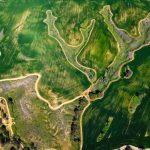
Mars is not a uniform landscape. Selecting a location for a colony is a high-stakes calculation involving solar irradiance, atmospheric pressure, and access to subsurface volatiles. The mapping process must prioritize proximity to lava tubes or craters that provide natural radiation shielding—a primary concern for long-term health and operational continuity.
Effective mapping demands a multi-layered approach to terrain analysis. We must integrate orbital reconnaissance data with surface-level geological surveys to identify “high-value zones.” These zones are defined by their potential for In-Situ Resource Utilization (ISRU). If a colony cannot extract water or generate propellant locally, it remains tethered to Earth’s supply chain, rendering it a fragile outpost rather than an autonomous society.
Strategic Infrastructure and Spatial Efficiency
Once a site is chosen, the internal mapping of the colony itself becomes the core concern. In high-performance environments, spatial efficiency translates directly into lower energy costs and reduced maintenance cycles. The layout must minimize the distance between life support systems, agriculture modules, and habitation zones to mitigate the risks associated with depressurization or mechanical failure.
Consider the concept of “modular redundancy.” By mapping the colony as a series of interconnected, self-contained cells, leadership can isolate compromised sections without endangering the entire population. This is a lesson in execution: design for failure, not just for perfect performance. A map that assumes linear growth is a map that will fail when the first system goes offline.
AI-Driven Predictive Mapping
The scale of Martian logistics exceeds human cognitive capacity. We are moving toward a future where AI systems handle the real-time mapping of Martian environments, simulating millions of failure scenarios before a single foundation is poured. These algorithms identify correlations between temperature shifts, dust storm frequency, and structural integrity that human architects would inevitably overlook.
This is where high-performance thinking meets the physical frontier. By automating the mapping process, we reduce human error and allow mission planners to focus on higher-order strategy. The map is no longer a static document; it becomes a dynamic, living interface that adjusts based on sensor feedback from the surface. In this model, the colony functions as a single, integrated organism.
The Operational Imperative
The colonization of Mars will be the most significant test of human strategy in history. It requires a departure from the “move fast and break things” mentality. On Mars, breaking things means death. The mapping of these colonies must be precise, modular, and deeply integrated with automated support systems.
Leaders who aim to succeed in this domain must prioritize the creation of resilient, self-sustaining networks. We are not building houses; we are building a new foundation for the future of the species. Every meter of mapped terrain, every cubic meter of pressurized space, and every resource extraction node must be justified by its contribution to the long-term viability of the mission.
Further Reading
- The Architecture of Resilient Leadership
- Mastering Complex Systems and High-Performance Thinking
- Execution Strategies for High-Stakes Environments