The Invisible Ceiling on Computational Performance
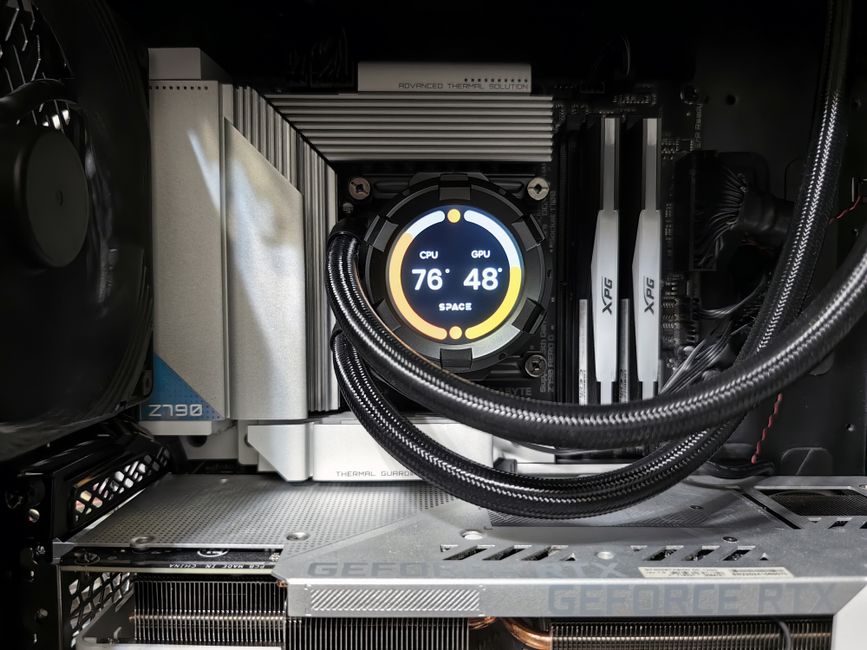
Most organizations treat hardware as a static foundation—a reliable constant that sits beneath their software stack. This is a strategic oversight. When a high-performance system slows down, executives often blame inefficient code or bloated infrastructure. Frequently, the culprit is far more physical: thermal throttling.
At its core, thermal throttling is a safety mechanism. When a microprocessor exceeds its thermal design power (TDP), it dynamically reduces its clock speed to prevent permanent hardware damage. While this protects the silicon, it creates an unpredictable performance ceiling. For the leadership team responsible for digital products or data-heavy operations, this is not just an IT issue; it is a direct constraint on throughput, latency, and operational output.
The Hidden Cost of Unmanaged Heat
Performance in modern computing is rarely linear. Because microprocessors throttle based on real-time temperature sensors, performance becomes stochastic. A server rack operating at 95 degrees Celsius will produce vastly different results than one at 65 degrees, even if the workload remains identical.
This creates a “jitter” in system performance that is notoriously difficult to debug. When your strategy relies on high-frequency trading, real-time analytics, or large-scale AI model inference, thermal throttling acts as a silent tax. It introduces latency spikes that degrade user experience and diminish the ROI of your expensive hardware investments.
Ignoring this reality leads to poor decision-making regarding infrastructure procurement. If your operations team is buying hardware based on “peak” specs rather than “sustained” thermal performance, they are paying for capacity the hardware cannot reliably deliver.
Operational Excellence Through Thermal Awareness
High-performance thinking requires an understanding of the entire stack, including the physics of silicon. To optimize performance, you must treat cooling as a first-class citizen of your technical architecture.
The Feedback Loop
Modern microprocessors are autonomous agents. They monitor their own thermal state and adjust voltage and frequency accordingly. If your software architecture does not account for this, you are effectively running blind. Effective execution requires telemetry that monitors not just CPU usage, but CPU temperature and frequency scaling.
Designing for Sustained Throughput
The smartest engineers design systems for the “throttled state.” This means building software that is thermally efficient, minimizing unnecessary compute cycles that trigger heat spikes. By optimizing code to run cooler, you ensure that the processor remains in its “boost” state for longer, effectively increasing your system’s capacity without upgrading a single component.
Strategic Implications for AI and Compute-Heavy Workloads
As we move into an era dominated by intensive AI workloads, thermal management is becoming a competitive differentiator. If your competitors are hitting thermal walls while your systems are optimized for sustained, cool operation, you gain a significant advantage in speed and cost efficiency.
This is where leverage comes into play. You don’t need more silicon; you need better thermal management. Whether through advanced liquid cooling in the data center, more aggressive airflow orchestration, or smarter workload scheduling that prevents “hot spotting” on server clusters, the objective is to maintain the processor’s peak frequency.
Moving Beyond Hardware Specs
Stop viewing hardware as a commodity. The ability to manage the thermal profile of your infrastructure is a marker of operational maturity. When you understand the physical limitations of your microprocessors, you stop chasing theoretical performance and start delivering consistent, reliable, and high-speed results.
The goal is not to eliminate heat—that is physically impossible—but to manage it as a variable within your operational model. Treat your hardware with the same rigor you apply to your business strategy. When you align your high-performance thinking with the physical realities of your silicon, you unlock levels of efficiency that remain invisible to those who ignore the heat.