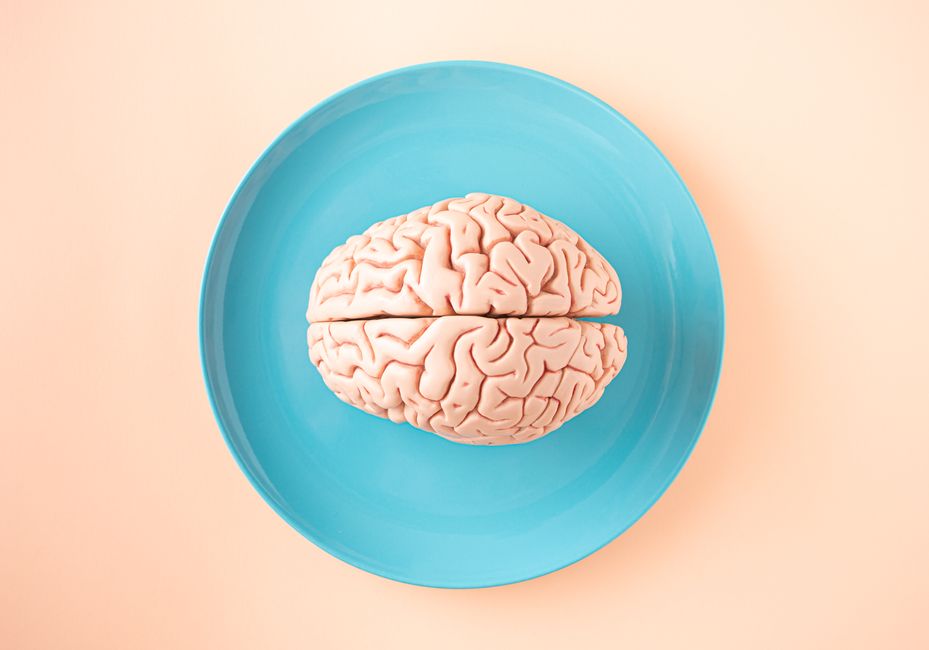
The human brain is not a static hardware platform. It is a dynamic, evolving architecture that constantly rewrites its own source code through experience, intentionality, and focus. The concept of migration of consciousness—the deliberate shifting of one’s cognitive state, priorities, and identity—is the ultimate leadership tool. Most individuals operate within a default mental state, reacting to stimuli like a thermostat responding to ambient temperature. Exceptional performers, however, treat their consciousness as a mobile asset, migrating it across different “operating systems” depending on the demands of the environment.
The Operational Necessity of Cognitive Shifting
High-stakes decision-making requires the ability to detach from the immediate emotional weight of a crisis and relocate the mind into a framework of objective strategy. This is not mere compartmentalization; it is a tactical migration of focus from the ‘doing’ layer to the ‘architecting’ layer.
Consider the difference between a tactical operator and a strategic leader. The operator resides in the consciousness of the “now”—the granular, the immediate, and the reactive. The strategist migrates consciousness to the “next”—the systemic, the probabilistic, and the long-term. When a leader fails to execute this migration, they succumb to micromanagement, effectively tethering the organization’s progress to their own limited bandwidth.
The Mechanics of Mental Relocation
To master the migration of consciousness, one must first recognize the “gravity” of current operational states. Stress, urgency, and ego act as gravitational wells that keep consciousness trapped in low-level problem-solving. To escape these wells, high-performance thinkers employ specific cognitive triggers:
Temporal Displacement: Intentionally projecting the mind into a future state (e.g., “If this project succeeds/fails in six months, what was the primary cause?”) to bypass current emotional noise.
Systemic Abstraction: Moving the focus from the individual component—the person, the task, the error—to the systemic flow of the entire operation.
Perspective Inversion: Adopting the viewpoint of a competitor or a dispassionate third party to evaluate one’s own decision-making process.
Integrating AI as a Cognitive Extension
The rise of artificial intelligence offers a unique inflection point for the migration of consciousness. We are no longer limited by the biological constraints of our own memory or processing speed. By offloading rote analytical tasks and data synthesis to AI, the human mind is liberated to migrate toward higher-order synthesis—the domain of judgment, intuition, and ethical framing.
This is the new frontier of operational excellence. The leader who attempts to do the work of the machine remains a glorified clerk. The leader who migrates their consciousness to the oversight of the machine becomes an architect of outcomes. The goal is not to compete with computational power, but to inhabit the cognitive space that computation cannot reach: the integration of disparate variables into a coherent, decisive vision.
The Cost of Cognitive Stagnation
The inability to migrate consciousness manifests as “identity rigidity.” This occurs when a leader becomes so identified with their past successes or their current methodology that they lose the ability to adapt. When the environment shifts, the rigid mind breaks; the migratory mind evolves.
Executing this shift requires rigorous self-awareness. It demands the honesty to ask: Where is my consciousness currently residing, and is that the optimal location for the outcome I intend to produce? If you are currently obsessed with a minor operational hiccup, you have lost the ability to see the broader execution landscape. You have effectively migrated to the wrong floor of the building.
Executing the Shift
To master this, treat your cognitive focus as a finite resource that must be allocated with the same discipline as capital. Stop allowing your consciousness to be hijacked by the loudest signal in the room. Instead, map your daily cognitive demands against the necessary states of mind required to solve them. If a task requires deep creative synthesis, do not attempt it while your consciousness is trapped in the reactive, high-frequency state of email and Slack. Migrate before you engage.