Institutional Resilience: Diversifying Technical Infrastructure to Eliminate Single Points of Failure
Introduction
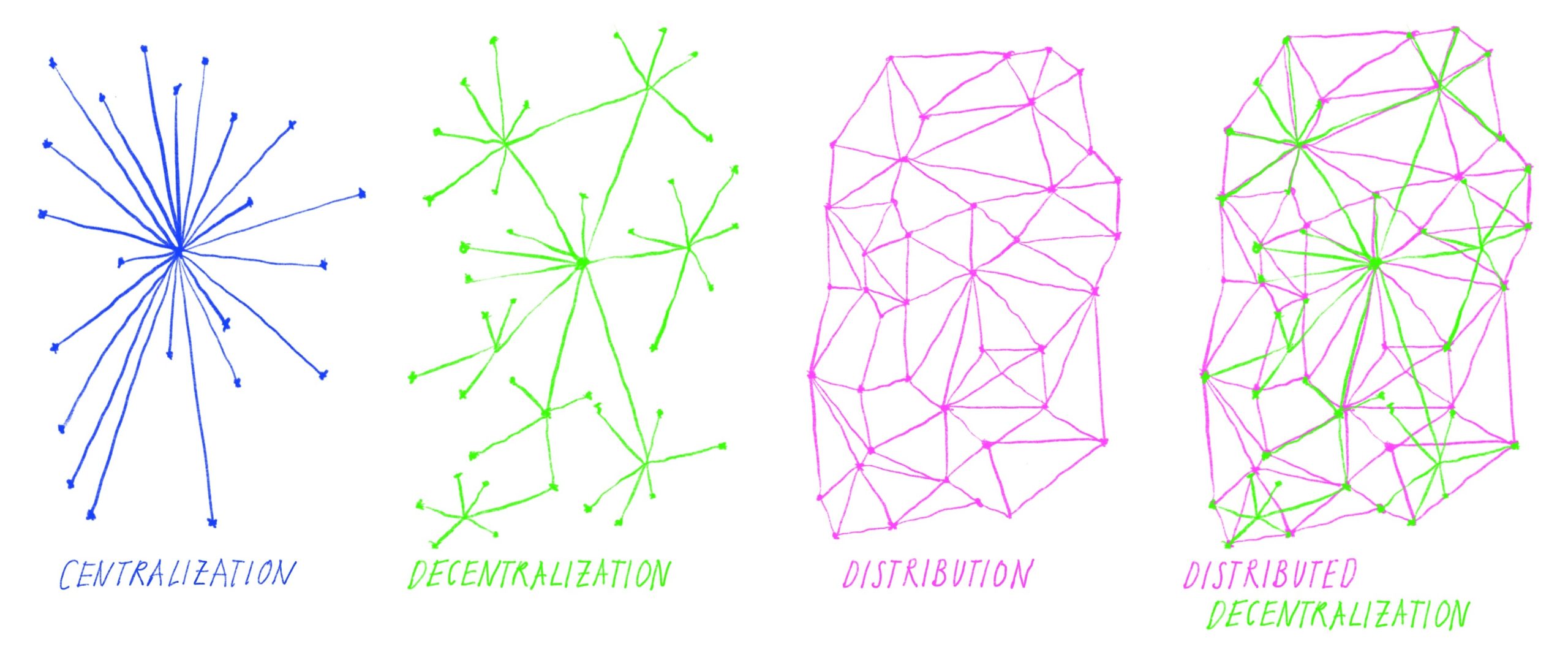
In the digital age, an organization is only as robust as its weakest technical link. For decades, the mantra of “efficiency” drove institutions toward consolidation—centralizing data centers, standardizing software stacks, and relying on single-provider cloud ecosystems. While this reduced operational overhead, it inadvertently created fragile architectures. When a single provider experiences an outage, a proprietary tool suffers a vulnerability, or a specific API fails, the entire institution grinds to a halt.
Institutional resilience is no longer just about disaster recovery; it is about architectural redundancy. By intentionally diversifying technical infrastructure, organizations move from a state of “brittle efficiency” to “adaptive durability.” This article explores how to audit your systems for single points of failure (SPOFs) and rebuild them for multi-layered reliability.
Key Concepts
At its core, institutional resilience relies on two primary architectural strategies: decoupling and redundancy.
Decoupling involves breaking monolithic systems into independent modules. When components are tightly coupled, the failure of one system propagates through the entire stack. By utilizing microservices, message queues, and modular APIs, you ensure that if one component fails, the rest of the institution continues to function.
Redundancy refers to the practice of maintaining duplicate or alternative infrastructure that can take over if the primary system fails. However, true resilience isn’t just having two servers instead of one; it’s about having two different types of infrastructure (e.g., a hybrid cloud approach) to ensure that a provider-specific outage does not result in a total blackout.
The goal is to move away from the “all-in” mentality. Whether it is your cloud provider, your authentication service, or your data storage solution, if you rely on one vendor for your critical path, you are operating with an inherent fragility that could threaten your institutional continuity.
Step-by-Step Guide to Building Resilient Infrastructure
- Conduct a Dependency Audit: Create a comprehensive map of your technical stack. Identify every third-party service, API, cloud region, and proprietary software tool. Highlight which of these represent critical paths—if they go down, do you stop working?
- Identify Single Points of Failure: Once mapped, categorize each dependency by the severity of impact. If 80% of your operational software runs exclusively on a single cloud availability zone or a specific vendor’s proprietary platform, you have identified your primary SPOF.
- Prioritize Decoupling: Start with the most critical paths. Refactor your code or architecture to interact with internal services via APIs rather than direct database access. This allows you to swap out backend services without disrupting user-facing applications.
- Implement Multi-Vendor Strategies: For critical cloud services, evaluate a multi-cloud or hybrid strategy. Use automated failover protocols that can route traffic to a secondary provider or an on-premises data center if the primary cloud provider experiences downtime.
- Automate State Recovery: Ensure that your infrastructure-as-code (IaC) allows you to spin up identical environments on different platforms. If your environment setup is manual, you cannot achieve true redundancy.
- Conduct Stress Tests and “Game Days”: Resilience is a muscle that must be exercised. Run simulated failures where you intentionally disable a service or region to verify that your failover mechanisms work as intended.
Examples and Real-World Applications
Consider the banking sector’s move toward “Open Banking” and distributed ledgers. Traditionally, banks relied on massive, monolithic mainframe systems. If that mainframe crashed, no transactions could process. Modern, resilient institutions have moved toward API-led connectivity where core banking ledgers are isolated from customer-facing apps. This allows the bank to update or switch out user interfaces without touching the underlying core, and if the mobile app service provider has an issue, the ATM network or teller systems remain operational.
“True redundancy isn’t just having two of the same thing; it’s having two different things that achieve the same outcome.”
Another example is found in global content delivery. Major streaming services do not rely on a single CDN (Content Delivery Network). They distribute their traffic across multiple vendors. If Provider A’s North American routing tables go down, the intelligent traffic manager detects the latency spike and shifts the load to Provider B or C in real-time. This is seamless to the user, proving that diversifying infrastructure is the key to uninterrupted service delivery.
Common Mistakes
- The “Redundancy without Failover” Trap: Many organizations have a secondary data center, but they do not have the automated systems in place to switch traffic to it. A backup that takes six hours to manually initiate is not a solution for modern, high-speed operations.
- Ignoring Operational Complexity: Diversification increases the number of moving parts. If you diversify too quickly without implementing robust monitoring and observability tools, you may find that you have simply replaced a “single point of failure” with a “configuration management nightmare.”
- Underestimating Human Failure: Infrastructure is not just silicon and code. It includes the engineers who manage it. If all your institutional knowledge about a system rests in the head of one person, that is a single point of failure. Practice cross-training and documentation to build human resilience.
- Vendor Lock-in via Proprietary APIs: Choosing a database or storage solution that uses proprietary, vendor-locked query languages makes it exponentially harder to move your data to a more reliable platform when you need to. Prioritize open standards whenever possible.
Advanced Tips
To reach the next level of institutional resilience, focus on observability. You cannot fix what you cannot measure. Implement distributed tracing and centralized logging that spans across your entire infrastructure, regardless of the vendor. When a failure occurs, the ability to pinpoint exactly where the breakdown happened is the difference between a five-minute blip and a five-hour outage.
Furthermore, adopt a “Cellular Architecture” mindset. Instead of scaling up one massive system, build small, self-contained units (cells). If a failure occurs, it is limited to a single cell, leaving the rest of the institution unaffected. This is how large-scale social media platforms survive; they shard their user base so that a total system collapse is statistically improbable.
Finally, keep your Data Sovereignty in mind. While cloud services are powerful, ensure you have an offline, immutable backup of your critical data stored in a location controlled exclusively by your organization. Regardless of how well-diversified your active infrastructure is, you must maintain a “glass break” escape hatch for your core data.
Conclusion
Institutional resilience is the proactive process of building systems that embrace volatility rather than fearing it. By auditing your dependencies, decoupling your technical stack, and investing in multi-vendor redundancy, you protect your organization from the inevitable failures of the digital world.
The journey toward resilience is not a one-time project; it is a permanent change in philosophy. It requires moving from a mindset of “preventing failure” to one of “managing through failure.” When you build infrastructure with the expectation that components will eventually break, you ensure that your institution remains standing long after those components have failed. Start small, audit your critical paths today, and systematically remove the single points of failure that threaten your future.