
The Entropy Trap: Why Optimization Fails Without Symbolic Sovereignty
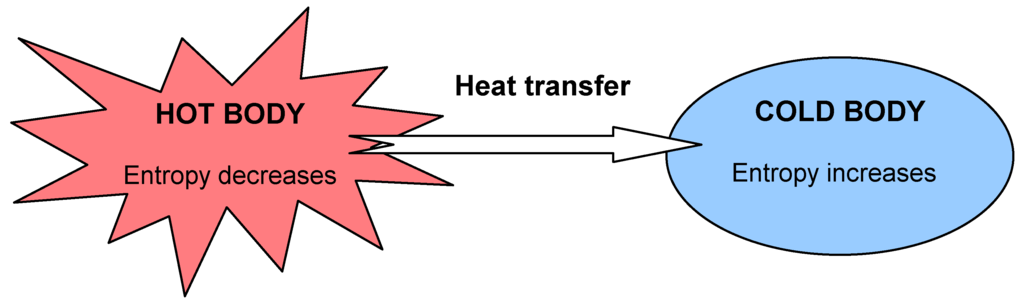
We live in a culture obsessed with the mechanics of success. We track our sleep, we optimize our workflows with AI-driven CRMs, and we obsess over the granularity of our OKRs. Yet, beneath this veneer of high-functioning efficiency, a quiet decay is taking hold. I call this the Entropy Trap: the phenomenon where increased process-density leads to a decrease in executive impact.
The Likoniel Paradigm introduced us to the idea of archetypal alignment—using historical frameworks to create cognitive anchors. But there is a dangerous corollary to this philosophy that most leaders ignore: Optimization is not a substitute for Sovereignty.
The Myth of the ‘Plug-and-Play’ Executive
Many modern professionals treat their leadership style like a modular software update. They read a book on Stoicism, adopt a morning ritual from a tech billionaire, and attempt to overlay these habits onto their business. They are searching for a system that solves the problem of leadership for them. This is the fundamental error of the modern age: believing that the map is the territory.
When you outsource your decisiveness to a system—even a high-level one like a Solomonic focus ritual—without developing the sovereign capacity to hold that space, you are merely wearing a costume. You are engaging in ‘cargo cult’ leadership. You have the rituals, you have the data, but you lack the Command Presence required to animate them.
Symbolic Sovereignty: The Anti-Fragile Response
If Likoniel represents the frequency of intellectual clarity, then Sovereignty is the internal hardware that allows you to broadcast that frequency. Without this foundation, your attempts at ‘archetypal alignment’ will buckle under the first sign of external pressure. Real leadership is not about aligning with an archetype; it is about becoming an architect of your own internal reality.
How do we bridge this gap? We move from participation to authoring.
- Stop Auditing, Start Establishing: Most leaders spend their days auditing their own output. They live in a state of reactive assessment. Sovereignty requires you to move from the ‘audit’ mindset to the ‘establishment’ mindset. You do not ask, ‘Is this aligned with my goals?’ You define the reality, and the goals follow.
- The Theology of the ‘No’: Influence is not measured by what you do, but by the chaos you refuse to invite into your field. Sovereignty is the act of curation. If you cannot say ‘no’ to a lucrative, misaligned opportunity, you are not a sovereign executive—you are a service provider for the market’s whims.
- Sigils as Cognitive Hard-Coding: We talked about sigils as anchors. Now, take it further. A sigil is not just a tool; it is a declaration of your boundaries. Create a ‘Symbolic Operating Procedure’—a set of non-negotiable rules for your mental state that you enforce as strictly as you enforce your company’s financial compliance.
The Contrarian Reality: Efficiency is a Trap
There is a ceiling to efficiency. Once you have reached a certain tier of operation, further ‘optimization’ actually creates more noise. It creates complexity where simplicity is required. The greatest leaders I have worked with are not the ones with the cleanest calendars; they are the ones who possess the most radical clarity regarding their own narrative.
They don’t just use tools; they embody the system. They understand that the market is a chaotic, irrational entity, and the only way to influence it is to project an order so undeniable that it forces the environment to shift in response.
The Final Synthesis
The transition from a high-performer to a true leader is the transition from managing information to commanding resonance. You cannot ‘hack’ your way to the top of your industry. You must, instead, grow into the internal capacity required to sustain that level of influence. Don’t look for a new framework to make you faster; look for the internal sovereign authority that makes your presence inevitable.
The era of the ‘Manager’ is ending. The era of the ‘Architect’—the person who designs the reality in which they operate—has begun. How will you define the architecture of your next quarter?


Leave a Reply