

Article Outline
- Introduction: The shift from “Black Box” models to transparent AI decision-making.
- Key Concepts: Defining Global Interpretability vs. Local Interpretability.
- Methodologies: Feature importance, Partial Dependence Plots (PDP), and Surrogate models.
- Step-by-Step Guide: A workflow for implementing global interpretability.
- Case Studies: Credit scoring and healthcare diagnostic modeling.
- Common Mistakes: Pitfalls like multicollinearity and over-simplification.
- Advanced Tips: Moving toward model-agnostic techniques.
- Conclusion: Strategic importance for compliance and trust.
Cracking the Black Box: A Practical Guide to Global Interpretability in Machine Learning
Introduction
In the modern data-driven landscape, machine learning models drive high-stakes decisions—from who gets a loan to which patients receive specific medical interventions. However, as model complexity grows, we face a significant hurdle: the “Black Box” problem. When a model produces an output, understanding why it reached that conclusion is no longer just a technical luxury; it is a business and ethical necessity.
While local interpretability explains a single prediction (e.g., “Why was this specific applicant denied?”), global interpretability aims to explain the entire model’s logic. It provides a comprehensive view of how a model behaves across the entire input space. Mastering this allows developers to move beyond simple accuracy metrics, ensuring models are fair, compliant, and aligned with human intuition.
Key Concepts
Global interpretability is the study of a model’s holistic behavior. It seeks to answer the question: “What are the primary features and decision rules driving this model’s outputs on average?”
To understand global interpretability, you must distinguish it from its counterpart:
- Local Interpretability: Explains individual predictions. It is essential for specific audit trails.
- Global Interpretability: Explains the “mental model” of the algorithm. It is essential for understanding general trends, feature interactions, and potential systemic biases.
The core philosophy of global interpretability is that if you cannot explain the logic of your model to a stakeholder, you do not truly own or control that model. By visualizing feature importance and directional impacts, you transform opaque code into a transparent decision-support tool.
Methodologies for Global Insight
There are several robust techniques to achieve global interpretability, regardless of whether you are using Random Forests, Gradient Boosted Trees, or Deep Neural Networks.
Feature Importance
Most models offer built-in feature importance scores. These quantify how much each variable contributes to the reduction of uncertainty or variance across the dataset. While simple, it provides a high-level “rank order” of variables that matter most to the model.
Partial Dependence Plots (PDPs)
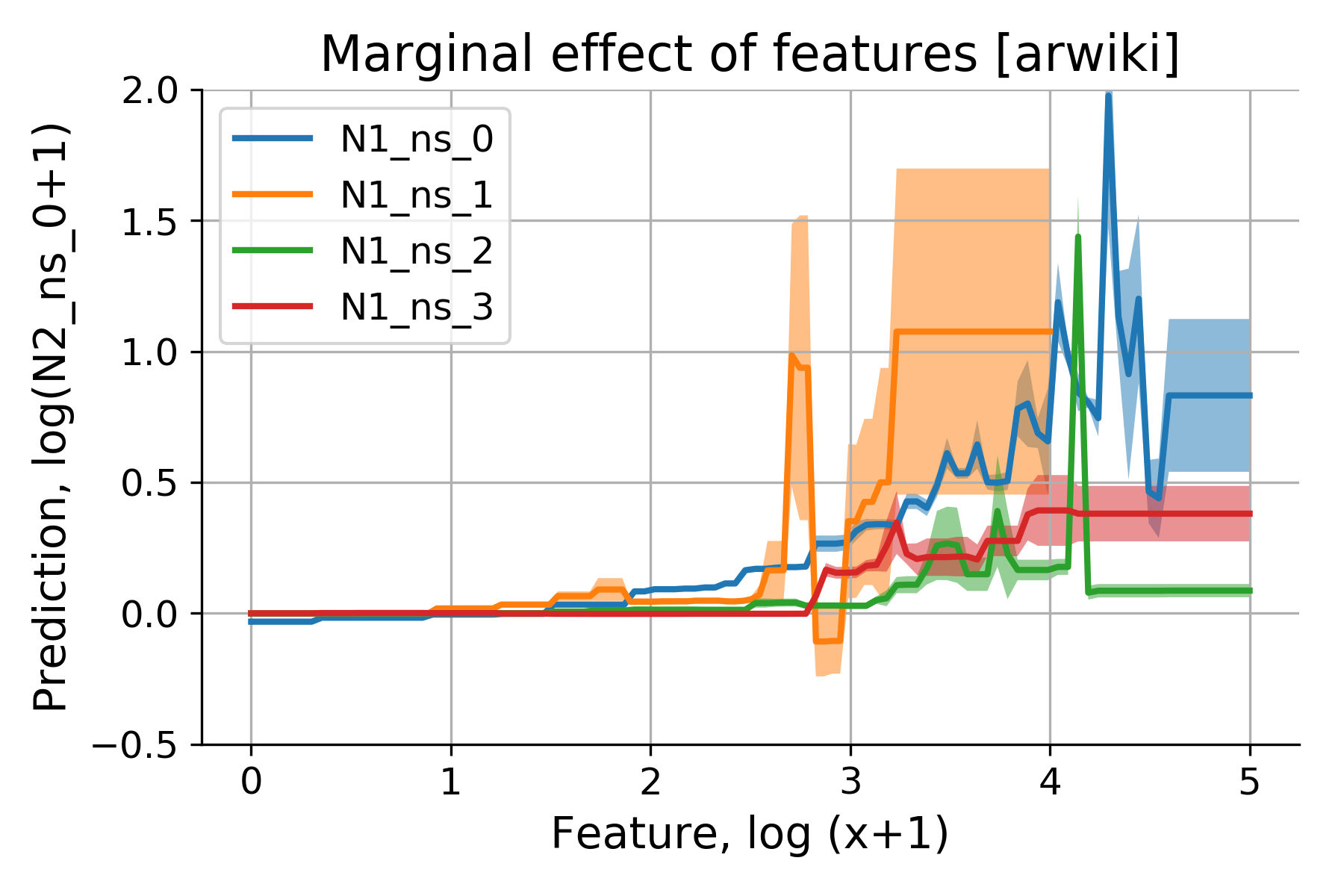
PDPs show the marginal effect of one or two features on the predicted outcome. They allow you to visualize if a relationship is linear, monotonic, or more complex (e.g., exponential growth or U-shaped curves). This helps confirm if the model’s learned behavior aligns with known domain expertise.
Surrogate Models
If your primary model is too complex to interpret directly, you can train an “interpretable surrogate” (such as a shallow decision tree) to mimic the predictions of the complex model. You then analyze the surrogate, which provides a readable approximation of the global logic of the black-box original.
Step-by-Step Guide
- Baseline Assessment: Run your trained model on a hold-out test set to establish a baseline of feature importance. Use the built-in importance metrics provided by your framework (e.g., Scikit-Learn’s feature_importances_).
- Generate Partial Dependence Plots: Select the top five features identified in Step 1. Generate PDPs for these features to visualize the direction and shape of their impact. If a variable shows a counter-intuitive curve, investigate if the model is over-fitting or capturing noise.
- Assess Feature Interactions: Use H-statistic (Friedman’s H-statistic) to determine if two features are interacting to influence the model. Often, the true complexity of a model lies not in individual features, but in how features interact.
- Train a Surrogate Model: Create a simplified Decision Tree or a sparse Linear Regression model using the predictions of your complex model as the “target.” If the surrogate model achieves high accuracy compared to the original, you have successfully distilled the complex model’s logic into a readable format.
- Document and Validate: Compare your findings against domain knowledge. If the model relies heavily on a feature that subject matter experts know is irrelevant, you have identified a data leakage or a training bias that must be corrected.
Examples and Real-World Applications
Example: Credit Scoring Systems
In financial services, regulators often require “adverse action notices.” If a model rejects an applicant, the company must explain why. Using global interpretability, a bank can identify that “Debt-to-Income Ratio” and “Recent Credit Inquiries” are the two primary global drivers for rejection. This ensures that the bank’s internal policy matches the algorithm’s performance, preventing discriminatory practices.
In healthcare diagnostic modeling, global interpretability is critical for physician adoption. If a model predicts a high risk of disease, but the global interpretability analysis shows the model is relying heavily on “patient zip code” rather than “clinical symptoms,” physicians will rightly ignore the model. Global interpretability allows data scientists to catch these systemic “shortcuts” before the model is deployed.
Common Mistakes
- Ignoring Multicollinearity: If two features are highly correlated, the model might split the importance between them, leading to an understatement of the true importance of either. Always perform a correlation check before interpreting global feature importance.
- Over-Trusting Local Interpretations: Many assume that if you understand a few local predictions, you understand the model. This is false. A model can be locally correct for the wrong global reasons. Always validate the global view to ensure consistency.
- Assuming Linearity: If you use a complex model but interpret it with linear assumptions, you lose the nuances. Global interpretability methods like PDPs are designed to capture non-linearities; don’t collapse that complexity into a single “linear coefficient” unless absolutely necessary.
Advanced Tips
To go beyond the basics, leverage Permutation Feature Importance. Unlike the standard “gain” metric, which is often biased toward high-cardinality features (like IDs or dates), permutation importance randomly shuffles the values of a single feature and measures the resulting drop in model performance. This gives you a more robust and objective view of how much the model actually relies on a specific feature.
Additionally, consider SHAP (SHapley Additive exPlanations) Global Summaries. By averaging SHAP values across the entire dataset, you can create a “summary plot” that shows both the direction (positive or negative) and the magnitude of a feature’s impact on all predictions. This is currently the gold standard for bridging local and global interpretability in a single, coherent framework.
Conclusion
Global interpretability is the bridge between raw algorithmic performance and organizational trust. It shifts the conversation from “Does this model work?” to “Do we understand how this model works?”
By implementing methods like Partial Dependence Plots, surrogate modeling, and SHAP summaries, you move your AI strategy from a state of blind reliance to one of informed governance. Remember: an accurate model is only as valuable as the confidence stakeholders have in it. In a world where transparency is becoming the regulatory norm, global interpretability is the most effective tool in your data science arsenal for ensuring long-term success and ethical responsibility.





Leave a Reply