

Outline
- Introduction: The shift from local to global interpretability in AI models.
- Key Concepts: Defining global interpretability vs. local explanations (SHAP/LIME).
- Methodologies: Feature importance, Partial Dependence Plots (PDP), Accumulated Local Effects (ALE), and Surrogate Models.
- Step-by-Step Guide: Implementing a global audit of a machine learning model.
- Real-World Applications: Finance, Healthcare, and Predictive Maintenance.
- Common Mistakes: Over-reliance on feature importance rankings, ignoring feature interaction, and data leakage.
- Advanced Tips: Balancing global accuracy with global explainability using distillation models.
- Conclusion: Why global insight is essential for regulatory compliance and trust.
Beyond the Black Box: Mastering Global Interpretability for AI Transparency
Introduction
In the rapid adoption of machine learning, many organizations have traded transparency for predictive power. We often rely on sophisticated “black box” models—deep neural networks or gradient-boosted trees—that deliver exceptional accuracy but obscure the “why” behind their logic. While local interpretability tools like LIME or SHAP are excellent for explaining a single loan denial or a specific medical diagnosis, they fall short when you need to understand the entire logic of the system.
Global interpretability aims to solve this by distilling the model’s overall behavior into human-understandable insights. It answers questions like: “What are the primary drivers for my entire customer churn model?” or “How does this model behave across the full range of income levels?” Without this global perspective, you are essentially flying an aircraft with individual instruments that flicker occasionally, rather than having a dashboard that shows the flight path of the entire mission.
Key Concepts: Local vs. Global
To master model transparency, you must distinguish between the two primary interpretability domains. Local interpretability explains an individual prediction. It asks: “Why did the model reject this applicant?”
Global interpretability, conversely, attempts to describe the model as a whole. It asks: “What is the relationship between annual income, credit score, and approval probability across the whole population?” It seeks to uncover the internal “rules of thumb” the model has learned during training. By prioritizing global methods, you can perform comprehensive model audits, identify hidden biases, and ensure that your production systems align with business logic and legal requirements.
Essential Methodologies
Global interpretability relies on a suite of diagnostic tools designed to map out the model’s “mental model.”
- Feature Importance Rankings: Provides a broad view of which variables (e.g., tenure, salary, location) contribute most to the model’s variance.
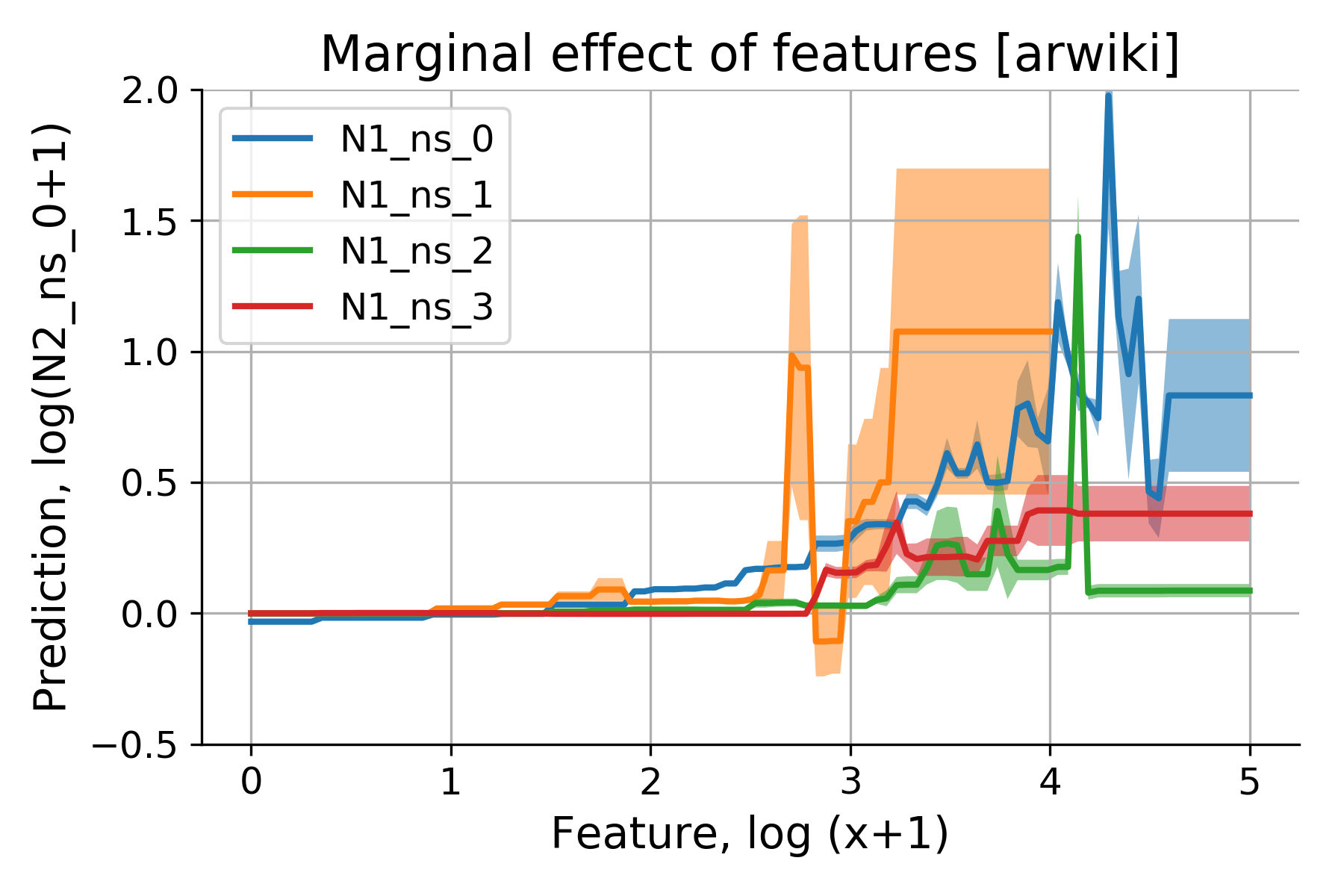
- Partial Dependence Plots (PDP): Visualizes the marginal effect of one or two features on the predicted outcome, holding other features constant.
- Accumulated Local Effects (ALE): An improvement over PDP that accounts for correlated features, preventing the model from analyzing impossible data combinations.
- Global Surrogate Models: Training an inherently interpretable model (like a shallow decision tree) to mimic the predictions of a complex model (like an ensemble of XGBoost models).
Step-by-Step Guide to Global Model Auditing
- Assess Global Feature Importance: Start by generating a permutation-based feature importance score. This identifies the “heavy hitters” in your dataset. If a feature you expect to be critical ranks near the bottom, your model may be ignoring vital information or suffering from data quality issues.
- Visualize Marginal Effects: Use PDPs for your top five features. If you are predicting house prices, a PDP should show a clear, logical trend—e.g., as square footage increases, price should generally rise. If the line is jagged or counter-intuitive, your model is likely overfitting on noise.
- Correct for Feature Interactions with ALE: If your features have high multi-collinearity, move to ALE plots. These plots provide a more accurate reading of how features influence the model by calculating the change in prediction based on small conditional shifts in the input.
- Validate against Domain Expertise: Present your global plots to subject matter experts. Does the “model logic” reflect the real-world processes they manage? If the model implies that age is the primary driver of credit risk when it should be debt-to-income ratio, you have found a potential bias or a data leak.
- Summarize with a Surrogate Model: Build a shallow decision tree using the complex model’s predictions as the target variable. This “surrogate” allows you to print a literal map of the model’s logic that can be shared with stakeholders who are not data scientists.
Real-World Applications
Financial Services: Banks use global interpretability to prove compliance with “Right to Explanation” regulations like GDPR or the Equal Credit Opportunity Act. By showing regulators a PDP that proves race or gender is not influencing the global logic of loan approvals, they build a foundation of trust.
Healthcare: When deploying predictive models for patient readmission, doctors need to know that the model isn’t relying on proxies for socio-economic status. Global interpretability allows hospital administrators to confirm that the model’s logic aligns with clinical symptoms, such as the severity of a condition, rather than insurance type.
Manufacturing: Predictive maintenance models often benefit from global interpretability by confirming that the system is sensitive to engine temperature and vibration patterns as expected, rather than reacting to external seasonal artifacts in the sensor data.
Common Mistakes to Avoid
- The “Feature Importance” Trap: Relying solely on feature importance rankings. Importance does not equal causality or directionality. A feature can be important but have a nonsensical, non-linear relationship with the target.
- Ignoring Feature Interaction: PDPs assume features are independent. If your model heavily relies on interactions (e.g., age and income together determine risk), simple 1D plots will hide the most important parts of your model’s logic.
- Inconsistent Data Distributions: Applying interpretability tools to data that is not representative of your training set. If your model has never seen a specific range of values, the “global” logic it generates for those values will be pure conjecture.
- Over-Smoothing: Using surrogate models that are too simple. If your surrogate model (e.g., a tree with only 3 nodes) has a very low R-squared when compared to the original model, it is not accurately representing the logic.
Advanced Tips
To truly master global interpretability, focus on Model Distillation. This is the process of using the outputs of a large, high-performance model (the teacher) to train a smaller, transparent model (the student). By minimizing the difference between the teacher and the student, you gain the accuracy of the complex system with the transparency of a simple one.
Pro-Tip: Always measure the “Fidelity” of your surrogate models. If your surrogate cannot predict the main model’s output with at least 80-90% accuracy, it is not an interpretable model; it is a misleading model. Always report the fidelity score alongside your interpretability findings.
Conclusion
Global interpretability is not just a nice-to-have feature; it is a requirement for the professional deployment of artificial intelligence. By moving beyond individual case studies and capturing the “big picture” logic of your models, you transform AI from a magical, unpredictable black box into a reliable, auditable tool for decision-making.
Start by auditing your most critical production models using feature importance and ALE plots. Engage your subject matter experts early in the process to validate these findings against real-world domain knowledge. When you can explain how and why your model reaches its conclusions at scale, you gain the ultimate competitive advantage: the ability to scale AI with confidence, precision, and trust.





Leave a Reply