Federated Bioelectronic Medicine in EdTech: A Growth Guide
Learn how federated learning and bioelectronic sensors create privacy-focused, adaptive learning environments that optimize student performance and engagement.
1. Introduction: Defining the convergence of bioelectronic medicine and EdTech.
2. Key Concepts: Explaining Federated Learning (FL) and its intersection with neuro-feedback systems.
3. The Framework: How privacy-preserving AI models map physiological responses to learning states.
4. Step-by-Step Guide: Implementing a bio-data privacy loop in EdTech.
5. Real-World Applications: Adaptive learning environments and accessibility tools.
6. Common Mistakes: Over-reliance on raw data and ignoring data heterogeneity.
7. Advanced Tips: Balancing edge computing with latency requirements.
8. Conclusion: The future of decentralized human-computer interaction in education.
***
The Federated Bioelectronic Medicine Framework: Revolutionizing Adaptive Education Technology
Introduction
The traditional classroom model—and even the standard digital learning environment—often suffers from a fundamental disconnect: the instructor or the software remains largely blind to the physiological state of the learner. While we have analytics for clicks and test scores, we lack real-time visibility into cognitive load, stress markers, and engagement depth. Enter the Federated Bioelectronic Medicine Framework. By merging bioelectronic sensors—which monitor neurophysiological signals—with federated learning, we can create hyper-personalized educational experiences without compromising the sanctity of sensitive biological data.
This is not merely about tracking attention; it is about building a decentralized infrastructure where insights are shared, but raw biological data remains firmly on the user’s device. For educators and developers, this represents a paradigm shift from “one-size-fits-all” curriculum delivery to dynamic, bio-responsive instruction.
Key Concepts
To understand this framework, we must break down its two pillars: Bioelectronic Medicine and Federated Learning (FL).
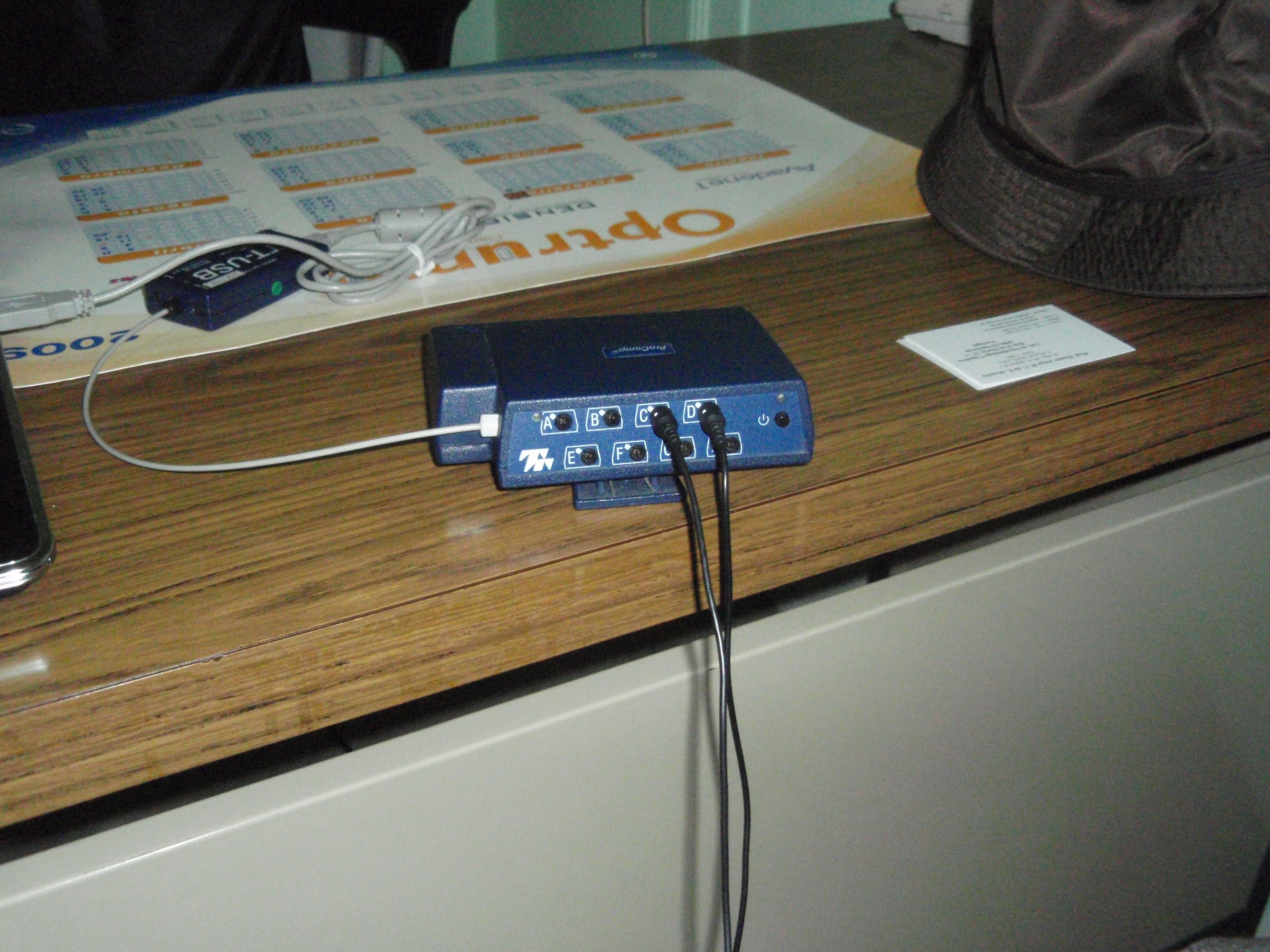
Bioelectronic medicine involves the use of sensors to record, stimulate, or modulate biological signals. In an educational context, this might include EEG (electroencephalography) headsets for focus tracking or wearable sensors monitoring heart rate variability (HRV) as a proxy for stress and cognitive fatigue.
Federated Learning solves the privacy dilemma. Instead of sending raw, intimate brainwave data to a central server to train an AI model, the model is sent to the user’s local device. The device “learns” from the user’s specific physiological patterns, updates the model locally, and sends only the mathematical improvements (gradients) back to the global server. The central server aggregates these updates to refine the global model, which is then pushed back to all devices. The result? A smarter system that learns from thousands of students without ever “seeing” a single raw neural signal.
Step-by-Step Guide: Implementing the Federated Bio-Loop
Data Acquisition Layer: Integrate non-invasive wearables (e.g., consumer-grade EEG headbands or biometric watches) to collect localized data streams such as alpha/beta wave ratios or galvanic skin response.
Local Feature Extraction: Use edge computing to process raw signals locally. Convert noise-heavy bio-signals into actionable metrics, such as “Cognitive Overload Index” or “Engagement Score,” directly on the student’s hardware.
Model Personalization: The local EdTech client evaluates the student’s performance against their own physiological baseline. If the user is struggling but physiologically “in the zone,” the system adjusts the complexity of the material.
Federated Aggregation: Periodically, the device sends the model updates (not the raw biological data) to a central server. This server combines these updates using a protocol like Federated Averaging (FedAvg).
Model Deployment: The global model—now smarter and more robust—is distributed back to all student devices, allowing the entire EdTech ecosystem to benefit from collective insights while ensuring individual privacy remains intact.
Examples and Real-World Applications
Adaptive Accessibility Tools: For students with neurodivergent conditions, such as ADHD or dyslexia, the framework can automatically adjust the pacing of reading materials. If the bioelectronic sensors detect a spike in frustration markers, the interface can simplify text, provide visual aids, or suggest a mandatory “micro-break” before cognitive performance degrades further.
Corporate Upskilling and Simulation: In high-stakes professional training (e.g., pilot simulation or surgical training), the federated framework monitors the trainee’s stress response. By correlating physiological “panic” signatures with performance errors, the system creates a personalized training path that forces the user to practice high-stress scenarios until their biological markers indicate improved emotional regulation.
The power of this framework lies in the decoupling of insight from identity. We are moving toward a future where educational software knows *how* you learn, without ever knowing *who* you are.
Common Mistakes
Ignoring Data Heterogeneity: Different students have different physiological baselines. A “stressed” heart rate for one student may be a “resting” rate for another. Models that do not account for individual biological variation will produce inaccurate feedback.
Over-reliance on Raw Data: Attempting to upload raw EEG data to a cloud server is not only a privacy nightmare but also a bandwidth bottleneck. Always process features at the edge.
Neglecting the Feedback Loop: Many EdTech systems collect data but fail to provide a tangible, actionable change in the UI. If the system detects cognitive fatigue, it *must* act—whether by slowing down the video or changing the interactive element—otherwise, the data is useless.
Advanced Tips
Latency-Optimized Edge Computing: To keep the user experience seamless, ensure that your feature extraction logic is lightweight. Use quantized models that can run efficiently on mobile processors. If the bio-feedback loop has a delay of more than 500 milliseconds, the user will lose the sense of “flow” and synchronization between their effort and the system’s response.
Differential Privacy: Even with federated learning, consider adding “noise” to the model updates sent to the server. This technique, known as Differential Privacy, mathematically guarantees that no individual’s specific biological signature can be reverse-engineered from the global model updates.
Contextual Normalization: Use “Calibration Phases” at the start of each session. Have students perform a baseline task to establish their resting state for that specific day, as sleep, caffeine, and time of day significantly impact bio-signals.
Conclusion
The Federated Bioelectronic Medicine Framework is the missing bridge between human cognitive science and digital learning. By prioritizing privacy through decentralized learning, we can finally create educational tools that are as responsive as a human tutor while benefiting from the massive scalability of AI. As we move forward, the focus must remain on ethical implementation and the respectful use of biological data. When executed correctly, this technology does not just teach; it understands, adapts, and empowers every learner to reach their peak cognitive potential.
Introduction For decades, education technology (EdTech) has focused on the external interface: smarter software, adaptive algorithms, and digital delivery systems.…
Saliency Maps: Decoding the “Black Box” of AI Decision-Making Introduction As machine learning models become the architects of modern decision-making,…
The Administrative Bottleneck in Modern Education Educational institutions frequently suffer from a misalignment between mission and execution. While leaders prioritize…