Beyond the Metric: Why Ethical Engagement Requires Respecting the Ineffable
Introduction
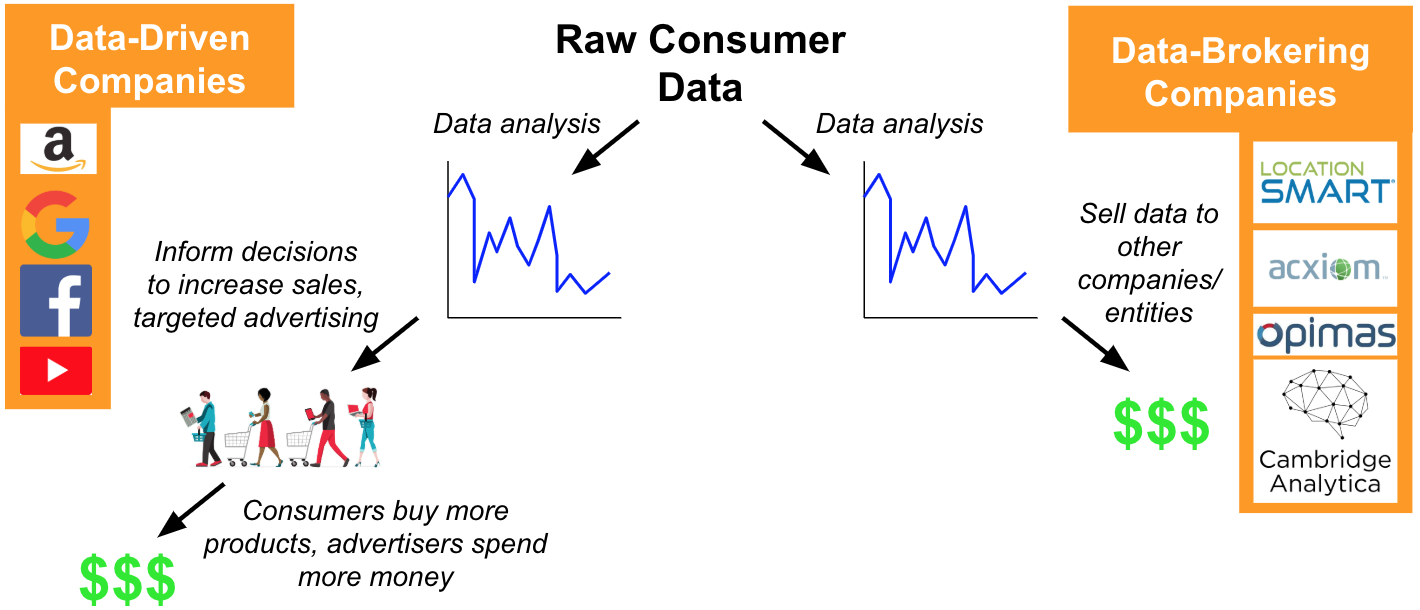
We live in an age of quantification. From the metrics on our social media dashboards to the sentiment analysis algorithms powering corporate decision-making, we are constantly translating human experience into rows of data. This impulse—to categorize, measure, and optimize—is a cornerstone of modern efficiency. However, it harbors a dangerous blind spot: the assumption that if an experience cannot be measured, it does not exist or carries no value.
Ethical engagement begins with the humble recognition that data points cannot encompass the totality of human experience. When we treat individuals as mere collections of demographic tags or behavioral signals, we strip them of their agency, complexity, and that elusive quality we often call the “sacred.” This article explores why data-driven systems must be balanced with human-centric wisdom, providing a framework for engaging with people—not as digital profiles, but as whole, complex beings.
Key Concepts: The Reductionist Trap
At the heart of this issue is the concept of reductionism. Reductionism is the practice of simplifying complex phenomena into their basic parts. While useful for biology or physics, it becomes ethically hazardous when applied to human consciousness and community.
The Data-Experience Gap: Data is inherently historical. It records what has already happened, capturing a static snapshot of a person. Yet, human experience is fluid, aspirational, and often contradictory. When we mistake the “map” (the data) for the “territory” (the person), we inadvertently engage in bias. We assume we know what a person wants or needs based on their past, ignoring their capacity for change, growth, and transcendence.
The Sacred as the Inquantifiable: In this context, “sacred” does not necessarily denote religious dogma. It refers to the depth of human experience that defies categorization: our personal values, our grief, our flashes of inspiration, and our moral intuitions. These are the elements that dictate how we live, yet they frequently fall outside the scope of standard data collection. To ignore them is to build systems—and relationships—that are structurally incomplete.
Moving from a data-first approach to an ethics-first approach requires a fundamental shift in perspective. Follow these steps to audit and improve how you engage with others.
Identify the Data Ceiling: Before making a decision based on analytics, ask: “What does this data fail to tell me?” List the emotional or subjective factors that your metrics are missing. Acknowledge that the data is only a partial view.
Practice Qualitative Inquiry: Supplement your quantitative metrics with deep listening. Conduct interviews, focus groups, or informal conversations that allow people to express their narratives in their own words. Look for the “why” behind the “what.”
Implement “Human-in-the-Loop” Decision Making: Never allow an algorithm or a spreadsheet to be the final arbiter of a decision involving people. Use data to inform, not to dictate. Ensure there is always a human lens applied to the output before action is taken.
Create Feedback Loops for Agency: Provide individuals with the ability to correct or refine the data you have on them. If someone feels misidentified or boxed in by a system, create an accessible path for them to offer a counter-narrative.
Evaluate for Impact, Not Just Utility: Assess your engagement strategies based on the flourishing of the individual, not just the efficiency of the transaction. Ask if your approach respects the dignity and complexity of the people involved.
Real-World Applications
Healthcare and Patient Experience: A hospital may use data to track patient recovery times and readmission rates. While this data is vital, it misses the “sacred” experience of the patient’s fear, their family dynamic, and their personal comfort. An ethical approach would integrate quantitative clinical data with qualitative assessments of the patient’s psychological well-being, ensuring that the “patient journey” is treated as a human experience rather than a series of clinical checkpoints.
Workplace Management: HR departments often use productivity trackers to monitor employee performance. An ethical manager recognizes that high output does not always equal a healthy or sustainable team. By recognizing the limitations of performance metrics, a leader can supplement data with empathetic check-ins, recognizing the “sacred” space of employee morale, burnout, and career purpose, which never show up on a productivity graph.
Community Advocacy: Organizations often try to solve social issues by looking at poverty indices or census data. However, those numbers never capture the resilience, culture, and community spirit of a neighborhood. Ethical engagement means entering these communities as partners who listen to local stories, rather than as observers who only look at the statistics of their struggle.
Common Mistakes
The Fallacy of Objectivity: Believing that because data is numerical, it is inherently neutral. Data is gathered, interpreted, and utilized by humans, all of whom have their own biases. Numerical data is not “truth”—it is a filtered perspective.
Optimization Obsession: Trying to “solve” human behavior like a technical bug. Human lives are not problems to be optimized; they are experiences to be supported. Trying to force people into an “optimized” flow often results in alienation.
Ignoring Context: Applying a dataset from one context to another without considering the environmental, cultural, or historical variables that shape the current moment. Context is what transforms raw data into meaningful wisdom.
Data Paternalism: Making decisions for others based on what your data says is “best for them,” without including them in the process. This strips people of their autonomy and is a hallmark of unethical engagement.
Advanced Tips for Navigating the Future
As AI and machine learning continue to advance, the gap between data and the “sacred” will likely widen unless we intentionally bridge it. Here are deeper insights for maintaining an ethical stance:
Cultivate “Negative Capability”: This term, coined by the poet John Keats, describes the capacity to remain in uncertainties, mysteries, and doubts without an irritable reaching after fact and reason. In a world of data, we feel pressure to know everything. Cultivating the ability to say, “I don’t know” or “The data doesn’t show the whole picture,” is a radical act of humility that keeps doors open for deeper, more ethical engagement.
Prioritize Interpretive Empathy: Treat the interpretation of data as an act of translation. When you see a data point, ask yourself how you might interpret that same data through the lens of a person’s hopes or fears. This imaginative leap is what moves us from being data processors to being compassionate leaders and community members.
Build for Human Sovereignty: Design systems that prioritize the individual’s right to be seen beyond their digital footprint. As designers, managers, or communicators, ensure your systems allow for serendipity, complexity, and the occasional defiance of expectations. If your system makes it impossible for someone to be “surprising,” it is not serving them; it is controlling them.
Conclusion
The pursuit of data-driven insight is not inherently malicious. It is a powerful tool for understanding trends and managing complexity. However, the ethics of engagement are found in the margins—in the space between the data point and the person. When we choose to recognize that every individual is more than the sum of their metrics, we restore the dignity required for truly human-to-human connection.
By accepting that some aspects of life are inherently ineffable, we do not weaken our effectiveness; we enhance our wisdom. We stop managing “segments” and start cultivating relationships. We stop chasing “conversion rates” and start building trust. Ethical engagement, ultimately, is the practice of looking at a screen, seeing the numbers, and having the courage to look away—or to look deeper—in order to see the person standing on the other side.
Deploying Monitoring Agents for Asynchronous Inference Analysis Introduction In the high-stakes world of machine learning production, deployment is not the…
Validate Retraining Sets Against Production Drift Signatures to Ensure High-Quality Model Updates Introduction Machine learning models are not “set and…
Discover how Graph-Based Zero-Knowledge Proofs secure P2P energy trading and carbon credit verification while maintaining privacy in decentralized energy systems.
Navigating the Global AI Regulatory Landscape: A Strategic Guide for Organizations Introduction The rapid proliferation of artificial intelligence has transitioned…
Outline Introduction: Defining the “System Prompt” vulnerability and why it matters for modern security. Key Concepts: Understanding LLM architecture, prompt…
Introduction Modern agriculture stands at a critical juncture. For decades, the industry has relied on blunt-force fertilization—applying massive, uniform quantities…