
Uncategorized
-

Financial institutions must balance algorithmic transparency with the protection of proprietary trading strategies.
The Transparency Paradox: Balancing Algorithmic Disclosure with Proprietary Edge Introduction In the modern financial landscape, algorithms are no longer just tools—they are the core of institutional survival. From high-frequency trading (HFT) platforms to AI-driven credit scoring engines, financial institutions rely on proprietary models to gain a competitive edge. However, this reliance has invited intense scrutiny…
-

Auditable trails are essential for demonstrating that models do not perpetuate systemic biases in lending.
Outline Introduction: The shift from opaque “black box” models to defensible, transparent AI in financial services. Key Concepts: Defining auditable trails, algorithmic bias, and the regulatory landscape (Fair Lending Act, ECOA). Step-by-Step Guide: Implementing a lifecycle-based audit trail—from data ingestion to model deprecation. Examples: Case study on proxy variable identification (e.g., how zip codes can…
-

Local interpretability focuses on explaining individual predictions to enhance user trust.
Outline Introduction: The “Black Box” problem in AI and why local interpretability is the bridge to human trust. Key Concepts: Global vs. Local interpretability; defining surrogate models (LIME/SHAP). Step-by-Step Guide: How to implement local explanations into a deployment pipeline. Examples: Applications in Fintech (loan denials) and Healthcare (diagnostic recommendations). Common Mistakes: Over-relying on global feature…
-

Legal compliance requires documenting not just the model’s prediction, but the rationale behind its logic.
Contents 1. Introduction: The paradigm shift from “Model as Black Box” to “Model as Accountable Agent.” 2. Key Concepts: Understanding Interpretability vs. Explainability and the legal mandates (GDPR, EU AI Act). 3. Step-by-Step Guide: How to build an audit trail for decision logic. 4. Real-World Applications: Financial lending and healthcare diagnostic systems. 5. Common Mistakes:…
-

Global interpretability aims to provide a comprehensive understanding of the entire model logic.
Article Outline Introduction: The shift from “Black Box” models to transparent AI decision-making. Key Concepts: Defining Global Interpretability vs. Local Interpretability. Methodologies: Feature importance, Partial Dependence Plots (PDP), and Surrogate models. Step-by-Step Guide: A workflow for implementing global interpretability. Case Studies: Credit scoring and healthcare diagnostic modeling. Common Mistakes: Pitfalls like multicollinearity and over-simplification. Advanced…
-

The “Right to Explanation” under GDPR mandates that automated decisions be understandable to the affected party.
The Right to Explanation: Demystifying Automated Decisions Under GDPR Introduction In an era where algorithms determine everything from your credit score to your insurance premiums, the “black box” of artificial intelligence is no longer just a technical concern—it is a legal one. When a machine denies a loan or filters a job application, who is…
-

Input perturbation involves systematically altering features to observe changes in prediction stability.
Contents 1. Introduction: Defining the “black box” problem in AI and why stability testing is critical for reliability. 2. Key Concepts: Understanding robustness, local Lipschitz continuity, and the mechanics of feature perturbation. 3. Step-by-Step Guide: A tactical workflow for implementing perturbation analysis (Baseline setting, sensitivity analysis, noise injection, and metric tracking). 4. Examples & Case…
-

Visualizations must be tailored to the specific persona, such as a risk officer or a medical practitioner.
Outline Introduction: The “one-size-fits-all” dashboard fallacy. Key Concepts: Defining the intersection of user mental models and data representation. Step-by-Step Guide: A framework for persona-driven design (Discovery, Filtering, Encoding, Contextualizing). Examples/Case Studies: Contrast between a Risk Officer (high-level aggregation) and a Medical Practitioner (patient-specific granular data). Common Mistakes: Over-visualization, lack of actionable hierarchy, and “Data Dumping.”…
-

Excessive technical detail can lead to “explanation fatigue,” causing users to ignorecritical model warnings.
Contents 1. Main Title: The Paradox of Precision: Combating Explanation Fatigue in Technical Interfaces 2. Introduction: Define the “Cognitive Overload” problem where too much detail leads to blindness. 3. Key Concepts: Defining “Explanation Fatigue,” the role of cognitive load theory, and the threshold of “warning apathy.” 4. Step-by-Step Guide: A practical framework for auditing and…
-
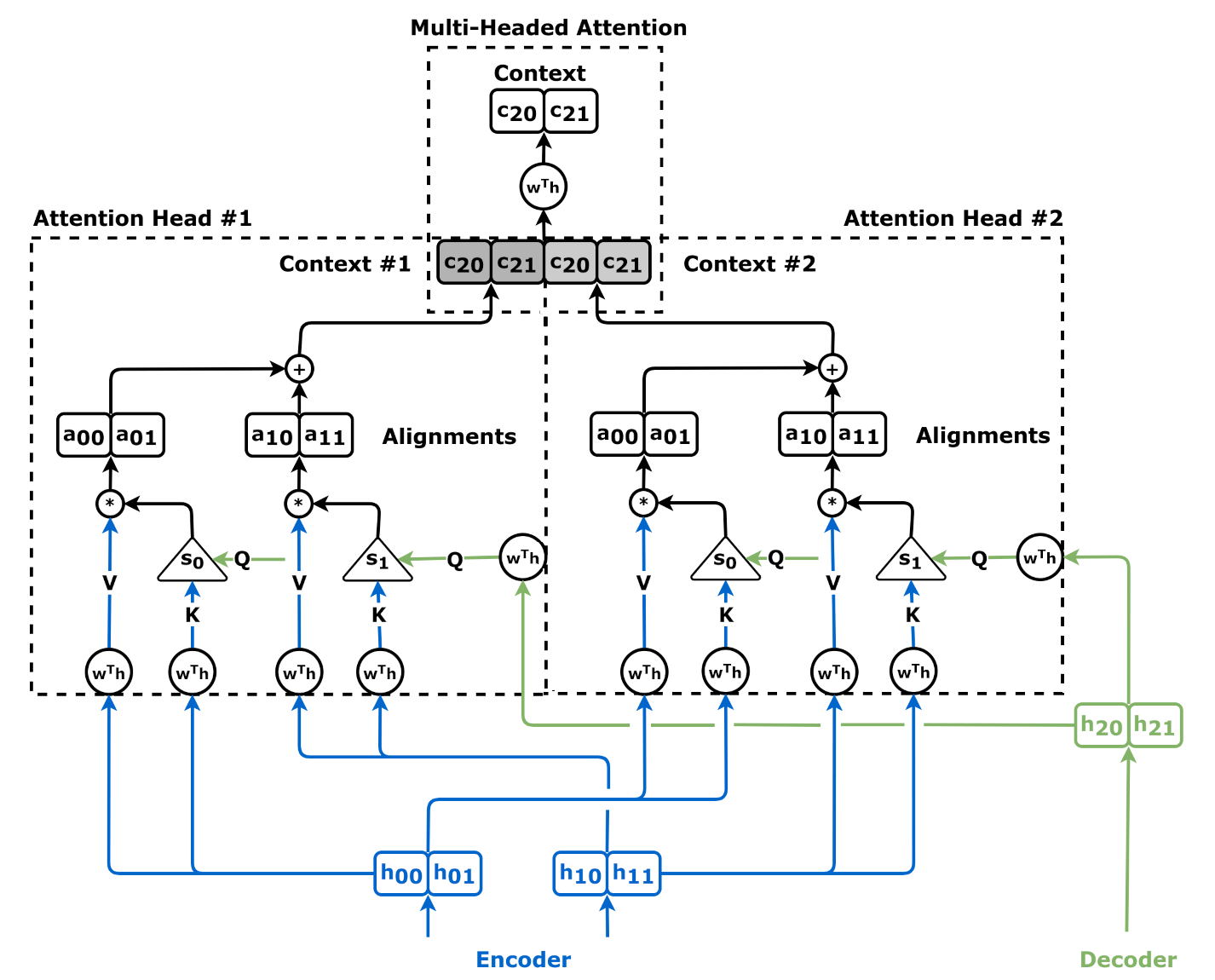
Attention mechanisms in Transformers inherently provide a form of interpretability via weight visualization.
Outline Introduction: The “Black Box” problem and why Attention is the bridge to transparency. Key Concepts: Understanding Query, Key, and Value vectors and the attention map. Step-by-Step Guide: Extracting, normalizing, and visualizing attention weights. Examples: Analyzing machine translation and document summarization. Common Mistakes: The “Attention is not Explanation” fallacy and confounding factors. Advanced Tips: Using…