The End of the Waiting List: The Operational Shift in Healthcare
The global organ transplant system is a broken supply chain. It relies on a sporadic, unpredictable, and ethically fraught logistics network that treats human life as a scarce commodity. For decades, the bottleneck has been binary: you either find a donor match, or you succumb to systemic failure. Bio-printing human organs is moving us past this scarcity model, transforming biology from a fixed constraint into a programmable manufacturing process.
This is not merely a medical breakthrough; it is a fundamental shift in the strategy of human longevity. When we can manufacture tissue on demand, we transition from reactive crisis management to proactive asset maintenance. For leaders and operators, understanding this shift is essential, as the implications for insurance, workforce productivity, and the bio-economy will be seismic.
From Prototyping to Production
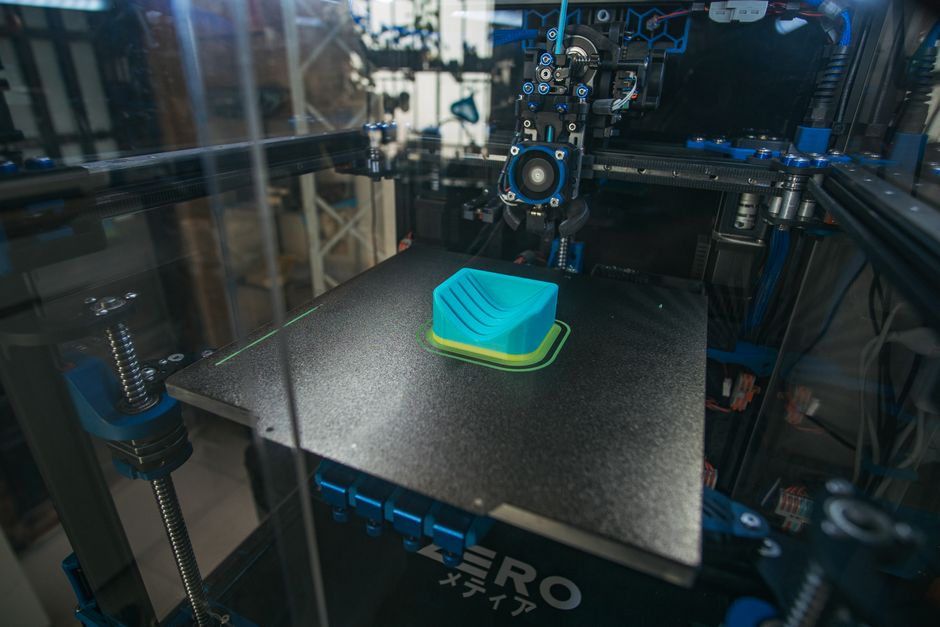
Early bio-printing was effectively 3D prototyping—simple scaffolds and basic cell structures that lacked the complexity for clinical application. The current frontier involves multi-material printing: depositing hydrogels, living cells, and growth factors in precise geometries. The goal is to replicate the extracellular matrix, the structural framework that gives organs their function and durability.
The operational challenge is no longer about geometry; it is about vascularization. You can print a structure, but if it cannot support a blood supply, it becomes necrotic tissue within hours. High-performance labs are now integrating micro-fluidic channels directly into the printing process, ensuring that the finished product is not just a replica, but a functioning biological machine. This mirrors the transition in operational excellence: moving from creating static outputs to designing systems that sustain their own internal flows.
The Data-Driven Biological Factory
Bio-printing relies on the digitization of biological data. To print a functional liver or kidney, you require a digital twin—a precise 3D map derived from patient imaging—combined with bio-ink formulations that react predictably to environmental stimuli. This is the ultimate application of high-performance data utilization.
We are seeing the rise of a new sector: biological manufacturing as a service. Companies are moving toward standardized bio-ink cartridges and automated printing platforms that remove the “human error” variable from tissue cultivation. By standardizing the input, these organizations are scaling the output, drastically reducing the cost-per-unit of synthetic organs. This is the same trajectory taken by the semiconductor industry; once the process is standardized, the rate of innovation becomes exponential.
Strategic Implications for the Future
As this technology matures, the definition of “health” for the high-performing individual will change. If you can replace a failing organ with a bio-printed version grown from your own stem cells—eliminating the risk of rejection and the need for lifelong immunosuppressants—the ceiling for human longevity shifts upward.
Leaders must consider the impact on the decision-making frameworks of the next decade. When health becomes a modular, replaceable asset, how do we value human capital? How do we calibrate risk when chronic disease is no longer a terminal career event? We are moving into an era where biological resilience is an engineered capability rather than a genetic roll of the dice.
The organizations that dominate this space will not necessarily be the ones with the best surgeons, but the ones with the most robust supply chains for bio-materials and the most sophisticated software for tissue orchestration. In the world of execution, the winner is usually the one who masters the underlying infrastructure before the rest of the market realizes the rules have changed.