The Billion-Year Hard Drive: Rethinking Data Longevity
Most organizational data strategies operate on a five-year horizon. We treat information like perishable inventory, constantly migrating it across cloud instances and hardware refreshes. But when we look at the scale of human knowledge, this approach is fundamentally flawed. We are currently presiding over a “digital dark age” where the lifespan of our most critical strategic assets—intellectual property, architectural records, and historical decision-making logs—is shorter than the shelf life of a plastic bottle.
Inter-generational data storage is not merely an archival concern; it is a fundamental pillar of operational excellence. If an organization cannot access its foundational logic or historical data in fifty years, it has failed to preserve its own institutional memory. True leadership requires building systems that survive the tenure of the current executive team.
The Fragility of Modern Bit-Rot
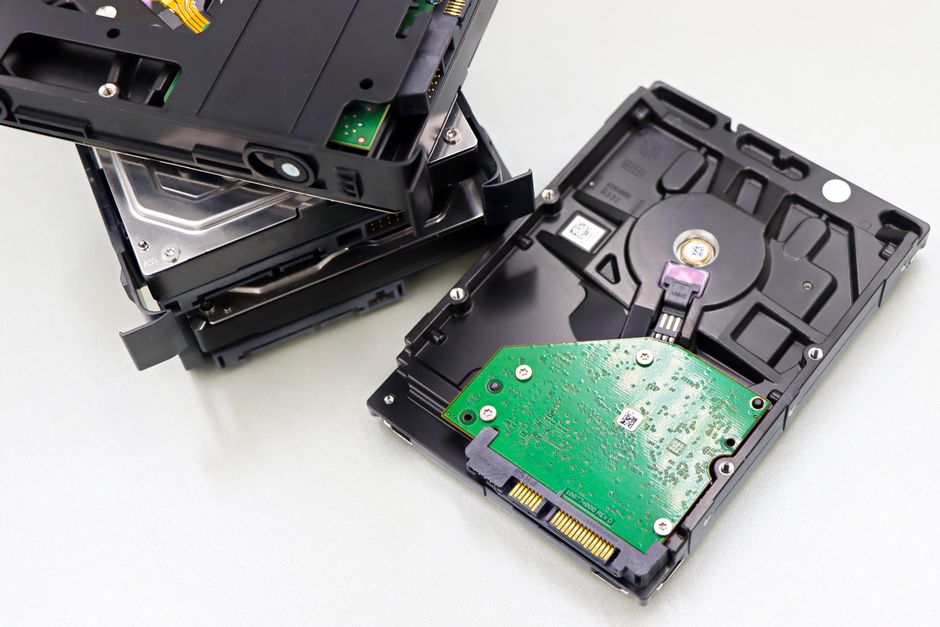
The primary enemy of long-term data retention is not decay, but obsolescence. Magnetic tape degrades, hard drives fail, and file formats go extinct. Relying on active migration—constantly copying data from old mediums to new ones—is a high-risk strategy. It introduces human error, security vulnerabilities, and massive operational overhead.
High-performance thinking demands that we distinguish between “hot” data, which requires immediate access, and “cold” data, which requires immutable longevity. Most leaders conflate the two, keeping everything in high-cost, high-maintenance active storage. This is a waste of resources. We need to implement tiered storage architectures where archival data is offloaded to mediums designed for multi-generational stability, such as fused silica glass or synthetic DNA.
Operationalizing Deep-Time Archives
To move from temporary storage to inter-generational preservation, organizations must adopt three core principles:
Format Agnosticism: Data should be stored in open, self-describing formats. If your data requires proprietary software to be read, it is already dead. Every archival record must be accompanied by the specifications required to reconstruct the file structure from scratch.
Immutable Verification: Implement cryptographic hashing at the point of creation. Over decades, the ability to verify that a file has not been altered is as important as the ability to read the file itself.
Decoupling from Infrastructure: Stop tying your data to the evolution of your server hardware. True decision-making in this space involves investing in storage media that does not require active power or cooling to remain stable.
The Strategic Cost of Information Loss
The cost of losing data is rarely immediate, which is why it receives so little budget priority. However, the cumulative loss of context is a silent killer of execution. When teams lose access to the “why” behind past strategic pivots, they are doomed to repeat the same failures. Information is the fuel of AI models; if your archival data is fragmented or lost, you are effectively lobotomizing the future intelligence of your organization.
We must treat data storage as an infrastructure project on par with physical real estate. Just as an architect designs a building to last a century, a data officer must design the storage architecture to outlive the current business cycle. This requires a shift from viewing data as a liability to be managed, to viewing it as a permanent asset to be preserved.
Bridging the Gap
The challenge is not technological—the physics of long-term storage is well-understood. The challenge is one of incentive alignment. Institutional leaders are incentivized to optimize for quarterly performance, not for the integrity of data in the year 2100. Overcoming this requires a structural change in how we allocate capital toward long-term leverage. By investing in archival-grade storage today, you are buying a competitive advantage for your successors: the ability to learn from the past without the friction of reconstruction.