Require periodic reassessments of the original AI use-case for continued validity.

Contents1. Introduction: The “Set it and Forget it” trap in AI governance. Why initial validity is not permanent.2. Key Concepts: Defining AI drift, conceptual integrity, and the lifecycle of model relevance.3. Step-by-Step Guide: Establishing a […]
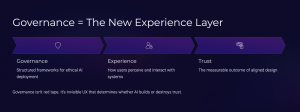

Governance Frameworks, Policy Documentation, and Compliance Requirements

Architecting Accountability: A Practical Guide to Governance, Policy, and Compliance Introduction In the modern business landscape, “governance” is often dismissed as bureaucratic red tape—a necessary evil reserved for legal departments and auditors. However, when viewed […]

Define the organization’s stance on the use of proprietary versus open-source AI.

Outline Introduction: Defining the AI strategy conundrum in the enterprise. Key Concepts: Proprietary vs. Open-Source AI defined (Black-box vs. Glass-box). Step-by-Step Guide: Assessing business needs, risk profiles, and resource allocation. Examples: Comparing GPT-4 integration versus […]

Establish guidelines for the secure decommissioning and retirement of legacy models.

The Lifecycle of AI: Establishing Protocols for Secure Model Decommissioning Introduction In the current gold rush of artificial intelligence, organizations are focused almost exclusively on the “birth” of models—training, fine-tuning, and deployment. However, the most […]

Maintain a comprehensive registry of model versions and their respective safety profiles.

Outline Introduction: The shift from “move fast and break things” to responsible AI deployment. Key Concepts: Defining model versioning, safety profiles, and the concept of a “Model Card” registry. Step-by-Step Guide: How to build an […]

Require a formal “Go/No-Go” review process before every major model update.

The Case for the Formal “Go/No-Go” Review: Safeguarding AI Model Deployments Introduction In the high-stakes world of machine learning and generative AI, the speed of deployment is often prioritized over the stability of the output. […]

Ensure all API endpoints require mutual TLS authentication for secure connection.

Securing Your API Infrastructure: Implementing Mandatory Mutual TLS (mTLS) Introduction In an era where API breaches are becoming the primary vector for enterprise data theft, traditional perimeter-based security—like simple API keys or basic OAuth tokens—is […]

Automate the cleanup of sensitive transient data after post-inference processing.

Contents1. Introduction: The hidden liability of transient inference data.2. Key Concepts: Understanding transient data lifecycles and the “Privacy by Design” mandate.3. Step-by-Step Guide: Architectural patterns for automated cleanup (Lambda triggers, TTL policies, and secure shredding).4. […]

Set mandatory training requirements for developers regarding AI safety standards.

Implementing Mandatory AI Safety Training for Development Teams: A Strategic Framework Introduction The rapid proliferation of generative AI and automated decision-making systems has transitioned from an experimental phase to a core business dependency. However, as […]