Architecture of Autonomy: Understanding Distributed Authority
— by
Steven Haynes
Contents
1. Introduction: Defining the shift from hierarchical power structures to decentralized, planetary-scale networks.
2. Key Concepts: Defining “autonomous nodes,” “self-correction,” and the mechanics of distributed consensus.
3. Step-by-Step Guide: How to evaluate or design a system based on distributed authority.
4. Real-World Applications: Blockchain protocols, mesh networks, and decentralized autonomous organizations (DAOs).
5. Common Mistakes: The fallacy of “decentralized by name” and the danger of silent centralization.
6. Advanced Tips: Understanding game theory, sybil resistance, and state propagation.
7. Conclusion: The future implications for governance and digital infrastructure.
***
The Architecture of Autonomy: How Distributed Authority Shapes Our Future
Introduction
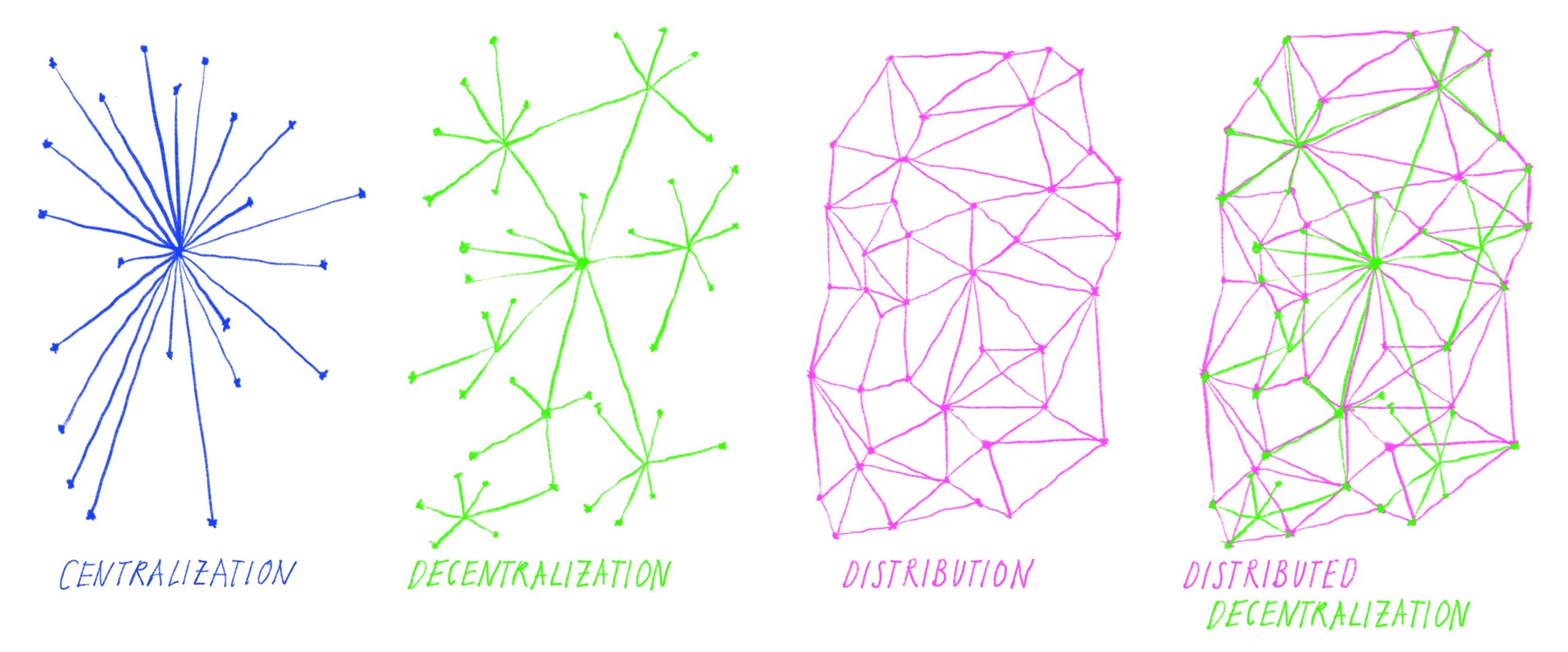
For centuries, human civilization has relied on centralized hubs of power. Whether it is a government, a financial institution, or a corporate server, our systems have been built on the principle of the “single point of failure.” However, we are currently witnessing a profound architectural shift: authority is migrating away from these monolithic centers and is being distributed across a planetary network of autonomous, self-correcting nodes.
This transition is not merely technical; it is a fundamental reconfiguration of how we manage trust, verify truth, and execute decision-making. For the modern professional, understanding this shift is essential, as these decentralized frameworks are becoming the bedrock of everything from global finance to supply chain logistics and digital identity.
Key Concepts
To understand the mechanics of distributed authority, we must first break down the three pillars that hold these systems together: autonomy, distribution, and self-correction.
Autonomous Nodes
In this context, a “node” is any individual entity—a computer server, a participant in a protocol, or an automated agent—that operates according to a pre-defined set of rules. An autonomous node does not require permission from a central authority to execute its function. It acts based on the data it receives and the protocols it follows, making it inherently resilient to external interference.
Distributed Authority
Unlike a pyramid structure, where power flows from the top down, distributed authority operates like a mycelial network. No single node possesses the “truth.” Instead, the truth—or the current state of the network—is a product of consensus reached among these nodes. If one node fails, the network remains intact. If one node is compromised, the system rejects its input.
Self-Correction
Self-correction is the mechanism that keeps the network honest. In a distributed system, this is usually achieved through cryptographic proof and game theory. If a node attempts to broadcast invalid data or deviate from the network’s rules, the other nodes identify this discrepancy and isolate or penalize the offender. This allows the system to maintain its integrity without a human “manager” overseeing the process.
Step-by-Step Guide: Evaluating Distributed Systems
Whether you are integrating a decentralized tool into your business or building a new protocol, you must audit the system’s architecture. Use this framework to determine if a system truly distributes authority.
Analyze the Consensus Mechanism: Does the system rely on a central server to validate transactions, or is there an algorithmic consensus (such as Proof of Stake or Proof of Work)? If there is a central API key, the authority is not distributed.
Assess Entry Barriers: A truly distributed network allows any node to join provided they meet the protocol’s technical requirements. If an entity can unilaterally ban participants, the system is centralized.
Examine Data Sovereignty: Can the nodes store and access the ledger independently? If the nodes rely on a single, proprietary database for their history, they are not autonomous.
Test for Resilience: If the primary developer or the “founding” node goes offline, does the network continue to function? If the answer is no, the authority is still centralized.
Evaluate Incentive Alignment: Are the nodes incentivized to act truthfully? A robust system uses economic rewards and penalties to ensure that the most profitable action for a node is also the most honest action for the network.
Examples and Real-World Applications
The theory of distributed authority has moved from academic papers to the global stage. Here is how it manifests in the real world:
The strength of a distributed network is measured not by the power of its nodes, but by the difficulty of subverting the collective consensus.
Decentralized Finance (DeFi): Protocols like Uniswap or Aave operate as autonomous financial nodes. They execute trades and lending agreements without a central bank or broker. The “authority” is written into the smart contract code, which is verified by thousands of nodes globally.
Decentralized Physical Infrastructure Networks (DePIN): Projects like Helium or Hivemapper allow individuals to build networks for wireless coverage or mapping. By incentivizing independent nodes to provide data, these networks build global services at a fraction of the cost of traditional telecommunications giants, all without a central governing body.
Governance via DAOs: Decentralized Autonomous Organizations allow members to vote on the trajectory of a project. The results of the vote are automatically executed by the code, removing the need for a corporate board of directors to interpret or implement decisions.
Common Mistakes
Transitioning to or adopting distributed systems is fraught with pitfalls. Avoid these common errors:
Confusing “Distributed” with “Decentralized”: A system can be distributed across multiple servers while still being controlled by a single person or entity. Always verify where the administrative keys lie.
Ignoring the “Sybil Attack” Risk: In a system where authority is distributed, one entity might try to create thousands of fake nodes to gain a majority. Ensure the system has a cost-to-entry (like token staking) to prevent this.
Underestimating Latency: Distributed consensus takes time. You cannot achieve the same millisecond-speed transaction times as a centralized database because the system must reach a global agreement. Do not sacrifice security for speed prematurely.
Neglecting Maintenance: Just because a system is autonomous does not mean it is static. Code needs auditing and upgrades. If there is no mechanism for community-led upgrades, the protocol will eventually stagnate.
Advanced Tips
To master the implementation of distributed systems, you must look beyond the basic architecture and into the mechanics of long-term sustainability.
Focus on “Game Theory” Design: The most successful distributed networks view their participants as rational economic actors. You must design incentives that make it “expensive” to lie and “profitable” to follow the protocol rules. This is known as cryptoeconomics.
Leverage Zero-Knowledge Proofs (ZKPs): If your network handles sensitive data, use ZKPs. This allows nodes to verify the accuracy of information without seeing the underlying data itself. It combines the benefits of distributed authority with the necessity of privacy.
The “Fork” as a Check and Balance: In a truly distributed system, the ability to “fork” (create a new version of the code if the community disagrees with the current direction) is the ultimate check on authority. It ensures that the developers remain accountable to the users. If the users don’t like the direction, they can simply move to a new, better-aligned version of the network.
Conclusion
Authority distributed across a planetary network of autonomous, self-correcting nodes represents a fundamental evolution in human organization. By shifting trust from fallible human institutions to verifiable, algorithmic processes, we are creating infrastructure that is more transparent, resilient, and equitable.
As you navigate this new landscape, remember that the goal is not to eliminate authority, but to democratize it. Whether you are building, investing, or participating, the key is to prioritize systems that minimize reliance on any single node and maximize the integrity of the collective whole. The future belongs to those who understand that in a truly decentralized world, the network is the authority.





Leave a Reply