The Trust Equation: Why Explainability is the Foundation of Automated Systems
Introduction
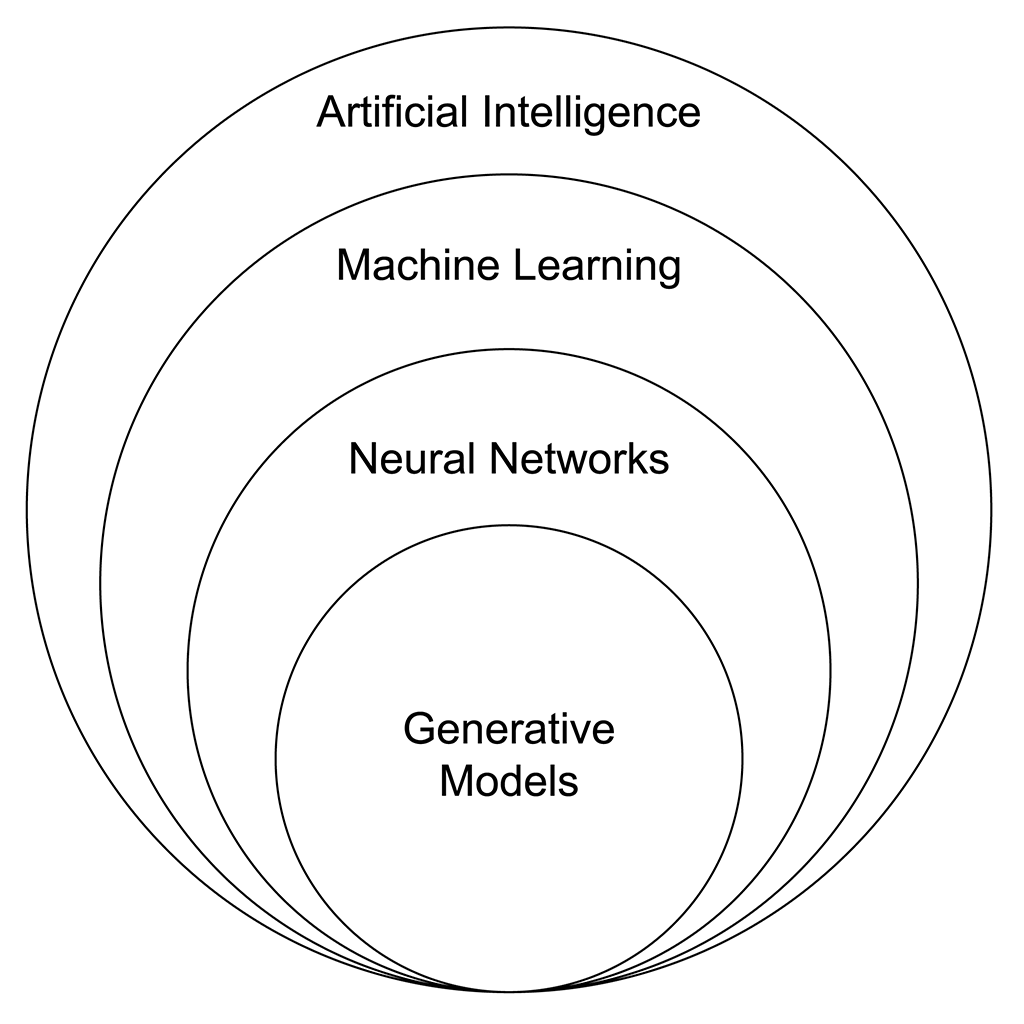
In an era where artificial intelligence and machine learning drive everything from credit approvals to medical diagnoses, a silent crisis is brewing: the “black box” problem. When an automated system makes a critical decision but cannot articulate the “why” behind it, human trust evaporates. Whether you are a business leader integrating AI tools or a professional navigating an increasingly automated workflow, understanding the link between reliability and explainability is no longer optional—it is a competitive necessity.
Trust in technology is not a binary switch; it is a calibrated response to performance. When a system functions reliably but obscures its decision-making process, it creates anxiety. Conversely, when a system is transparent but unreliable, it creates frustration. True adoption occurs only at the intersection of consistent performance and lucid communication.
Key Concepts: The Mechanics of Explainable AI (XAI)
Explainable AI (XAI) refers to a set of processes and methods that allow human users to comprehend and trust the results and output created by machine learning algorithms. To understand why this drives trust, we must break down two core pillars: Reliability and Clarity.
Reliability: This is the consistency of output. Does the system produce the same result for identical inputs? Does it handle edge cases with grace rather than catastrophic failure? Reliability builds the baseline for “calibrated trust.”
Clarity: This is the human-readable narrative attached to an output. Clarity moves beyond a simple “Yes/No” score to provide a rationale—for example, explaining that a loan was denied due to a specific debt-to-income ratio rather than a vague “algorithmic risk assessment.”
When these two elements align, they create Interpretability. Interpretability allows a human operator to verify the logic of the system, enabling them to intervene when the AI encounters a scenario it wasn’t trained to handle. Without this, users tend to either blindly follow automated suggestions (over-trust) or ignore them entirely (under-trust), both of which lead to operational failure.
Step-by-Step Guide: Building Trust in Your Automated Workflows
If you are implementing automated systems, you can move from “blind reliance” to “informed collaboration” by following this framework:
Audit the “Why”: Before deploying any automated tool, identify the decision points that carry the most risk. For these points, mandate that the software provides a confidence score alongside the output. If the system is unsure, it must be programmed to flag the item for human review.
Implement Feature Importance Mapping: Use tools that identify which variables weighed most heavily in a decision. If a predictive maintenance tool suggests replacing a part, it should clearly state, “Triggered due to a 15% deviation in vibration frequency.”
Establish a Feedback Loop: Create a mechanism for human operators to label instances where the AI’s explanation was unhelpful or inaccurate. This “human-in-the-loop” data is vital for developers to refine the system’s logic.
Standardize Human-Readable Logs: Move away from technical jargon. Translate system logs into plain language summaries for end-users, ensuring that the explanation focuses on actionable, domain-specific factors rather than raw code.
Continuous Validation: Reliability isn’t a one-time setup. Periodically stress-test the system with adversarial data to see if the explanations remain consistent and logical under pressure.
Examples and Case Studies: Real-World Applications
The impact of explainability varies significantly across sectors. Here is how it manifests in the real world:
Healthcare: Clinical Decision Support
Consider an AI-driven diagnostic tool used in oncology. A system that simply flags a biopsy as “high risk” is less trusted by doctors than one that highlights the specific cellular markers that triggered the alert. By visually identifying the anomalies, the AI becomes a consultant to the doctor rather than a replacement, fostering a level of trust that allows the professional to validate the machine’s findings.
Finance: Loan Underwriting
Modern credit systems often use machine learning to evaluate applicants. In the past, these were rigid models. Today, advanced systems provide “reason codes” for every decision. If an applicant is rejected, the system lists specific factors like “lack of credit history” or “recent delinquency.” This transparency not only builds trust with the applicant but also provides the bank’s risk team with the confidence that the model is not relying on biased or discriminatory variables.
Common Mistakes to Avoid
The “Confidence Illusion”: Providing an overly precise probability score (e.g., 98.42%) when the model is actually high-variance. This creates a false sense of certainty that leads to dangerous over-reliance.
Overloading the User with Data: Providing “transparency” by dumping raw data or thousands of lines of code. True clarity is about distillation—showing the essential drivers of a decision, not the entire computational history.
Ignoring Contextual Nuance: Applying the same level of explanation for low-stakes automation (like email sorting) as for high-stakes automation (like medical triaging). Tailor the depth of the explanation to the severity of the decision.
The “Black Box” Defense: Using the complexity of the model as an excuse for lack of clarity. If you cannot explain how a system reaches a decision, you should not be using that system for high-stakes tasks.
Advanced Tips: Beyond Simple Explanations
“Trust is not about the transparency of the algorithm, but the transparency of the intent.”
As you evolve your usage of automated systems, consider Contrastive Explanations. Instead of just asking, “Why was this decision made?” ask, “Why this, and not that?” This is how humans naturally learn. Programming systems to provide “counterfactuals”—such as “If your income were $5,000 higher, this loan would have been approved”—offers actionable paths forward for users, turning a rejection into a roadmap.
Furthermore, emphasize Uncertainty Quantification. A sophisticated system should recognize when it is operating outside its “zone of competence.” If an automated system has low training-data coverage for a specific input, it should explicitly communicate that uncertainty. Admitting “I am not sure” is the single most effective way to build long-term, high-integrity trust with human counterparts.
Conclusion
The relationship between humans and automated systems is undergoing a permanent transformation. We are moving away from the era of “trust by default” toward an era of “trust by verification.”
Reliability ensures that a system does its job correctly, but explainability ensures that we know why it does that job. Without reliability, explanations are merely excuses for failure. Without clarity, even the most reliable system remains a source of unease and inefficiency. By prioritizing both, you empower your organization to leverage AI as a transparent, dependable partner. Start by auditing your current automated touchpoints, simplifying the language of your decision logs, and prioritizing the “why” in every output. This is the surest path to building a future where automation serves as a catalyst for human ingenuity rather than a barrier to it.
Mitigating Algorithmic Inequality: Implementing Bias Detection Tools in the Testing Phase Introduction In an era where machine learning models automate…
Outline Introduction: The shift from technical proficiency to digital fluency as a core leadership competency. Key Concepts: Defining digital literacy…
Learn how to secure system upgrades using a multi-stage validation framework. Master simulation, public review, and consensus voting to ensure system integrity.
Establishing an Internal AI Safety Oversight Committee: A Governance Framework for Modern Enterprises Introduction Artificial Intelligence is no longer an…
The Implementation Phase: A Phased Approach to Minimizing Operational Disruption Introduction The moment a project moves from planning to implementation…
Article Outline Introduction: Why inference security is the new frontier of cybersecurity. Key Concepts: Defining the inference infrastructure (Models, APIs,…