The Thermodynamics of Profit: Why Entropy is Your Greatest Competitive Threat
Most corporate sustainability initiatives are failing because they are framed as an act of altruism. When you position environmental compliance as a ‘nice-to-have’ or a moral concession to public pressure, you relegate it to the periphery of your P&L. At The BossMind, we argue that this is not just a strategic misstep—it is a fundamental misunderstanding of the physics of business.
The Business Case for Entropy
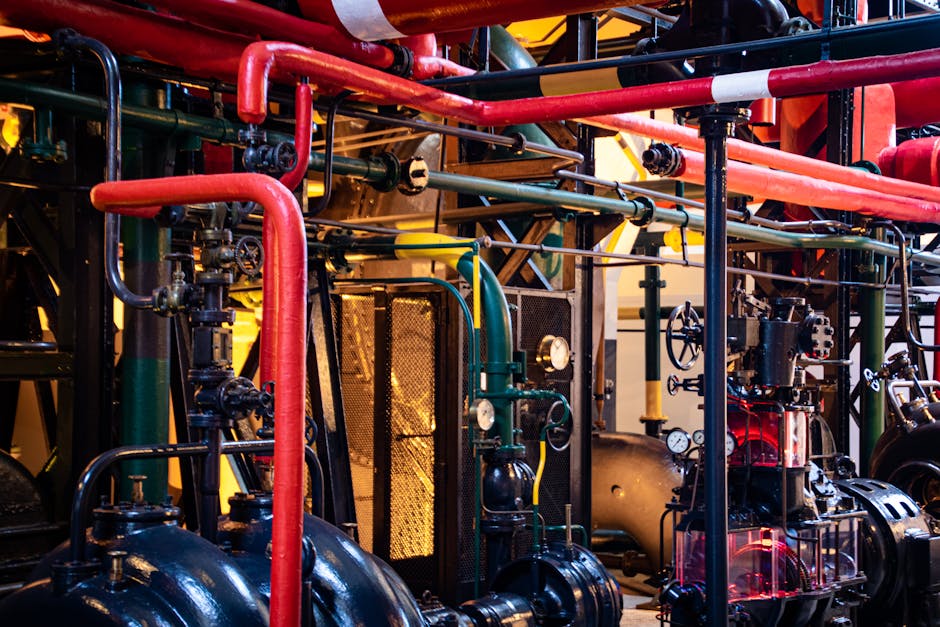
In classical physics, entropy is the measure of disorder or the degradation of energy within a closed system. In business, entropy manifests as inefficiency, waste, and supply chain fragility. If your production model is designed to ignore thermodynamic reality, you are essentially running a business that fights the laws of nature. That is a losing bet.
True operational excellence requires viewing your company not as a machine that sits atop an environment, but as a heat engine operating within a closed loop. Every kilowatt of energy lost to inefficiency and every ton of raw material discarded as ‘waste’ is literally profit evaporating into entropy. The leaders who will dominate the next decade aren’t those with the best PR campaigns; they are those who treat resource efficiency as a primary lever for margin expansion.
Reframing Waste as Misallocated Capital
For too long, executives have viewed environmental impacts as ‘externalities.’ This is an accounting fiction that masks poor management. If you are sending scrap materials to a landfill, you are paying twice: once to purchase the material, and again to dispose of it. In an era of increasing resource scarcity, that ‘waste’ is actually a failure of engineering and a leakage of capital.
High-performers must stop asking, ‘How can we be greener?’ and start asking, ‘How can we increase the energy density of our output?’ This shift in inquiry moves the needle from performative compliance to aggressive input optimization. When you redesign your manufacturing and logistics systems to treat every atom as a revenue-generating asset, sustainability becomes a byproduct of profitability, not an obstacle to it.
The New Executive Mandate: Systems Architecting
To lead in this environment, you need to cultivate a new breed of operator. We need leaders who understand that supply chain security is a subset of material science, and that regulatory risk is a failure to anticipate systemic feedback loops.
This is not about hiring consultants; it is about building intellectual capital inside your organization. You need to foster a culture where:
Operational transparency is valued over output volume.
Linear thinking is replaced by circular systems design.
Energy efficiency is tracked with the same rigor as quarterly revenue.
When your team understands the physics of production, they stop being passive employees and become systems architects. They stop looking for ways to ‘reduce emissions’ and start finding ways to maximize the utility of every joule of energy and every gram of matter that passes through your firm.
Conclusion: The Ultimate Competitive Advantage
The market is slowly waking up to the fact that resource scarcity is the ultimate ceiling on growth. Companies that continue to operate on 20th-century assumptions about infinite inputs will inevitably see their margins compressed by rising costs and systemic failures. By embracing the reality of thermodynamic constraints today, you are not just ‘going green’—you are building a leaner, more resilient, and more profitable enterprise that is fundamentally better designed for a resource-constrained future.
The era of wasteful, high-friction growth is ending. The era of high-efficiency, systemically-literate leadership has arrived. How will you pivot?