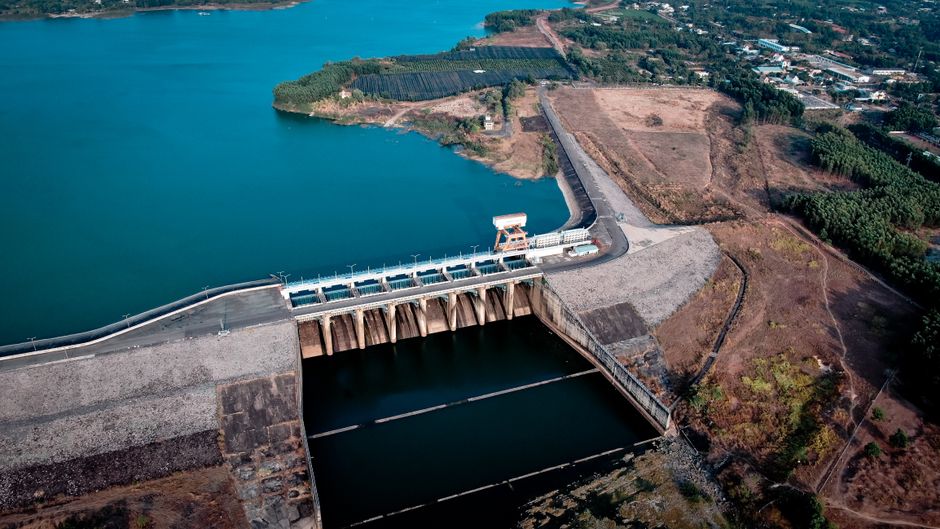
The Strategic Imperative of Energy Sovereignty
Energy independence is rarely discussed in the boardroom, yet it remains the ultimate constraint on organizational and national agility. Most leaders view energy as a line item—a predictable utility cost to be optimized or hedged. This is a fundamental failure of strategy. When your operational continuity depends on external supply chains, volatile global markets, or geopolitical stability, you have surrendered your margin of safety to forces you cannot control.
True energy independence is not merely about environmental impact or government policy; it is an exercise in risk mitigation and long-term decision-making. Organizations that treat energy as a strategic asset rather than a commodity build a defensive moat that competitors cannot cross. When the grid fluctuates or fuel prices spike, the energy-independent firm keeps moving while its peers scramble to manage the fallout.
Decentralization as Operational Excellence
The transition from centralized, fragile power grids to decentralized, resilient energy systems mirrors the evolution of high-performance organizations. Just as modern software architecture favors microservices over monolithic systems to prevent single points of failure, industrial and corporate operations must move toward localized power generation.
Microgrids, on-site solar arrays, and high-density battery storage are the physical equivalents of distributed decision-making. By localizing your energy source, you decouple your execution from the failures of the broader network. This is not just about keeping the lights on; it is about maintaining a steady state of production when the rest of the market enters a state of panic.
Leaders must evaluate their infrastructure through the lens of redundancy. If your facility requires 100% uptime to maintain a competitive advantage, relying on a public utility is a strategic gamble. Investing in independent energy capacity is a capital expenditure that pays dividends in reliability, shielding your balance sheet from the erratic pricing inherent in global energy markets.
The AI Factor: Energy as the New Compute
We are entering an era where energy and intelligence are synonymous. As AI models scale, the demand for compute power grows exponentially. The bottleneck for the next decade of innovation will not be the availability of data or algorithms, but the availability of reliable, high-density power.
Companies that control their own power generation will dictate the pace of their digital transformation. If your compute operations are tied to a constrained or expensive public grid, your ability to train models or process real-time data will be throttled by costs or availability. Energy independence is now a prerequisite for high-performance thinking in the age of artificial intelligence. You cannot lead the market if you are waiting on the utility company to grant you the capacity to compute.
Calculating the ROI of Resilience
The traditional financial model struggles to account for the value of energy independence because it treats “resilience” as a soft metric. High-performing leaders reject this framing. They quantify the cost of downtime, the cost of price volatility, and the strategic value of maintaining operations during a crisis.
When you shift the calculus from “lowest cost per kilowatt-hour” to “lowest risk per unit of production,” the investment case for energy independence becomes clear. It is a hedge against inflation, a shield against geopolitical volatility, and a foundation for technological scaling.
Stop viewing energy as a passive expense. Treat it as a critical component of your leadership mandate. The future belongs to those who own their inputs, secure their capacity, and refuse to be held hostage by the vulnerabilities of the status quo.