We often talk about the ‘dream state’ as the ultimate sandbox for the subconscious. But there is a dangerous corollary to this philosophy: the modern technology leader is so obsessed with maximizing their ‘cognitive throughput’ that they have completely eliminated the most vital precursor to breakthrough thinking—strategic boredom.
If your version of ‘optimizing your mindset’ involves listening to podcasts at 2x speed while you commute, or reviewing architecture logs during your lunch break, you aren’t optimizing. You are merely preventing your brain from entering the Default Mode Network (DMN).
The Danger of the ‘Always-On’ Architect
The DMN is the brain’s baseline state of rest. It is the mental equivalent of a system sitting idle, allowing background processes to defragment the hard drive. When you saturate every waking second with high-stimulation data—Slack notifications, technical whitepapers, or strategic audiobooks—you effectively starve the brain of the DMN’s capacity for ‘autobiographical planning’ and ‘creative incubation.’
You aren’t just missing out on rest; you are preventing your neural networks from performing the ‘cross-pollination’ of ideas that occurs when the brain is allowed to wander. In the world of high-level systems architecture, the best solutions aren’t found by grinding through more documentation. They are found when the brain finally gives up on the conscious problem and shifts into an associative, low-fidelity state.
The Strategy of Intentional Inefficiency
To lead at the executive level, you must master the art of ‘Strategic Boredom.’ This is not about laziness. It is about creating the necessary vacuum for innovation to rush into. Here is how to operationalize it:
The ‘No-Input’ Window: Dedicate 30 minutes daily to zero-input activity—walking without a phone, showering, or staring out a window. This allows your brain to transition from the task-positive network to the DMN.
Analog Friction: When facing a systemic bottleneck, move away from the IDE. Attempt to map the problem on a whiteboard or a paper notebook. The ‘friction’ of analog tools forces your brain to abstract the problem, which often reveals the elegant, simplified solution that was hidden by the clutter of your code editor.
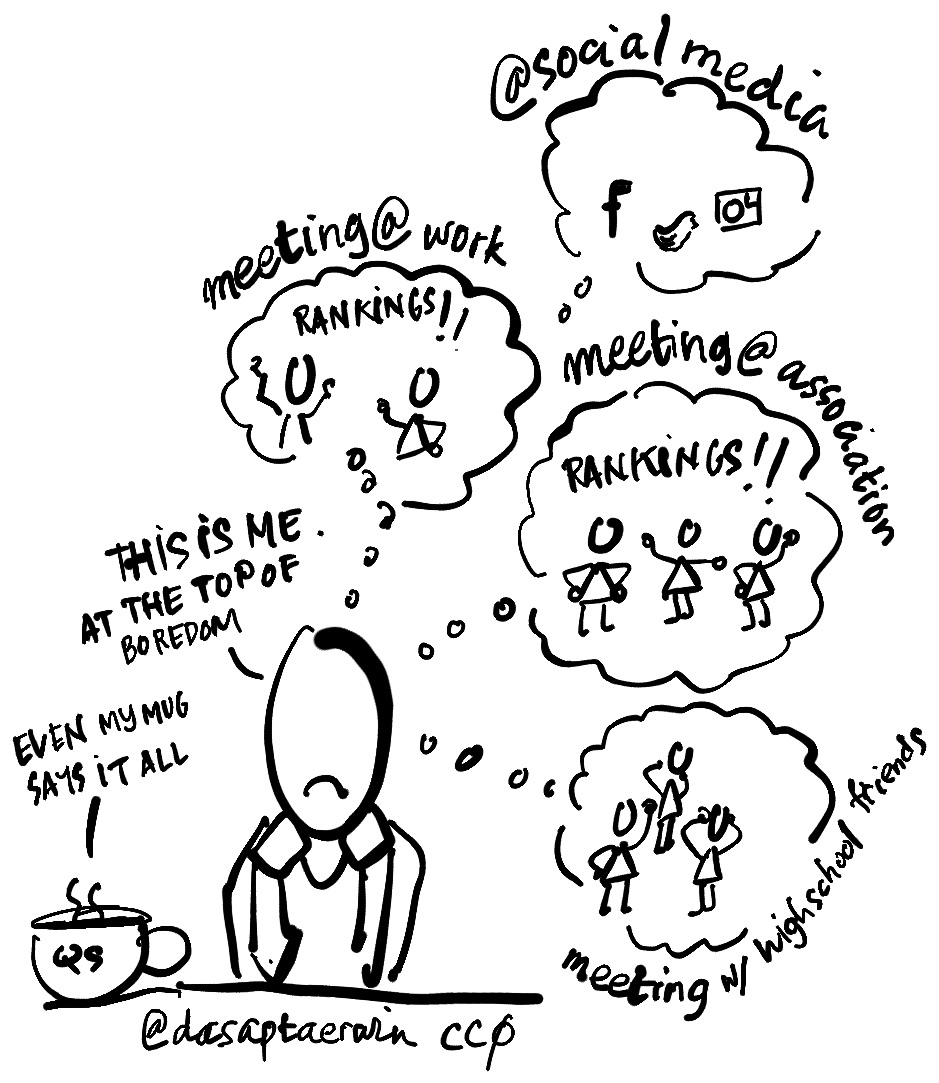
The Boredom Threshold: When you feel the urge to pull out your phone because you are ‘waiting’ for a meeting, resist it. Let the discomfort of boredom settle in. It is in that specific window of discomfort that the brain stops consuming information and starts synthesizing it.
Beyond the Grind
In the pursuit of technical excellence, many leaders have confused ‘intensity’ with ‘intelligence.’ They believe that if they are not actively processing data, they are falling behind. This is the ultimate fallacy of the high-performer. Your worth as a technology leader is not tied to the number of data points you consume, but to the novelty of the connections you form between them.
Stop trying to fill every gap in your schedule with external inputs. Start protecting the gaps. The most disruptive, market-shifting ideas aren’t found in the terminal or the meeting room—they are found in the silence you create between them. Visit thebossmind.com to explore how to transition from a culture of constant input to a strategy of deep, deliberate synthesis.