The Limits of Observation: Why Planetary Monitoring Defines Modern Operational Excellence
Most organizations operate with a blind spot that spans thousands of miles. They mistake local data—quarterly reports, internal KPIs, and departmental metrics—for a complete picture of reality. However, true strategic foresight requires a shift toward planetary-scale monitoring. In an era where supply chains, climate volatility, and geopolitical shifts are inextricably linked, the ability to observe the planet as a single, interconnected system is no longer a luxury for government agencies; it is a fundamental requirement for high-performance leadership.
When you monitor at a planetary level, you transition from reactive firefighting to proactive architectural control. You stop asking what went wrong yesterday and start identifying the systemic pressures that will dictate your market position tomorrow. This is the difference between watching your immediate competitors and watching the tectonic plates upon which your entire industry is built.
The Architecture of Planetary Visibility
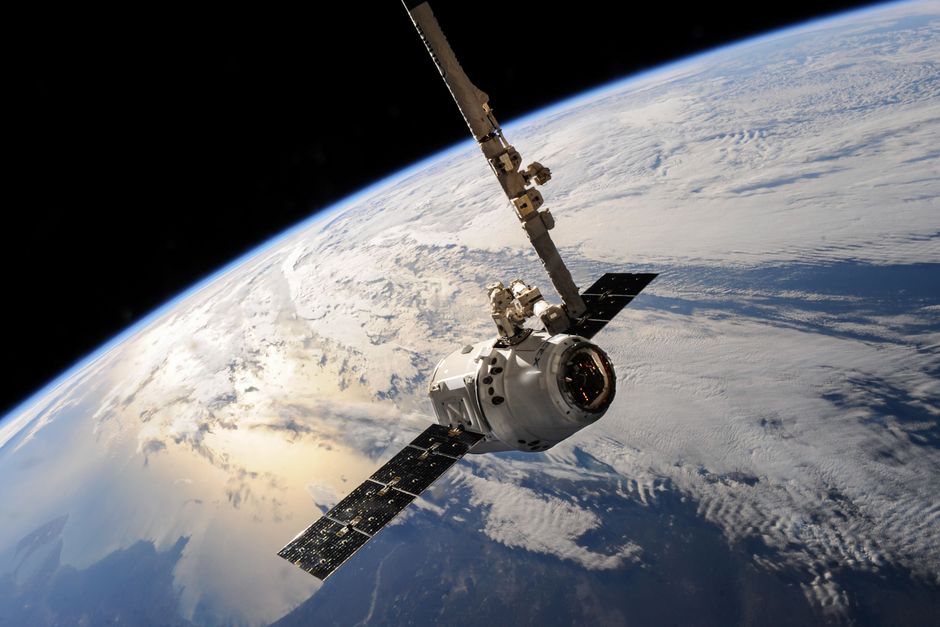
Planetary monitoring relies on a synthesis of remote sensing, satellite imagery, and high-frequency IoT data. For the executive, the value is not in the terabytes of raw data, but in the extraction of actionable intelligence. To achieve this, you must treat the Earth’s surface as a decision-making framework.
Consider the logistics sector. Companies that rely on localized tracking are constantly disrupted by regional weather events or infrastructure failures. Conversely, leaders who integrate planetary-scale meteorological data into their operational excellence models can reroute assets weeks before a disruption occurs. They are not predicting the future; they are observing the present with a wider lens.
From Satellites to Strategy
The integration of AI into satellite data analysis has transformed planetary monitoring from a static observation tool into a dynamic, predictive engine. Algorithms now track everything from ship movements in the South China Sea to deforestation rates in the Amazon, providing a continuous stream of truth that bypasses traditional reporting delays. This is the essence of high-performance thinking: removing the friction between an event and your awareness of it.
If your strategy relies on delayed information, you are already operating with a deficit. By building a dashboard that incorporates real-time planetary data, you compress your decision cycle. You see the drought that will affect commodity prices before the market prices it in. You see the infrastructure bottlenecks that will slow your expansion before your competitors even break ground.
Operationalizing Macro-Awareness
To implement this, you must move beyond the “dashboard as a vanity project” mindset. Effective planetary monitoring requires a disciplined approach to signal processing. Most executives drown in data because they lack a filter for what actually matters to their leadership strategy.
Identify Macro-Dependencies: Map your supply chain and operational footprint against planetary variables. Does a shift in maritime currents affect your shipping costs? Does regional soil health impact your long-term raw material availability?
Integrate AI Filtering: Human eyes cannot track global changes. Deploy machine learning models to monitor satellite feeds for anomalies, triggering alerts only when specific, pre-defined operational thresholds are breached.
Decouple Data from Reporting: Move away from monthly reviews. Planetary data should flow into your decision-making processes in near real-time, allowing for micro-adjustments that prevent macro-failures.
The Competitive Edge of the Global View
Planetary monitoring effectively solves the problem of “information asymmetry.” In a globalized economy, the entity with the most accurate, real-time map of the world’s physical state wins. This is not just about environmental or geopolitical awareness; it is about recognizing that every business operates within a physical environment that is constantly changing.
The leaders who thrive in the coming decade will be those who stop viewing the planet as an external environment and start viewing it as an internal data set. When you monitor planetary systems, you identify the constraints and opportunities that others ignore. This is how you build a resilient, forward-looking organization that can withstand the turbulence of a changing world.