Beyond the Frontier: Why Space Commercialization Needs a New Governance Model
The original narrative around space exploration often centers on the ‘Ethics of Ambition’—a debate about whether our drive to reach the stars outweighs our responsibility to preserve the orbital environment. However, this framing assumes that current corporate leaders are merely choosing between ethics and profit. A more urgent reality is that the current approach to space exploration is fundamentally incompatible with the long-term scalability required by the private sector.
The Stagnation of the ‘Pioneer’ Mindset
For decades, we have operated under the ‘Pioneer’ model—the idea that space is a frontier where rules are secondary to rapid iteration. While this was effective for the Apollo era, it is a liability for the multi-trillion-dollar space economy. When companies view their orbital operations as a series of isolated missions rather than a shared, permanent infrastructure, they inadvertently embrace a business model that is destined for collapse due to technical and geopolitical fragility.
The Argument for ‘Orbital Interoperability’
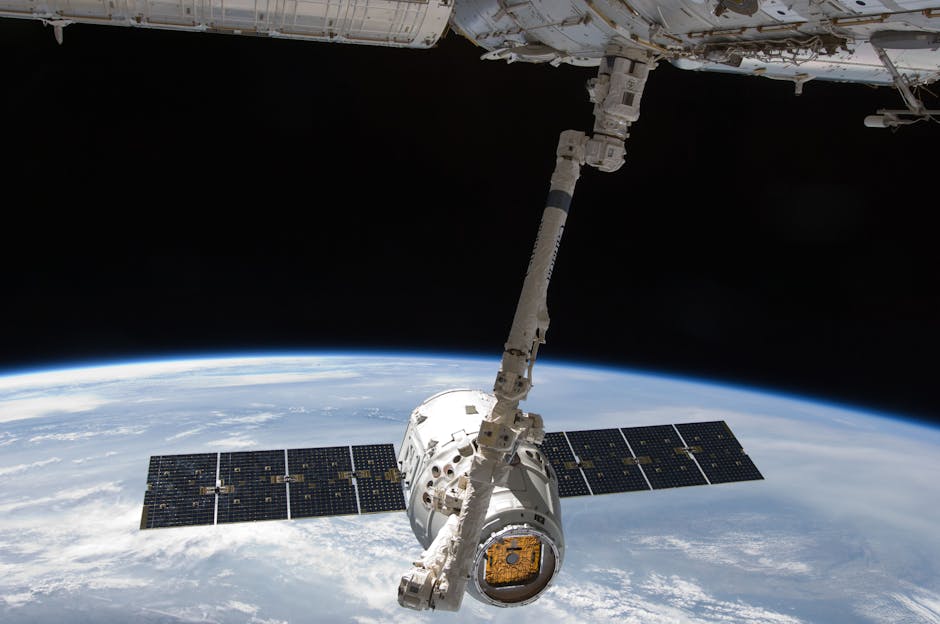
True leadership in the aerospace sector should shift away from proprietary, walled-garden architectures. Currently, if an orbital manufacturing facility suffers a critical failure, the potential for rescue or repair is zero because equipment and protocols are not standardized. This is not just a safety concern; it is a strategic flaw in asset protection. Leaders who advocate for cross-company standards—standardized docking ports, refueling interfaces, and data protocols—are not just being ‘good neighbors.’ They are creating the necessary ecosystem that allows an industry to survive its own growth phase.
From Sustainability to Resilience
Sustainability in space is often talked about as ‘planetary stewardship.’ Let’s reframe this for the boardroom: Orbital Resilience. A cluttered, lawless orbit is a volatile asset class. If the Kessler Syndrome—the catastrophic chain reaction of orbital collisions—is triggered, it will wipe out the valuation of every company in low-earth orbit overnight. Investing in debris mitigation technology isn’t ‘corporate social responsibility’; it is an act of hedging against the total loss of capital assets. Strategic leaders must treat space debris as a systemic financial risk, equal in importance to market volatility or supply chain disruption.
The Governance Gap
The current legal frameworks, such as the Outer Space Treaty, were written for states, not corporations. We are seeing a power vacuum where private entities are creating de-facto laws through their operational standards. The danger here is not just that this is ‘unethical,’ but that it is legally unpredictable. A robust strategy requires proactively participating in the creation of ‘Private Law’—industry-led self-governance that creates the stability required for long-term investors to feel comfortable deploying capital. If the industry does not self-regulate, it invites heavy-handed, reactive government oversight that could stifle innovation for a generation.
The BossMind Perspective
In high-performance organizations, the ability to build, scale, and maintain long-term systems is the ultimate differentiator. The next generation of space leaders will not be defined by who reaches Mars first, but by who builds the infrastructure that allows a thousand enterprises to operate safely behind them. To master these high-stakes operational frameworks, we encourage our readers to study the evolution of maritime law and global telecommunications standards as blueprints for the future of space.
Further Reading
International Telecommunication Union: Standards for Space-based Communications
The Hague International Space Resources Governance Working Group: Building a Legal Framework
The Secure World Foundation: Global Counterspace Capabilities and Security