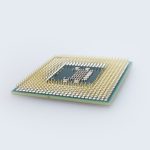
1. Introduction: The bottleneck of current AI hardware; defining the shift toward nano-fabrication.
2. Key Concepts: Understanding latency in neural processing, memristors, and photonic interconnects.
3. Step-by-Step Guide: Architectural implementation of low-latency nano-systems.
4. Real-World Applications: Edge computing, autonomous systems, and real-time medical diagnostics.
5. Common Mistakes: Over-reliance on Von Neumann architecture and thermal management oversights.
6. Advanced Tips: Integrating neuromorphic hardware with non-volatile memory.
7. Conclusion: The path toward real-time artificial cognition.
***
Low-Latency Nano-Fabrication Architecture: The Future of Real-Time AI
Introduction
The current trajectory of Artificial Intelligence is hitting a physical wall. As neural networks grow in parameter count, the traditional separation between memory and processing—known as the Von Neumann bottleneck—has become the primary inhibitor of progress. Even with state-of-the-art GPUs, the energy cost and time required to shuttle data between memory units and computational cores create significant latency. This delay is unacceptable for applications requiring millisecond-level responsiveness, such as autonomous navigation or high-frequency algorithmic trading.
The solution lies in low-latency nano-fabrication architecture. By moving computation directly into the hardware fabric at the nanometer scale, we can eliminate the “data commute.” This article explores how emerging nano-fabrication techniques are redefining AI hardware, enabling machines to process information with the speed and efficiency of biological neural systems.
Key Concepts
To understand low-latency AI, we must move beyond standard CMOS scaling. The focus has shifted toward Neuromorphic Computing and In-Memory Computing (IMC).
Memristive Crossbars
At the heart of low-latency nano-fabrication is the memristor. Unlike traditional transistors that switch between binary states, memristors can retain their resistance state based on previous current flow. By arranging these in a crossbar architecture, an entire matrix multiplication—the fundamental operation of a neural network—can be performed in a single clock cycle through Ohm’s Law and Kirchhoff’s Circuit Laws. This eliminates the need for data movement entirely.
Photonic Interconnects
Even with advanced processing, electrical signal degradation across high-density chips creates latency. Nano-fabrication now allows for the integration of silicon photonics, where data is moved via light rather than electrons. This allows for near-instantaneous bandwidth, minimizing the overhead of chip-to-chip or layer-to-layer communication.
Step-by-Step Guide to Implementing Nano-Scale AI Architecture
Transitioning from standard architectures to a nano-fabricated AI system requires a fundamental shift in design philosophy. Follow these steps to optimize for low latency.
Select the Processing Material: Move away from pure silicon. Utilize phase-change materials or transition metal oxides that exhibit memristive properties. These materials allow for non-volatile state storage, which is critical for low-power, high-speed inference.
Design the Crossbar Array: Map your neural network weights directly onto the physical conductance of the memristor array. Each synapse in your model corresponds to a physical component, creating a hardware-native neural network.
Integrate Peripheral CMOS Logic: While the core computation happens in the nano-array, you still require CMOS logic for input/output interfacing and signal conversion. Use 3D-stacked fabrication to place this logic directly beneath the memristor layer to reduce path length.
Optimize Clock Distribution: In a low-latency system, the clock signal is often the bottleneck. Implement asynchronous design paradigms where “events” (spikes) trigger computation, rather than a global clock signal, mirroring the efficiency of the human brain.
Examples and Real-World Applications
The implications of nano-fabricated AI extend far beyond the laboratory. By reducing latency to the sub-microsecond range, we unlock new capabilities in mission-critical environments.
“The goal is not just to make AI faster, but to make it instantaneous. When a self-driving car detects an obstacle, the transition from photon to action must happen in the time it takes for a single synapse to fire.”
Autonomous Robotics: Current robots often experience “motion sickness” or jitter because of processing lag. A nano-fabricated AI chip allows for real-time sensor fusion, enabling drones and robots to react to environmental changes with zero perceptible delay.
Medical Diagnostics: In neuro-interventional procedures, AI-assisted robotic arms must compensate for physiological tremors. Low-latency hardware enables these systems to adjust in real-time, providing a level of precision impossible with standard software-based AI.
Common Mistakes
Engineers often struggle when moving from software-defined AI to hardware-defined AI. Avoid these pitfalls:
Ignoring Thermal Drift: Nano-fabricated memristors are sensitive to heat. If the architecture does not account for thermal dissipation, the resistance states—and therefore the AI’s “knowledge”—will drift, leading to catastrophic accuracy loss.
Over-Engineering for Precision: In software AI, 32-bit floating-point precision is the standard. In hardware, this is expensive and slow. Utilize lower-precision arithmetic (4-bit or 8-bit), as most neural networks are inherently robust to minor hardware noise.
Neglecting Interconnect Congestion: Designing a fast core is useless if the wiring between arrays creates a bottleneck. Ensure that your fabrication process includes high-density, high-speed routing layers.
Advanced Tips
To push your architecture to the cutting edge, consider the following strategies:
Hybrid Neuromorphic-Digital Integration: Don’t try to force everything into a memristive array. Use the memristors for the heavy lifting (matrix multiplication) and keep high-precision tasks (like activation functions or normalization) on a dedicated digital logic core. This hybrid approach provides the best balance of speed and accuracy.
Exploit Sparsity: Real-world data is often sparse. Design your nano-fabrication architecture to skip zero-value inputs entirely. By implementing “event-driven” hardware that only consumes power when data changes, you significantly reduce both latency and energy consumption.
Conclusion
Low-latency nano-fabrication is the key to evolving AI from a powerful software tool into an embedded, real-time intelligence. By leveraging memristive crossbars, photonic interconnects, and asynchronous design, we can bypass the limitations of traditional computing architectures. While the transition requires a shift in how we approach hardware design—moving from software-centric to physics-centric optimization—the results are transformative. As we continue to refine these nano-scale processes, we move closer to a world where artificial cognition operates with the fluid, immediate responsiveness of the natural world.
Learn how to implement workflow automation to eliminate manual tasks, optimize business processes, and scale your operations with this definitive expert guide.
Defining Robustness: Assessing AI Resilience Against Adversarial Attacks Introduction Artificial Intelligence models are no longer confined to sandbox environments; they…
We are currently obsessed with the narrative that self-healing materials—polymers that knit themselves together or concrete that ‘grows’ over cracks—are…
Implementing Dual-Authorization for Core Algorithmic Changes: A Blueprint for Production Safety Introduction In modern software engineering, algorithms are the silent…
The Algorithmic Erasure: Navigating Cultural Appropriation in AI-Generated Media Introduction We are currently witnessing a seismic shift in how visual…