Investigate the intersection of data mining and the study of historical occult patterns in digitized archival records.
— by
Steven Haynes
Outline
Introduction: The marriage of Digital Humanities and the Esoteric; why occult archives are a goldmine for data scientists.
Key Concepts: Defining Occult Data Mining (ODM), Network Analysis in Hermetic texts, and Natural Language Processing (NLP) for archaic linguistic shifts.
Step-by-Step Guide: From OCR digitization to semantic mapping of grimoires.
Case Studies: The Voynich Manuscript and the spread of Rosicrucian manifestos across 17th-century Europe.
Common Mistakes: Over-interpreting noise, ignoring context-sensitive vocabulary, and ethical considerations of archival bias.
Advanced Tips: Utilizing vector space modeling to find hidden thematic threads between disparate occult movements.
Conclusion: Bridging the gap between empirical data and historical mysticism.
The Digital Seer: Mining Historical Occult Patterns in Digitized Archives
Introduction
For centuries, the study of occultism—alchemy, astrology, hermeticism, and ceremonial magic—was relegated to the fringes of academic historical research. These texts were often dismissed as irrational or fraudulent. However, the rise of the Digital Humanities has fundamentally changed this landscape. We are currently witnessing an unprecedented influx of digitized archival records, including private journals, forbidden grimoires, and ephemeral pamphlets.
When we apply modern data mining techniques to these vast, digitized repositories, we move beyond subjective interpretation. We begin to see the structure of thought. By treating occult manuscripts as datasets, researchers can map the flow of esoteric ideas, track the evolution of secret societies, and identify cross-cultural influences that were previously invisible to the naked eye. This article explores how you can harness data mining to uncover the hidden architectures of occult history.
Key Concepts
To investigate occult patterns, one must move past traditional reading and into the realm of distant reading. The following concepts are essential for any data-driven investigation into esoteric history:
Natural Language Processing (NLP) for Archaic Scripts: Historical occult texts often use idiosyncratic, metaphorical, or encoded language. NLP models must be fine-tuned to recognize shifting syntax and terminology that evolved over centuries.
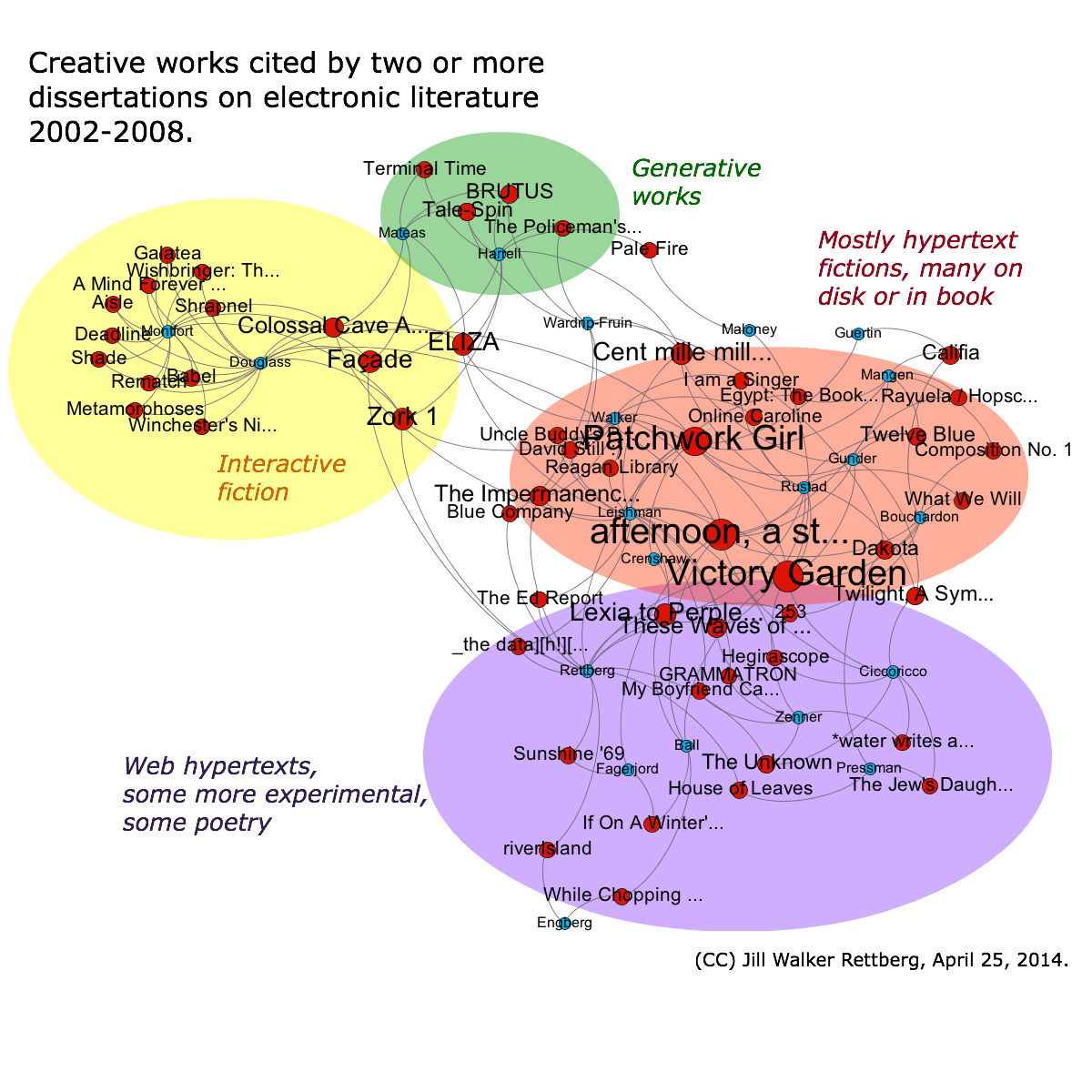
Network Analysis (Social and Ideational): Occultism is inherently social, often moving through secret nodes. Network analysis allows us to visualize the connections between authors, patrons, and the clandestine circles they frequented.
Semantic Mapping: By clustering terms related to symbolic concepts (e.g., “The Great Work,” “planetary influences,” “elemental correspondences”), we can track how these concepts migrated across time and geography.
OCR (Optical Character Recognition) Refinement: The primary hurdle in historical records is the degradation of original text. Training models on early modern typefaces or handwriting is the first step in successful mining.
Step-by-Step Guide: Mining the Esoteric Archive
Applying data mining to occult archives requires a rigorous, reproducible workflow. Follow these steps to transform static documents into actionable data.
Data Acquisition and OCR Cleaning: Identify digitized repositories such as the Wellcome Collection or the British Library’s digital archives. Use Tesseract or Transkribus to convert images into machine-readable text, and implement a “human-in-the-loop” validation step to correct errors in archaic spelling.
Corpus Tokenization and Normalization: Normalize the text. Occult texts often use multiple spellings for the same concept (e.g., “alchimy,” “alchemy,” “alchymie”). Map these to a single token to ensure the frequency analysis remains accurate.
Named Entity Recognition (NER): Train your NER models to flag entities specific to the field, such as authors, celestial bodies, ritual components, and geographical locations. This creates the “who, what, and where” of your historical network.
Topic Modeling: Utilize Latent Dirichlet Allocation (LDA) to categorize your corpus. This will help you distinguish between practical alchemy, religious mysticism, and natural philosophy, even within manuscripts that purposefully obscure their intent.
Visualization: Use tools like Gephi or Cytoscape to map the relationships uncovered. If an author frequently mentions a specific herb in conjunction with a planetary phase, your map will reveal the strength of that connection across your dataset.
Examples and Case Studies
The Mapping of the Rosicrucian Diffusion: In the early 17th century, the Rosicrucian manifestos caused a panic across Europe. By mining digitised pamphlet collections from 1610-1650, researchers have used text-reuse detection algorithms to show how the “Rosicrucian myth” was not just a singular event, but a viral dissemination of specific keywords and themes. The data shows exactly how the discourse shifted from religious critique to occult science as it crossed national borders.
Tracking Alchemical Nomenclature: By mining the Theatrum Chemicum, researchers have successfully visualized the evolution of chemical terminology. By observing the “co-occurrence” of specific metaphors—like the “green lion” or “the king’s bath”—with actual laboratory processes, we can empirically trace the transition from symbolic mysticism to legitimate chemical experimentation.
Common Mistakes
Ignoring the “Silence” in Data: Just because a topic is not frequently mentioned in the digital record does not mean it was unimportant. Occult practitioners were often deliberately secretive. Your model may mistake “frequency” for “importance.”
Assuming Linguistic Stability: Archaic English or Latin was not standardized. Using a modern dictionary for a 16th-century text will yield a 40% error rate in keyword recognition. Always use historical linguistic corpora for reference.
Over-interpretation of Noise: In manuscripts filled with erratic symbols and shorthand, data mining may produce “phantom correlations.” Always verify statistically significant clusters against a secondary, non-occult historical dataset to ensure the results are unique to your subject matter.
Advanced Tips
To reach a deeper level of insight, consider Vector Space Modeling (Word2Vec). By training a neural network on your occult corpus, you can identify “vector relationships” between terms. For instance, you might find that in the 17th century, the term “sulphur” is mathematically closer to “soul” than to “mineral.”
This approach reveals the ontological framework of the era—how the writer perceived the relationship between matter and spirit—rather than just listing the words they used.
Another powerful technique is Time-Series Sentiment Analysis. By charting the presence of “apocalyptic” language within occult manuscripts against historical events like the Plague or major wars, you can measure the “esoteric anxiety” of a population, providing a quantifiable metric for the cultural climate of an age.
Conclusion
Data mining in historical occult records is not an attempt to “solve” magic or demystify the arcane. Instead, it is a way to respect the complexity of historical thought by applying the best tools of the present. By shifting the focus from individual anecdotes to structural patterns, we gain a panoramic view of human inquiry that was previously hidden by time and censorship.
For the professional researcher or the curious enthusiast, the archive is no longer a graveyard of dead ideas. Through computational linguistics and network analysis, it becomes a living laboratory. As you begin your own investigations, remember: the data is only as good as your understanding of the context. Let the machines handle the frequency, but keep your human judgment for the nuance.



Leave a Reply