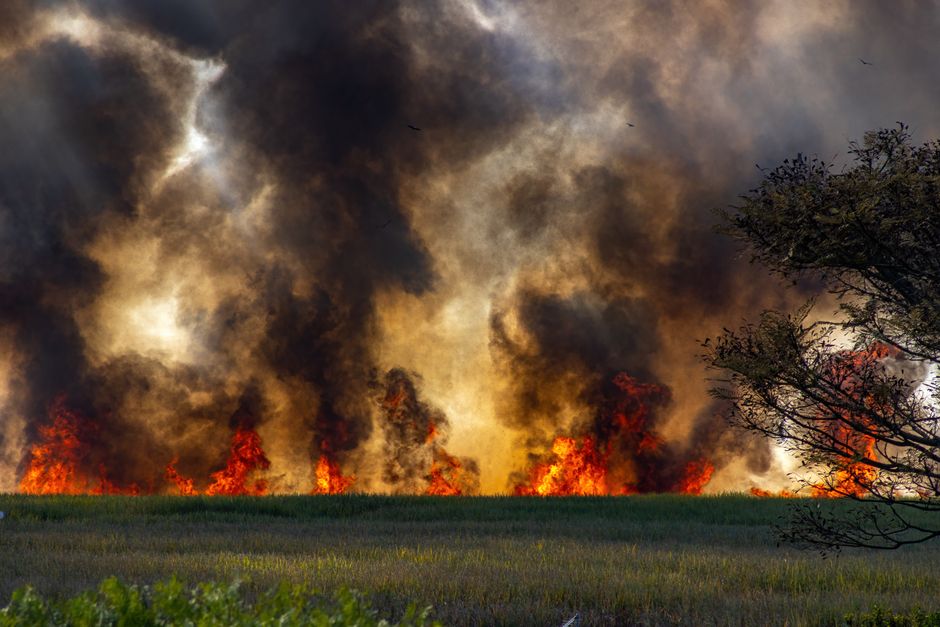
Terraforming is often framed as a biological or chemical challenge—a matter of introducing the right microbes or thickening an atmosphere to trap heat. This focus is a strategic error. Before life can take root, a planet must possess a coherent climate system, and climate is, at its core, a problem of fluid dynamics. If you cannot manage the movement of mass and energy across a planetary surface, your investment in greenhouse gases or reforestation will be undone by thermal instability and atmospheric collapse.
For the leader managing complex systems, the physics of terraforming offers a masterclass in large-scale strategy. You are not merely changing a variable; you are redesigning the feedback loops of an entire engine.
Thermal Convection as Operational Framework
On Earth, fluid dynamics—specifically the movement of air and water—redistributes solar energy from the equator to the poles. Without this redistribution, the tropics would be uninhabitable and the poles would be frozen solid. When terraforming a body like Mars, the primary constraint is not the lack of oxygen, but the lack of an active hydraulic cycle.
Engineers must consider the planetary boundary layer. If the atmosphere is too thin, the fluid dynamics of the gas are dominated by surface friction rather than Coriolis forces. This prevents the formation of organized weather systems. In execution, this is identical to a fragmented organization where information fails to circulate. Without a mechanism to move energy, you end up with localized pockets of extreme volatility and broad zones of stagnation. A successful terraforming plan requires the artificial induction of global circulation cells, forcing the atmosphere to behave as a unified, coherent system.
The Challenge of Phase Transitions
Water is the most erratic component in any planetary fluid model. It exists in three phases simultaneously, each acting as a massive energy sink or source. The latent heat of vaporization is a form of structural leverage; when water changes state, it moves vast amounts of energy across the globe without requiring a direct input of mechanical work.
However, phase transitions are notoriously difficult to predict. In high-performance systems, we call this the “tipping point” problem. Once a fluid system reaches a certain density or temperature, it can undergo a non-linear shift—a phase change that renders previous models obsolete. When designing a terraformed environment, you must build in buffers to manage these transitions. If you fail to account for the volatility of hydrological cycles, you invite system-wide failure, where the climate enters a runaway state that negates all previous efforts.
Fluid Stability and Decision-Making
The most dangerous fallacy in terraforming is the assumption that a static state is the goal. Fluid dynamics teaches us that stability is only possible through constant, dynamic motion. A stagnant planet is a dead planet. To maintain an atmosphere, you must sustain the energy gradients that drive the fluid flows.
This is a critical lesson for decision-making. Leaders often seek to eliminate friction and volatility to achieve “smooth” operations. But in complex systems, friction is often the source of necessary resistance that prevents a system from spiraling into chaos. You do not want to eliminate the fluid dynamics of your organization; you want to harness them. By directing the flow of information and resources, you create the energy gradients necessary for growth.
Designing for Turbulence
Turbulence is not an error; it is a feature of high-energy systems. In fluid dynamics, turbulence occurs when the inertial forces of a fluid outweigh its viscous forces. In a planetary context, this is how energy is dissipated safely rather than accumulating until it causes a catastrophic release.
When scaling a strategy, you must determine the “Reynolds number” of your organization—the point at which your processes transition from laminar (predictable) to turbulent (unpredictable). High-performance thinkers do not fear turbulence. They design structures that can remain functional even when the flow becomes chaotic. This is the difference between a brittle system that breaks under pressure and a resilient system that uses the energy of the turbulence to reorganize itself into a more efficient state.
The Strategic Imperative
Terraforming is the ultimate exercise in long-range high-performance thinking. It requires the ability to visualize how micro-level interactions—the movement of a single molecule of CO2 or water vapor—aggregate into a macro-level climate. It demands the foresight to manage energy budgets on a planetary scale. For those responsible for the trajectory of an organization, the principles remain the same: identify the currents, respect the phase transitions, and never mistake a static environment for a sustainable one.