The Architecture of Planetary Stewardship
We approach the prospect of terraforming not as a feat of engineering, but as an ultimate exercise in systemic risk management. When we discuss the transformation of a celestial body, we are not merely talking about atmospheric composition or temperature regulation; we are discussing the imposition of a singular decision-making framework onto an environment that has existed for billions of years without human interference. To treat a planet as a blank canvas is a strategic error that ignores the high-stakes reality of planetary-scale consequences.
The ethical constraints surrounding terraforming are not “soft” problems to be solved after the technical hurdles are cleared. They are core parameters of the mission architecture. If our strategy for expansion lacks a coherent moral foundation, the execution will inevitably collapse under the weight of unforeseen externalities.
The Fallacy of the Empty Canvas
The primary hurdle in terraforming ethics is the assumption of biological neutrality. We operate under the convenient illusion that if a planet lacks complex, macroscopic life, it is essentially void. This is a failure of high-performance thinking. Any planet capable of supporting life, or possessing the potential for prebiotic chemistry, is a closed system with its own inherent value and future trajectory.
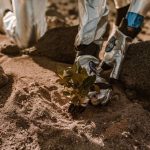
By altering a planet, we are committing an act of irreversible planetary engineering. If we introduce Earth-based microbes to a planet like Mars, we are not just “seeding” life; we are engaging in biological colonization that will likely eradicate any indigenous life forms that have managed to survive in the crust. This is the ultimate “move fast and break things” scenario, but in this case, the things being broken are entire biological lineages that we have yet to discover.
Operational Excellence in Interplanetary Ethics
Leadership in the context of space exploration requires the ability to balance aggressive ambition with precautionary restraint. A robust strategy for terraforming must be built upon the principle of “Do No Harm” at a planetary scale. This requires three distinct layers of operational oversight:
- Biological Containment Protocols: Before any physical intervention occurs, we must establish rigorous, transparent standards for planetary protection. If we cannot guarantee the isolation of Earth-based organisms, we have no business initiating large-scale atmospheric changes.
- The Precautionary Threshold: We must define clear, objective metrics for “biological presence.” If these thresholds are met, the project must be halted. This is not a matter of sentimentality; it is a matter of protecting potential scientific assets that are infinitely more valuable than a new colony site.
- Multi-Generational Accountability: Terraforming is an endeavor that spans centuries. Our current strategy must account for the fact that we are the ancestors of a future population that will inherit the consequences of our choices. A failure to build in ethical guardrails today is a failure of leadership for the next ten generations.
The AI Oversight Factor
As we move toward automated terraforming processes, the role of AI becomes central. We are already seeing the emergence of autonomous systems capable of managing complex environments. However, delegating planetary transformation to an algorithm without hard-coded ethical constraints is a recipe for disaster. We must integrate moral logic into the core of these systems, ensuring that the AI’s objective function—which might be focused on “increasing oxygen levels”—does not override the imperative to preserve indigenous biological integrity.
Effective execution in the age of automation requires that we treat ethics as a data point. When the system detects a potential conflict between mission objectives and planetary preservation, it must prioritize the preservation of the system’s original state until human intervention can provide a definitive, ethically-vetted path forward.
Beyond Colonization
Terraforming is often framed as a necessity for human survival. Yet, if our strategy is driven solely by desperation, we risk replicating the same destructive patterns that have plagued our history on Earth. If we approach the stars without a refined ethical framework, we are simply exporting our failures to new territories.
True planetary stewardship requires us to mature as a species. It demands that we view our role not as masters of the universe, but as curators of a larger biological reality. Our ability to terraform should be the final test of our character—not a tool for consumption, but a demonstration of our capacity to act with wisdom on a scale that actually matters.