

Outline
- Introduction: The shift from local to global interpretability. Why “Black Box” models are a liability in high-stakes industries.
- Key Concepts: Defining Global vs. Local interpretability. The “Model-Agnostic” paradigm.
- Methodologies: Feature Importance, Partial Dependence Plots (PDP), Accumulated Local Effects (ALE), and Surrogate Models.
- Step-by-Step Guide: Implementing global interpretability in a machine learning pipeline.
- Real-World Applications: Healthcare (diagnostics), Finance (credit scoring), and Regulatory Compliance (GDPR/AI Act).
- Common Mistakes: Over-relying on correlation, ignoring interactions, and “Interpretability vs. Accuracy” fallacies.
- Advanced Tips: Balancing stability with performance.
- Conclusion: Why interpretability is the new standard for model deployment.
Decoding the Black Box: A Guide to Global Model Interpretability
Introduction
For years, the machine learning community lived by the mantra that higher accuracy required greater complexity. We built deeper neural networks and more intricate ensemble models, often treating them as “black boxes.” We knew they worked, but we rarely understood why. As AI begins to make high-stakes decisions—from loan approvals to medical diagnoses—this lack of transparency has shifted from a technical inconvenience to a major liability.
Local interpretability methods, such as SHAP or LIME, help us understand why a model made a specific decision for a single user. However, to understand the overarching logic of a system, we need Global Interpretability. Global methods aim to explain the behavior of the entire model across the full data distribution. If you want to know how a system works as a whole, rather than just why it flagged a single transaction, global interpretability is your primary toolset.
Key Concepts
Global interpretability is the study of a model’s holistic structure. Unlike local methods that zoom in on a single data point, global methods provide a bird’s-eye view. They answer questions like: “Which features are most important across all predictions?” or “What is the general relationship between household income and loan approval?”
To achieve this, we generally rely on three main pillars:
- Feature Importance: Metrics that rank which variables exert the most influence on the model’s output.
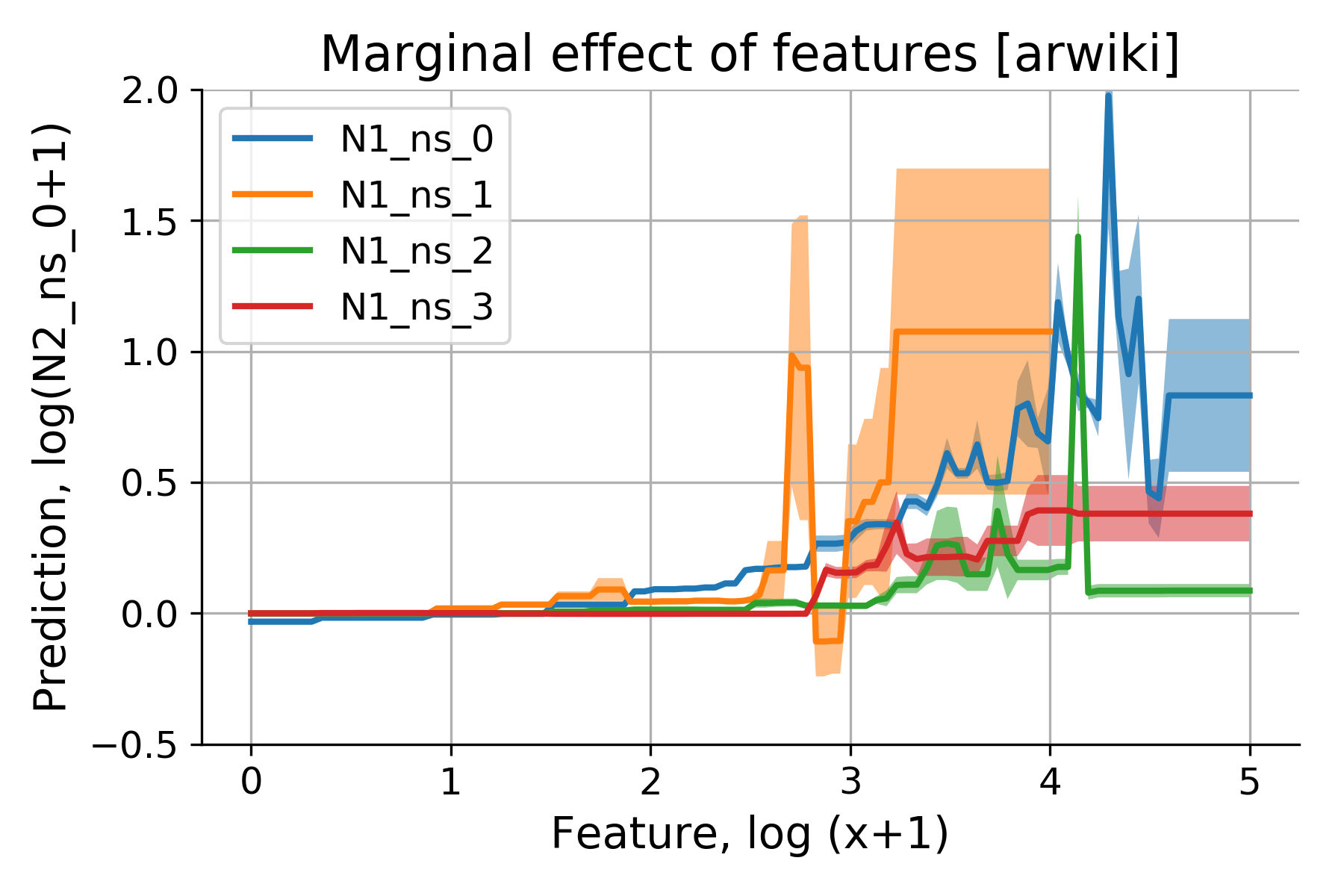
- Partial Dependence Plots (PDP): Visualizations that show the marginal effect of one or two features on the predicted outcome.
- Global Surrogate Models: Training a simpler, inherently interpretable model (like a shallow decision tree) to mimic the behavior of a complex model.
The goal is not necessarily to replicate the complexity of the original model, but to distill its logic into a human-comprehensible format.
Step-by-Step Guide
If you are looking to integrate global interpretability into your workflow, follow this structured approach to ensure your results are robust and actionable.
- Select the Model-Agnostic Approach: Do not tie your interpretability to a specific algorithm. Use tools (like Scikit-learn or interpretML) that allow you to analyze models regardless of whether they are Random Forests, Gradient Boosted Trees, or Neural Networks.
- Calculate Feature Importance: Start with permutation feature importance. This involves shuffling the values of a single feature and measuring the drop in model performance. If the accuracy tanks, the feature is critical.
- Generate Partial Dependence Plots (PDPs): For the top 5-10 features, generate PDPs. This will visualize how the model’s predictions change as a specific feature increases, holding all other features constant.
- Check for Interactions with ALE Plots: PDPs can be misleading if features are highly correlated. Accumulated Local Effects (ALE) plots are often more reliable in these scenarios because they calculate changes in predictions conditioned on the local distribution of the features.
- Build a Surrogate Model: If your stakeholders need a simple “rule of thumb,” train a shallow decision tree using the complex model’s predictions as the target labels. This provides a “student” model that is easy for humans to interpret while capturing the general logic of the “teacher” model.
- Validate against Domain Expertise: Present these visualizations to subject matter experts. If the global model logic contradicts established domain knowledge, it is a red flag that your model has likely learned noise or bias rather than true patterns.
Examples and Real-World Applications
Global interpretability is no longer optional in regulated industries. Below are three areas where these methods prove essential.
Case Study: Credit Scoring. A bank uses a deep gradient-boosted ensemble to approve loans. To comply with “Right to Explanation” laws, they must demonstrate that the model does not discriminate based on protected characteristics. Global interpretability methods show that while income and credit history are primary drivers, the model is not relying on biased proxy variables, providing the necessary audit trail for regulators.
In Healthcare, diagnostic tools often leverage clinical data. If a model predicts a high risk of readmission, doctors need to know if the model is relying on physiological markers or administrative artifacts (like the length of the hospital stay). Global interpretability confirms the logic is grounded in medical reality.
In Manufacturing, predictive maintenance models determine when equipment will fail. Global interpretability helps engineers understand that “vibration frequency” is the primary driver of failure across all machines, allowing them to optimize sensor placement without needing to track every individual machine’s specific prediction.
Common Mistakes
Even experienced practitioners fall into traps when interpreting models globally. Avoiding these will save you from misinformed strategy decisions.
- Confusing Correlation with Causation: Global interpretability tells you what the model thinks, not what is true in the real world. A model might use “day of the week” to predict sales, but that doesn’t mean the day causes the sales.
- Ignoring Feature Interactions: PDPs show individual feature effects, but if two features are highly dependent, the plot can show “unrealistic” data combinations. Always verify if the model’s logic holds across multi-dimensional feature space.
- Over-Smoothing with Surrogates: A surrogate model (like a shallow tree) is an approximation. Do not mistake the surrogate’s simplicity for the true accuracy of the underlying complex model.
- Ignoring Data Distribution: If you interpret a model globally, ensure the data you are using for the analysis is representative of the actual population. Interpreting a model using only training data can lead to misleading conclusions if the real-world data differs.
Advanced Tips
For those looking to go beyond the basics, consider these sophisticated techniques to enhance your interpretability workflow:
Use SHAP Global Summary Plots: While SHAP is often used for local explanations, the Summary Plot is a powerful global tool. It combines feature importance with the direction of the effect, showing not just which features matter, but whether they generally increase or decrease the prediction.
Stability Analysis: A truly reliable model should yield stable interpretations. If your global feature importance rankings change drastically when you add a small amount of data, your model is likely overfitting. Perform a sensitivity analysis by running your global methods on different subsets of your data; if the insights aren’t stable, your model is not ready for production.
Visualize Multi-dimensional Spaces: Use clustering to group similar model behaviors. Sometimes, a single global explanation isn’t enough because the model acts differently for different “types” of data. Use global interpretability within specific segments of your data to discover “local-global” patterns.
Conclusion
Global interpretability is the bridge between raw predictive power and organizational trust. By moving beyond the “black box” mentality, we can verify that our models are aligned with business goals, ethical standards, and scientific reality.
Whether you are implementing feature importance rankings, analyzing partial dependence, or building surrogate models, the goal remains the same: to transition from merely knowing that a model works to understanding the logic that powers it. In an era where AI influence is growing, the ability to explain the “why” behind the “what” is the most valuable skill a data professional can possess. Start by integrating these tools into your development cycle today, and you will find that a more transparent model is almost always a better, more robust model.





Leave a Reply