Federated learning approaches minimize the need to centralize sensitive data forsafety improvements.
— by
Steven Haynes
Outline
Introduction: The shift from data centralization to decentralized intelligence.
Key Concepts: Defining Federated Learning (FL) vs. traditional machine learning.
The Mechanics of FL: How models travel to data rather than vice versa.
Step-by-Step Guide: Implementing an FL pipeline.
Real-World Applications: Healthcare, Finance, and IoT edge devices.
Common Pitfalls: Data heterogeneity, communication overhead, and security vulnerabilities.
Advanced Strategies: Differential privacy and secure aggregation.
Conclusion: The future of privacy-first AI.
Federated Learning: How Decentralized AI Protects Sensitive Data
Introduction
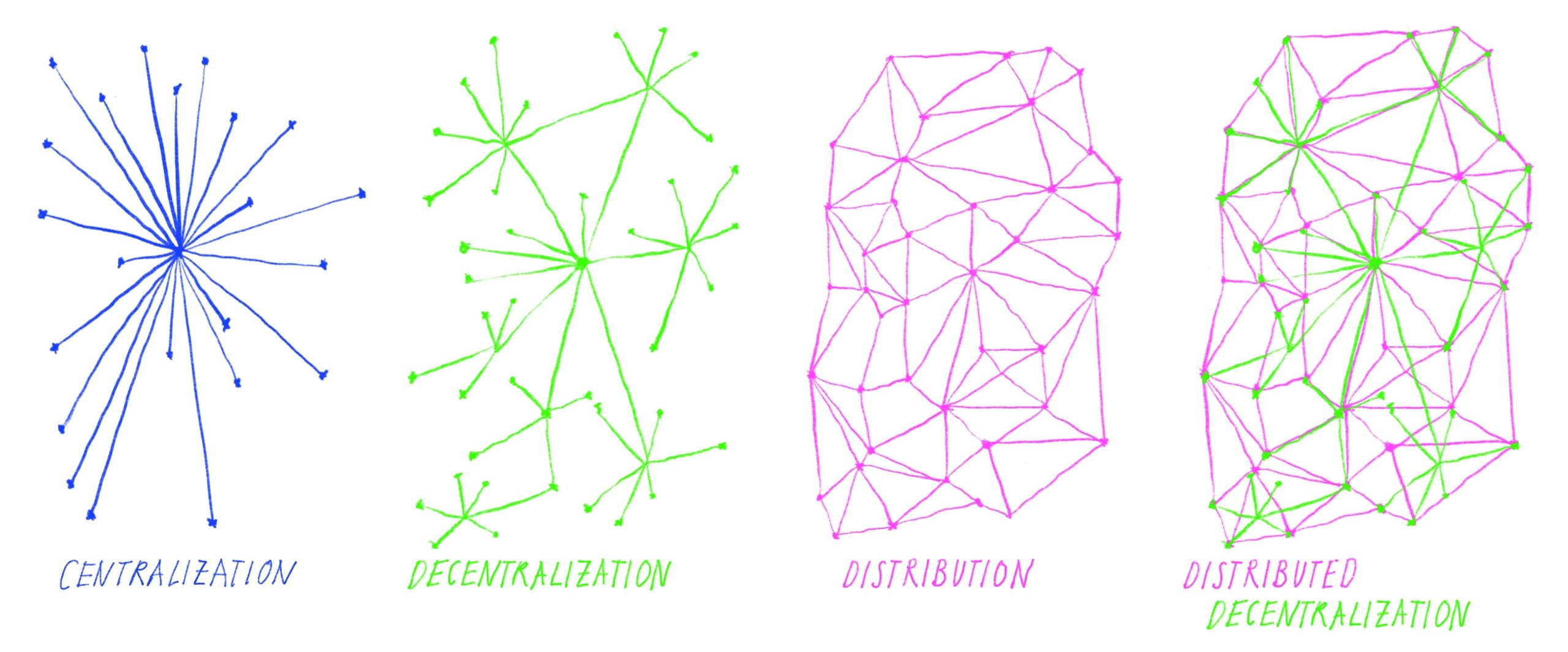
For decades, the standard playbook for artificial intelligence has been simple: hoard data, centralize it in a massive server farm, and train models on that aggregate pool. While effective for performance, this “collect-everything” approach creates a massive liability. Centralized data is a honeypot for cyberattacks, a compliance nightmare under regulations like GDPR, and a fundamental breach of user privacy.
Enter Federated Learning (FL). By flipping the traditional paradigm, FL brings the model to the data, not the data to the model. This allows organizations to train powerful machine learning algorithms across thousands of devices or servers without ever exposing raw, sensitive information. In an era where data sovereignty is paramount, Federated Learning is not just an alternative—it is the future of sustainable, safe, and ethical AI development.
Key Concepts
At its core, Federated Learning is a decentralized machine learning technique. In a traditional setup, you upload photos, health records, or financial logs to a central cloud provider. The cloud provider then uses that data to refine their global model.
In Federated Learning, the process is inverted:
The Global Model: A baseline algorithm is maintained on a central server.
Edge Computing: The model is distributed to local devices (like your smartphone, a hospital server, or an industrial sensor).
Local Training: The device trains the model locally using its own data. This data never leaves the device.
Update Aggregation: Only the weights (the mathematical insights or “learned patterns”) are sent back to the central server.
Model Synchronization: The central server aggregates these updates to refine the global model, which is then sent back out to the edge devices.
Because the raw data—your keystrokes, your diagnostic images, or your bank transactions—remains on your device, the privacy risk is effectively neutralized.
Define the Local Objective: Identify what the model needs to learn and ensure your local clients have the computational capacity to perform gradient descent.
Initialize the Global Model: Deploy an initial, general-purpose model from a secure central server to your target network of edge nodes.
Local Training Loop: Each participant performs a round of training on their private local dataset. This results in an “update” (or a weight change).
Secure Aggregation: Send these mathematical updates to the server. Use encrypted protocols so that even the central server cannot “see” what specific data influenced the update.
Global Update: The central server uses algorithms like Federated Averaging (FedAvg) to merge the updates into a new, improved global model.
Redistribution: The updated global model is pushed back out to all participating nodes, and the cycle repeats.
Real-World Applications
The applications for FL are rapidly expanding as industries look for ways to leverage AI without compromising sensitive data.
Healthcare Diagnostics
Hospitals are often prohibited from sharing patient records with other institutions due to HIPAA or local regulations. With Federated Learning, institutions can collaborate on an AI model for tumor detection. The model “learns” from patient scans at a hospital in London, a clinic in Tokyo, and a research center in New York, without a single patient file ever leaving its home facility.
Predictive Text and Mobile Intelligence
Keyboard applications like Gboard use Federated Learning to predict the next word you type. Your typing history is deeply personal and sensitive. By using FL, Google improves the predictive text algorithm for millions of users simultaneously, while the actual sentences you type remain encrypted and localized on your phone.
Financial Fraud Detection
Banks are reluctant to share their internal transaction data for fear of leaking trade secrets or proprietary customer behavior insights. Federated Learning allows multiple banks to build a robust fraud detection model together. The model identifies patterns of criminal activity globally, while each bank maintains full ownership and security of their own internal transactional data.
Common Mistakes
Ignoring Data Heterogeneity: Often, clients have vastly different types of data. If one hospital has high-resolution scans and another has lower-resolution files, the model might perform poorly. You must account for “Non-IID” (Independent and Identically Distributed) data to avoid model bias.
Ignoring Communication Costs: Sending model updates constantly consumes bandwidth. If you are dealing with millions of IoT devices, the overhead of sending and receiving updates can bottleneck the entire network. Efficient compression algorithms are essential.
Overlooking Model Poisoning: A malicious actor could theoretically join the training process and submit corrupted updates to influence the global model (e.g., trying to make the AI ignore certain types of fraud). Robust anomaly detection on incoming updates is mandatory.
Advanced Tips
To reach true production-grade Federated Learning, you must incorporate Differential Privacy. By adding controlled “noise” to the updates sent from devices, you make it mathematically impossible for the central server to reverse-engineer the data that created the update. Even if your central server is breached, there is no raw data to steal.
“The goal of advanced Federated Learning is not just to secure the transfer of data, but to ensure that the individual contribution of any single data point remains statistically invisible, even to the entity managing the model.”
Additionally, consider Secure Multi-Party Computation (SMPC). This allows the central server to compute the average of the updates without ever seeing the updates themselves. The server sees only the final aggregated result, adding an extra layer of “blind” trust to the architecture.
Conclusion
Federated Learning represents a vital maturation of machine learning. It acknowledges the reality that while AI needs vast amounts of information to learn, we no longer need to sacrifice individual privacy to provide that intelligence. By keeping data at the edge and centralizing only the knowledge gained from it, we create a more secure, compliant, and efficient ecosystem.
Whether you are in healthcare, fintech, or consumer technology, transitioning to a federated approach isn’t just about security—it’s about building trust with your users. In the future of AI, the models that thrive will be the ones that respect the boundary between data and intelligence.





Leave a Reply