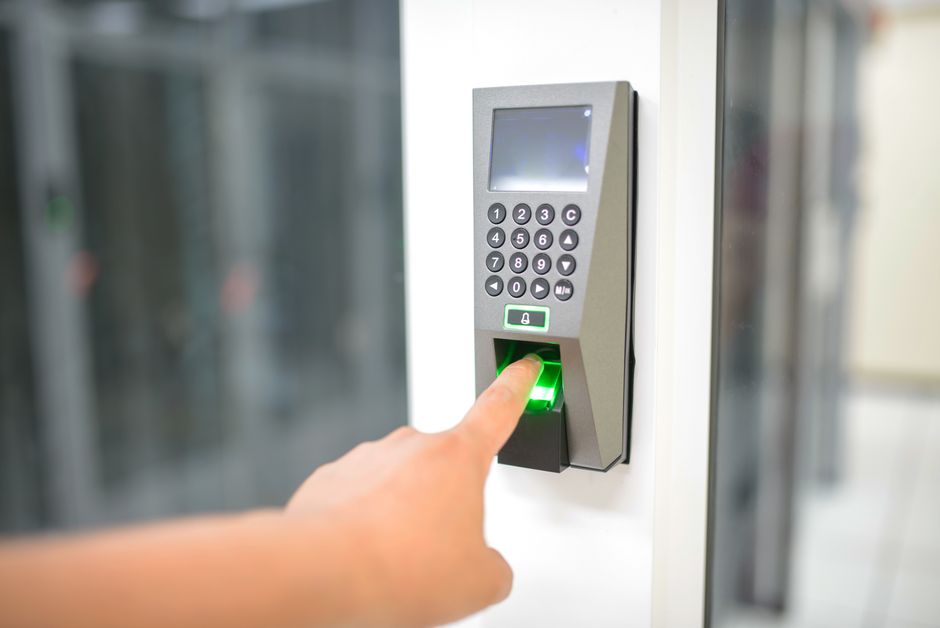
Security is the ultimate bottleneck to operational velocity. For decades, organizations have relied on the cognitive labor of employees to manage complex credentials, creating a massive, recurring tax on productivity. Every forgotten password, every forced reset, and every phishing vulnerability represents a failure of system architecture. Biometric authentication is not merely a convenience feature; it is a fundamental shift in how high-performance enterprises secure their most valuable assets without impeding the speed of decision-making.
The traditional password model forces a reliance on human memory, which is fundamentally flawed. When you force your team to manage dozens of unique, high-entropy strings, you are inviting failure. By shifting the burden of identity verification from the fallible human mind to intrinsic physiological traits, you remove the friction that slows down daily execution. This is the transition from “what you know”—which can be stolen, phished, or forgotten—to “who you are.”
The Strategic Imperative for Frictionless Access
In a high-stakes environment, the time spent authenticating is time lost to execution. When an executive or a lead engineer is interrupted by a multi-factor authentication (MFA) prompt that requires hunting for a physical token or waiting for an SMS code, the cognitive flow is broken. Deep work is fragile; interruptions are the enemy of high-performance output.
Biometric systems, such as facial recognition, fingerprint scanning, or iris identification, operate in the background. They allow for operational excellence by shrinking the authentication window to sub-second intervals. When access is invisible, the focus remains entirely on the task at hand rather than the security gatekeeper. This shift is critical for leaders who understand that every extra second of latency in an internal process compounds over time.
Addressing the Vulnerability of Static Credentials
Static passwords are a liability. They exist in databases, they are shared across platforms, and they are susceptible to brute-force attacks. From a risk management perspective, relying on passwords is poor strategy. Biometric data, when handled correctly via local encryption or hardware-backed security modules, offers a level of non-repudiation that passwords cannot match.
However, the implementation of biometrics requires a sophisticated approach to privacy and data integrity. Leaders must ensure that biometric templates are never stored as raw images. Instead, they must be converted into mathematical hashes, stored locally on the device, and verified without transmitting sensitive physiological data to a central cloud server. This decentralization of identity is the bedrock of a robust decision-making framework regarding enterprise security architecture.
Operationalizing Biometrics for High-Performance Teams
Implementing biometric authentication is not just an IT project; it is an organizational transformation. To do it correctly, consider the following principles:
Prioritize Hardware-Level Security: Use devices with dedicated chips (like Apple’s Secure Enclave or TPMs) to store biometric data. Avoid software-only implementations that are vulnerable to memory injection attacks.
Implement Multi-Modal Verification: In high-security environments, combine biometrics with device-bound possession factors. This ensures that even if a biometric can be spoofed—a rare but possible scenario—the attacker still lacks the physical hardware authorized to access the system.
Eliminate Password Fallbacks: The primary weakness of any biometric system is the “recovery” process. If an attacker can bypass a biometric check by resetting a password, the system is compromised. Move toward FIDO2 standards, which use public-key cryptography to ensure that the biometric unlock only authorizes a digital signature, rather than granting raw access.
The Future of Identity
As we move toward more integrated digital ecosystems, the reliance on legacy identity verification will become a competitive disadvantage. Organizations that fail to adopt biometric authentication will continue to suffer from credential-based breaches and internal process drag. By adopting modern identity standards, you create a seamless environment where security serves the objective of growth rather than acting as a hurdle to it.
The goal is to reach a state of invisible security. When your team can interact with your digital infrastructure with the same fluidity that they interact with their physical office space, you have achieved a significant advantage in execution. Stop asking your people to remember secrets; start verifying who they are through the most secure, efficient, and reliable means available.